Alesis KitStream review | Is it worth buying?
Alesis KitStream review: what the $399 kick-mounted mic and trigger box does well, where it falls short and how it compares with Yamaha's EAD range.
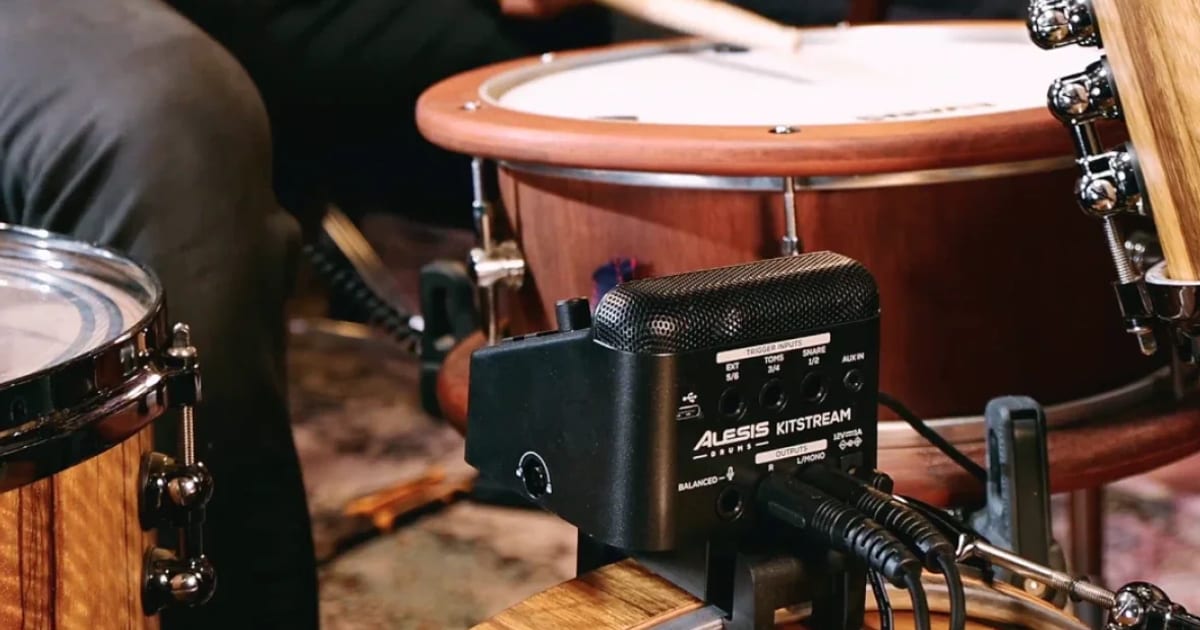
One box on your bass drum hoop, one cable, and your acoustic kit is on YouTube. That’s the promise of the Alesis KitStream, and at $399 it undercuts every Yamaha EAD.
We covered the launch in October. Now it’s in the shops, the question has changed. Is it any good, and should you buy one?
One thing to be clear about first. We haven’t played a KitStream. This review is built from the published spec, Alesis’s own material, retailer listings and the demo and review videos from people who have one. We name them as we go, and we say so where nobody has answered a question yet. Let’s find out what we know.
What is the Alesis KitStream?
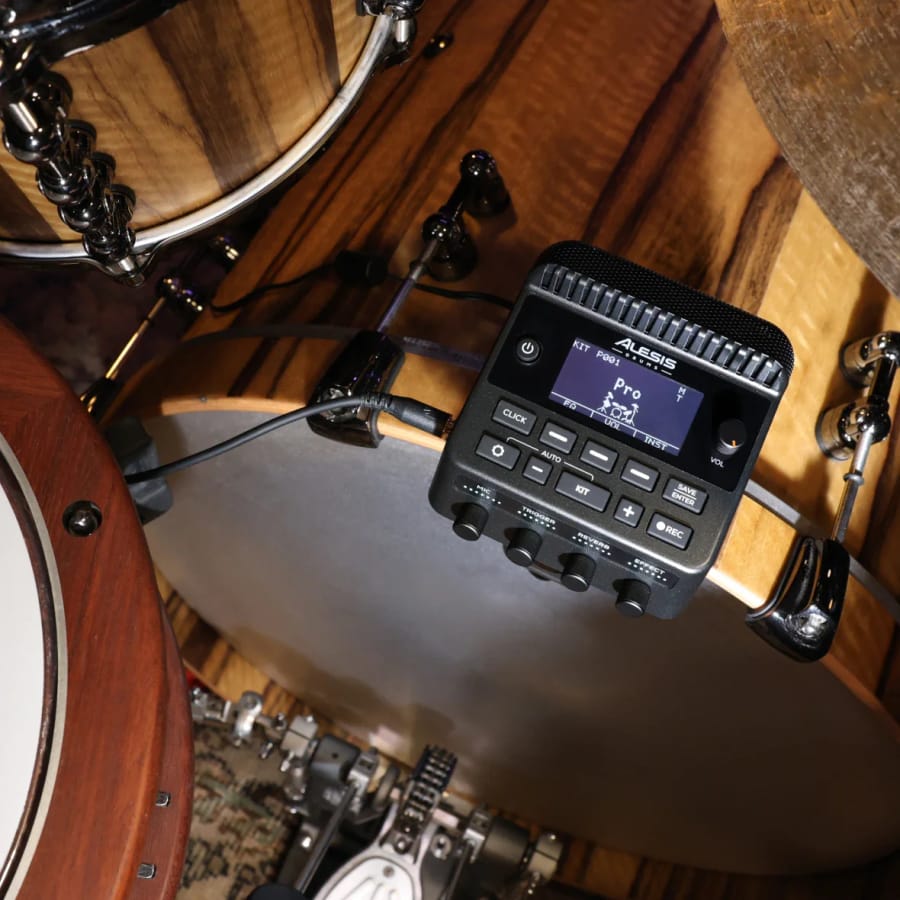
It’s a recording and streaming box for an acoustic drum kit. It clamps to the bass drum hoop, and a built-in stereo mic picks up the whole kit from there.
It’s also a small drum module. There are 500 drum and percussion sounds inside, with 50 preset kits and space for 100 of your own. Hit a trigger and it layers those sounds over your real drums.
If that sounds familiar, it should. Yamaha has done this since 2017 with the EAD10. The difference is that Yamaha uses a sensor on the hoop and a separate module. Alesis has put everything in one unit.
Who is it for?
Drummers who make videos, teach online, or want to hear their practice back. If mics, stands and an interface are what stand between you and posting a cover, this is aimed squarely at you.
It isn’t for anyone who wants to mix a record. And if you already own a set of drum mics and an interface, you have a better rig than this already.
What do you get?
Going by Guitar Center’s listing, the box holds the KitStream, a protective carrying case, a 6ft USB-C cable, a cable wrap and a drum key.
You also get Ableton Live Lite and a 90-day Drumeo subscription.
The hardware itself breaks down like this:
- Built-in stereo mic, with EQ, compression, reverb and effects on board
- Three TRS trigger inputs, good for up to six mono triggers, plus a dedicated kick input
- A 1/4-inch mic input for one extra dynamic mic
- USB-C carrying audio and MIDI to a computer or supported phone
- Bluetooth audio playback and an aux input for backing tracks
- Internal recording, up to 60 minutes per take
- A click, a record button and four knobs: Mic, Trigger, Reverb and Effect
Several retailers describe a kick trigger as built into the unit. Snare and tom triggers look to be extra, and some shops sell them in a bundle.
How much will it hold? Guitar Center lists up to 99 recordings. Kraft Music puts the total at up to 50 hours. Either way, it’s plenty.
What do the reviewers say?
Here’s the honest answer. At the time of writing we couldn’t find a full written review from any of the big drum or recording outlets. The coverage from Digital Drummer, Sonicstate and Mixdown is launch news, not testing.
The hands-on material is on YouTube. Adam Z Drumming has put one on his kick drum and tried it for recording, streaming and teaching lessons. Watch it and trust your own ears:
Two more are worth your time. Sweetwater Soundcheck has a demo, though remember Sweetwater sells the thing. Edrumcenter has a head-to-head called “Alesis Kitstream vs Yamaha EAD20”, which is the comparison most buyers want.
Early opinion from drummers is split. On Gearspace, one poster said it didn’t sound that good to them. Another said it sounds perfectly adequate for the job, at the price of a guitar pedal. That’s two forum posts, not a verdict, but it’s probably where the argument will stay.
What does it do well?
The price. $399 is well under any EAD. That’s the headline.
The setup. One unit on the hoop, with no separate module to mount. Kraft Music’s write-up also mentions a calibration wizard that sets the mic level and trigger sensitivity for you.
It records on its own. Sixty minutes a take, with no computer and no memory stick. For hearing your practice back, that’s ideal.
It’s built for play-alongs. Bluetooth and an aux input mean the song and your kit end up in the same recording.
The extras are useful. Live Lite gets you recording at home on day one, and a case in the box is a nice touch.
Where does it fall short?
It’s one mic position. A stereo mic at the bass drum hears the kick and snare up close and the ride from further away. You can’t fix that balance afterwards. Every unit of this type has the same limit.
The extra mic input has no phantom power. Guitar Center’s spec says dynamic mics only. So no condenser overhead, and there’s only one input anyway.
Don’t expect multitrack. Kraft Music’s comparison lists the KitStream’s USB as stereo plus MIDI. Yamaha’s EAD20 and EAD50 send eight channels in and ten out. If you want to mix the mic and the triggers separately later, that matters.
Triggers can misfire. Alesis’s own support FAQ says unwanted triggering can come from retrigger settings, crosstalk and mic gain. That’s true of any hybrid setup, but expect some tweaking.
It’s unproven. The EAD10 has been on real kits for nine years. The KitStream has been out for three weeks.
There’s one more thing to mention. The extra mic input is a 1/4-inch socket, not an XLR, so check before you buy a cable.
How does it compare with the Yamaha EAD range?
The EAD10 is the direct rival. It’s around $599 new, so the KitStream saves you about $200. The Alesis adds Bluetooth, USB-C and a one-piece design. The Yamaha has the track record, and there are plenty of used ones about.
The EAD20 is $899.99 and the EAD50 is $1,599. Those are a different class. You pay for multitrack USB and Yamaha’s newer sound engine. If you record or stream seriously, the EAD20 is still the one to beat.
What about the cheap route? A phone on a shelf and our free Drum Filters tool will clean up a clip for nothing. It won’t trigger sounds or feed a lesson call, mind.
And if what you really need is quiet practice, none of these help. That’s a job for an electronic kit, and our electronic drum kit buying guide starts with the Alesis Nitro Max.
How much is it, and where can I buy one?
The launch price is $399 in the US, €399.99 in Europe and £339.99 in the UK. Guitar Center lists it at $399, and we have seen it at about £339 from a UK retailer. Prices move, so check before you order.
Stock is still arriving, too. Some shops were showing pre-order dates into mid-November.
The right shop depends on where you are: Guitar Center in the Americas, Gear4music in the UK, or Thomann for Europe and the rest of the world.
Final thoughts
On paper, the KitStream is the cheapest sensible way to get an acoustic kit recorded and online. One unit, one cable, sounds and a recorder built in, for $399. Nice.
Should you buy it? If you want to post covers, teach online or hear your practice back, and you own no mics, it looks like a good buy. If you want to mix properly, save for an EAD20 or buy real mics.
The big question is still the sound, and that’s the one thing a spec sheet can’t tell you. So listen to the demos above on good headphones before you spend anything. We’ll update this page when we get our hands on one.
Want the back story? Our KitStream launch post has it.
Alesis KitStream FAQs
- How much does the Alesis KitStream cost?
- The launch price is $399 in the US, about €399.99 in Europe and about £339 in the UK. Shop prices move, so check the current figure before you buy.
- What does the Alesis KitStream do?
- It clamps to your bass drum hoop and records your whole acoustic kit through a built-in stereo mic. It also triggers 500 onboard sounds, records to its own memory, and sends audio and MIDI to a computer or phone over USB-C.
- Does the KitStream work as an audio interface?
- Yes. It sends audio and MIDI over a single USB-C cable and comes with Ableton Live Lite. The listings we have seen do not promise separate tracks for each source, so expect a mixed stereo feed rather than multitrack.
- Can I plug another microphone into the KitStream?
- Yes, one. There is a 1/4-inch mic input, but it has no phantom power, so it works with dynamic mics only. A condenser mic will not run from it.
- Do I need to buy triggers for the KitStream?
- Not to record. The built-in mic does that on its own. Retailers list a kick trigger as part of the unit, but layering sounds on your snare and toms needs extra triggers for the three trigger inputs.
- Is the Alesis KitStream better than the Yamaha EAD10?
- It is cheaper and newer, with Bluetooth, USB-C and everything in one unit. The Yamaha EAD10 has years of real-world use behind it. We have not played either side by side, so listen to demos of both first.
Keep reading
Electric Drums
Gretsch Catalina EVO review | Worth buying?
Gretsch Catalina EVO review: full-size shells, a real hi-hat and Gretsch samples from £1,839. What it does well, where it falls short and who it suits.
Head to Head
Yamaha EAD10 vs EAD20 vs EAD50 | Which one?
Yamaha EAD10 vs EAD20 vs EAD50, row by row: sensors, sounds, mic and trigger inputs, USB recording, apps and price, and which one suits how you play.
Electric Drums
Millenium MPS-1500 review | Is it any good?
Millenium MPS-1500 Hybrid-X review: wood shells, a nine-pad module and a low price. What testers and owners say, where it falls short and who should buy.