Yamaha EAD20 | The EAD50's engine for less
Yamaha's new EAD20 puts the flagship EAD50's SWX100 sound engine in an $899 box. What it does, what it drops, and which EAD is right for you.
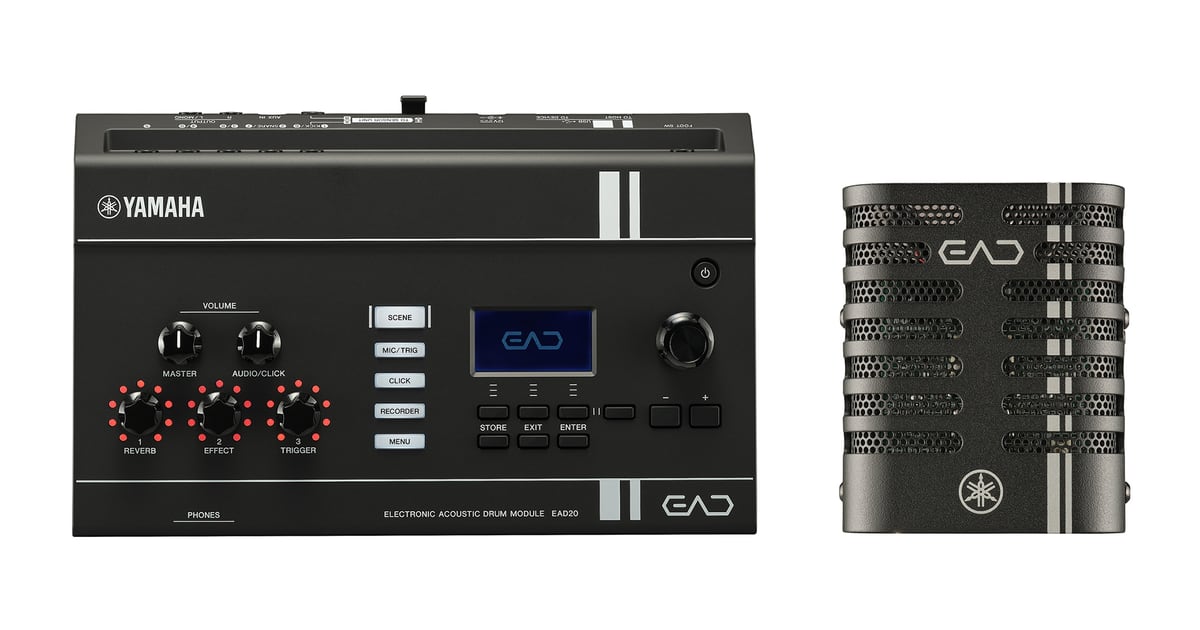
Six months ago Yamaha put its new SWX100 sound engine into the EAD50 and asked £1,500 for it. Plenty of drummers looked at that number, looked at their bank balance, and quietly went back to their EAD10.
Yamaha has clearly been reading the room. Today it launched the EAD20 — the same sound engine, in a smaller box, at $899.99.
That is a genuinely interesting piece of pricing. So what did Yamaha keep, what did it take away, and is this the EAD most of us should actually be buying? Let’s find out.
What is the Yamaha EAD20?
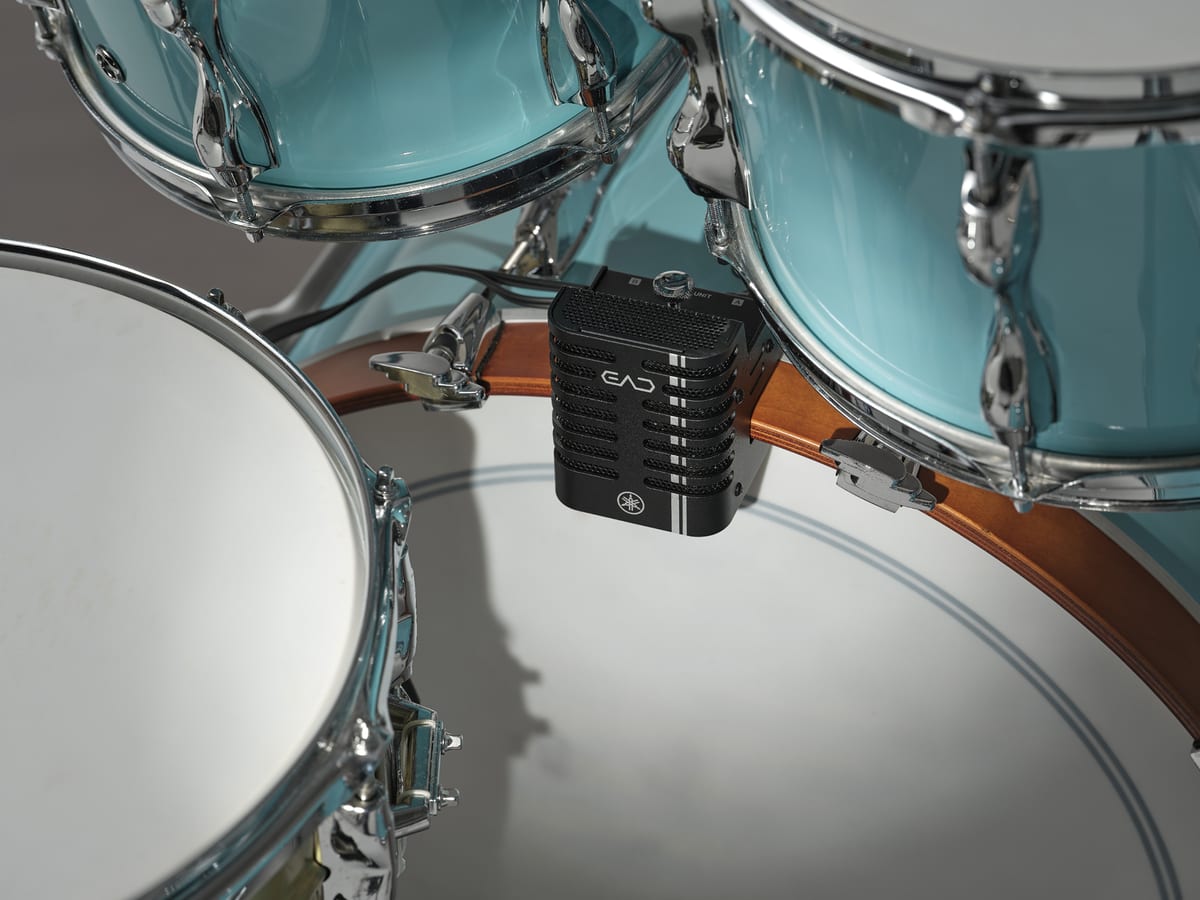
Same brilliant trick as every EAD before it. A sensor unit clamps to your bass drum hoop, listens to your whole acoustic kit in stereo, and sends that to a small module that handles the mixing, the effects, the recording and the trigger sounds. One clamp, one cable, one box, and your kit sounds produced.
The sensor is a stereo condenser mic using Yamaha’s own custom capsules, made in Japan, with a kick trigger built into the same housing. So the module hears the room and gets a clean, fast trigger signal off the bass drum for layering samples underneath what you are playing.
Yamaha is calling it “a standard model in the EAD series”, which is corporate for this is the middle one now. The EAD10 stays on as the budget entry, the EAD50 stays on as the flagship, and the EAD20 slots in between them.
Here it is:
The headline: it has the flagship’s brain
This is the whole story, really.
The SWX100 is Yamaha’s newest drum sound engine. It arrived in January in the EAD50, which is a £1,392 / $1,599 machine aimed at working pros. Eight months later, the same engine is in a module costing a little over half that.
What that buys you:
- 2,203 sounds — the full modern Yamaha library, not a cut-down version of it
- 512-note polyphony, so layered kits and long cymbal decays do not choke each other
- 252 digital effects — reverb, two effect slots, master effects, a master compressor and a master EQ
- 251 scenes — 51 factory presets plus 200 user slots you can fill yourself
Compare that with the EAD50’s spec and the numbers are all but identical. This is not a lite version of the engine. It is the engine.
That matters more than it might sound. The thing that made the EAD10 special was never its I/O — it was that a drummer with no recording knowledge could plug in and immediately sound good. The quality of the presets is the product. Handing the mid-tier module the flagship’s preset library is Yamaha giving away the bit that actually sells these things.
What else is in the box?
Rather more than you would expect at the price.
| Sound engine | SWX100 |
| Sounds | 2,203 |
| Polyphony | 512 notes |
| Effects | 252 |
| Scenes | 251 (51 preset, 200 user) |
| Sensor | Stereo condenser mic + kick trigger, hoop-mounted |
| Trigger inputs | Up to 9 (splittable inputs) |
| USB audio | 8-in / 10-out |
| Recording | Around 25 minutes, 44.1kHz / 16-bit stereo |
| Apps | EAD Touch, Rec’n’Share |
The 8-in/10-out USB interface is the line that should make content creators sit up. That is proper multitrack — your stereo kit mic, your trigger sounds and your effect returns arriving in your DAW or OBS as separate streams, not one squashed stereo bounce. It is the same interface spec as the EAD50.
You also get up to nine trigger inputs once you use splitter cables, which is enough for a seriously hybrid setup — pads, cones, an extra kick trigger, the lot. Single-zone, dual-zone and three-zone pads all work, Yamaha’s own and other brands’.
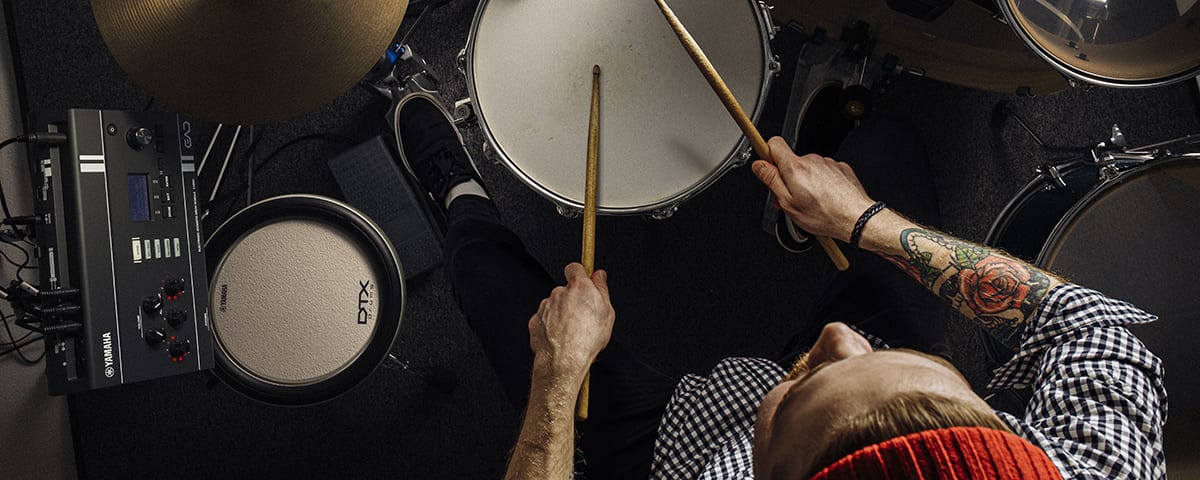
Then there is the practical stuff that gets used every single session: a built-in looper and sampler, an onboard recorder good for about 25 minutes of stereo, a metronome, and a Mic Talk talkback function for teaching and streaming.
Look at the front panel and you will spot three assignable knobs ringed with LEDs, marked reverb, effect and trigger. That is the bit you will actually touch. Grabbing reverb mid-song without stopping to dig through a menu is the difference between a feature you use and a feature you read about once.
Both apps carry over too — EAD Touch for editing and managing scenes on a phone or tablet, and Rec’n’Share for filming, editing and posting performances. If you have used an EAD before, none of this will need learning.
So what did Yamaha take away?
Inputs. Almost entirely inputs.
The EAD50 is a mixer as well as a module: five combo XLR/TRS inputs, so you can run its DSU50 sensor plus three of your own mics — a snare mic, an overhead, a vocal for teaching — and mix the lot in the box. The EAD20 does not do that. You get the one stereo sensor, and that is your acoustic sound.
The EAD50’s sensor is also a step up in its own right: the DSU50 is a matched pair of cardioid condensers in a ruggedised housing, built for a stage. The EAD20’s sensor is a stereo pair with custom Japanese capsules, which is no small thing, but it is not the same unit.
And the EAD50 goes further on triggers — ten dedicated inputs, plus another twelve over USB Trigger Link — where the EAD20 tops out at nine.
Here is the useful way to read that. The difference between these two modules is no longer sound quality. It is channel count. If you need to mic a snare separately, run a talkback mic and a click to the band, and gig it four nights a week, the EAD50 earns its money. If you are one drummer in one room filming videos, you are paying £600-odd for inputs you will never plug anything into.
Which EAD should you buy?
| EAD10 | EAD20 | EAD50 | |
|---|---|---|---|
| Released | 2017 | September 2026 | March 2026 |
| Price | around $599 | $899.99 | $1,599 / £1,392 |
| Sound engine | Original EAD | SWX100 | SWX100 |
| Sensor | Stereo mic + kick trigger | Stereo mic + kick trigger | DSU50 dual cardioid + trigger |
| Extra mic inputs | None | None | Up to 3 |
| Trigger inputs | Up to 6 | Up to 9 | Up to 10 (+12 over USB) |
| USB audio | 2-in / 2-out | 8-in / 10-out | 8-in / 10-out |
Rough guide: the EAD10 is still the bargain if you only want your kit to sound good on video and you can find one cheap. The EAD20 is the one for anyone who records or streams seriously and wants multitrack out of it. The EAD50 is for people who need to plug other things in.
Nine years on, the EAD10 is also the only model here still running the old engine — which tells you something about where this line is heading.
How much is it, and can I get one?
In the US, $899.99, and it is on shelves now — the major retailers had live listings and stock the day it was announced.
UK and European pricing is where it gets vague. Yamaha has not published a UK price yet, and we could not find a listing at a British retailer at the time of writing. Thomann’s Polish store has it at 3,924 PLN with about a week’s wait, which lands somewhere in the £730–£790 region once converted — but a currency conversion is not a price, so treat that as a shape rather than a number and wait for a proper UK listing.
If you want one, the right shop depends on where you are: Guitar Center in the Americas, Gear4music in the UK, or Thomann for Europe and the rest of the world.
And if $899 is still too much, the used market is getting interesting: now that there are three of these, EAD10s turn up on Reverb regularly, and they will not be getting more expensive.
Final thoughts
The EAD20 is the module the EAD50 launch made inevitable. Yamaha built a brilliant new sound engine, priced the box around it for professionals, and left an obvious gap underneath — and this fills it precisely.
The honest caveat is that nobody has independently played one yet. Every claim above about how it sounds comes from Yamaha and its retailers, and no reviewer has put it on a real kit and told us whether the trigger tracking, the mic quality and the presets hold up. Ask us again in a month.
But on paper, this is the EAD to want. The EAD10 turned bedroom drummers into El Estepario Siberiano and ZackGrooves; the EAD50 was arguably too much module for that job. The EAD20 looks like the one built for the people who were actually using them.
The whole range is on our Yamaha EAD hub, and if you are weighing this against going fully electronic, our electronic drum kit buying guide covers that decision properly.
Keep reading
News
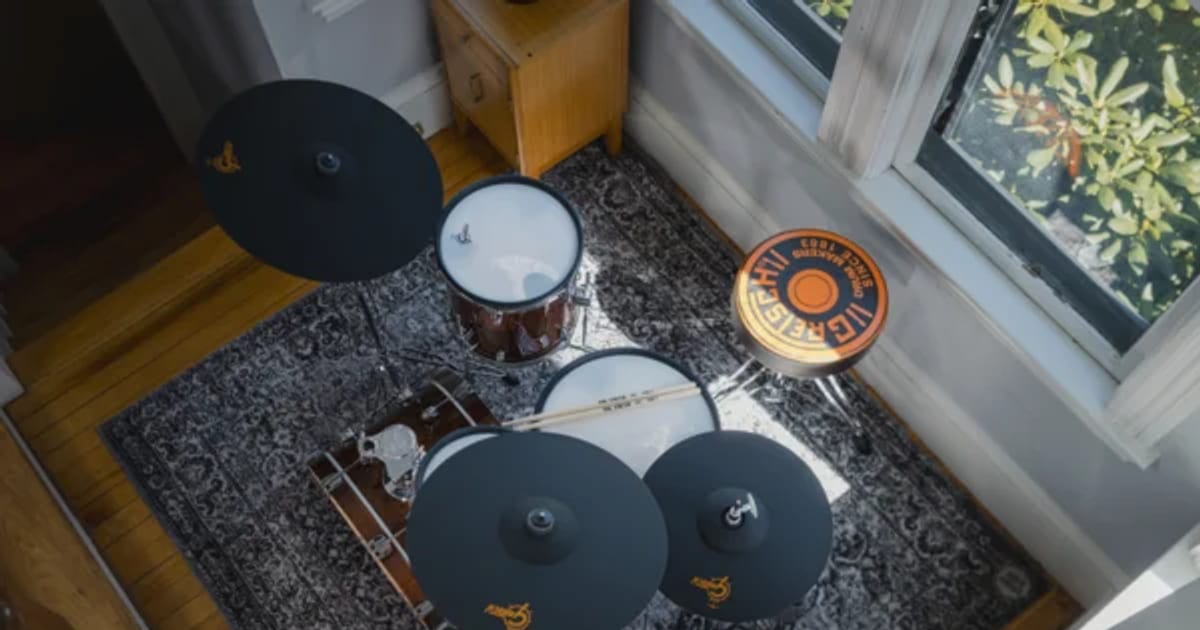
Gretsch Catalina EVO | Gretsch's first e-kit
After 143 years of acoustic drums, Gretsch has launched the Catalina EVO e-kit, with full-size shells and Gretsch samples, from £1,839 / $2,199.

News
Nicko McBrain's memoir | Hello Boys and Girls!
Iron Maiden's Nicko McBrain tells his story in Hello Boys and Girls!, out now in the UK, with a European spoken-word tour to follow.
News
Joey Kramer is back | Aerosmith at the Bowl
Aerosmith's rehearsal photos put founding drummer Joey Kramer back behind the kit for the Hollywood Bowl on 29 October and 1 November.