Electronic drum kits | The complete buying guide
Mesh vs rubber, why the module matters more than the pads, and the electronic drum kits we'd actually buy at every budget in 2026.
Electronic drum kits used to be the thing you bought because you couldn’t have real drums. Not any more. The current generation feels good enough that plenty of drummers — including touring professionals — practise on them by choice.
But the market is genuinely confusing. Two kits can look identical in photos and feel completely different under the sticks, because the things that matter are the things you can’t see in a product shot.
So what actually separates a £300 kit from a £1,500 one, and where should your money go? Let’s find out.
Why go electronic?
Three reasons, and they’re all good ones.
Volume. Tap-on-a-table quiet through headphones. If you live in a flat, share a wall, or want to practise at 11pm, this is the whole argument. (If you already own an acoustic kit, mesh heads and low volume cymbals can quieten it for less — worth weighing up before you buy anything.)
Practice tools. Every decent module has a metronome, coaching modes and recording built in. Hearing yourself played back is brutal and brilliant in equal measure.
It’s a studio. Plug in over USB and your kit becomes a MIDI controller for any drum software you like. Every note you play, captured and editable.
The parts of an electronic kit — and where the money hides
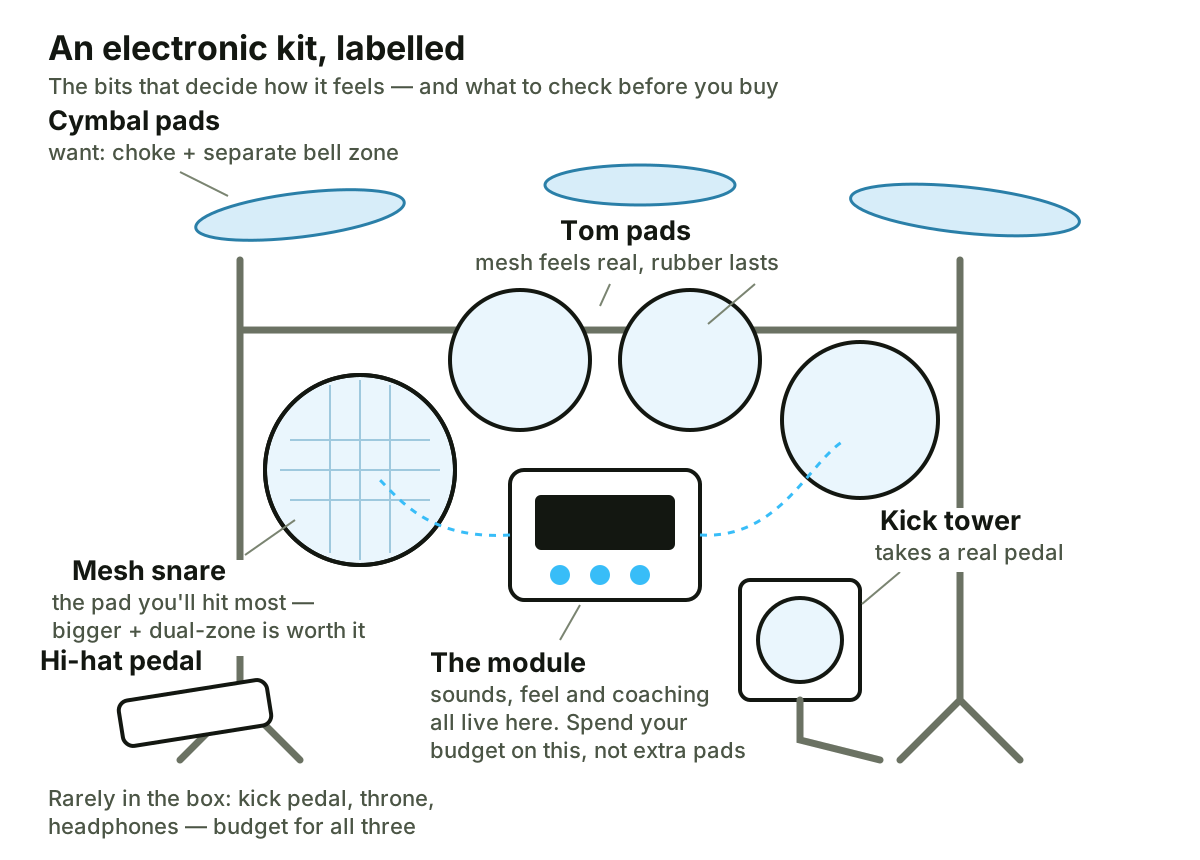
The module is the instrument. The pads are just switches with good manners — the module decides how you sound and how you feel. Triggering quality (does a quiet ghost note register? does a roll sound like a roll?) is what you’re really paying for as you go up a range, and it’s why a used kit with a great module beats a new kit with a cheap one.
Mesh beats rubber. Mesh pads rebound like a real head and can be tensioned with a drum key to taste. Rubber pads are fine for toms, harsh on the wrists as a snare. The snare pad is the one you’ll hit ten thousand times a week — prioritise a big, dual-zone mesh snare over almost everything else.
The kick matters more than you think. A proper kick tower takes a real bass drum pedal, feels right, and lets you learn technique that transfers to an acoustic kit — including your heel-toe ambitions. Beaterless “silent” kick pedals are much quieter for downstairs neighbours, but the feel is a compromise. Know which problem you’re solving.
Hi-hat: pedal vs controller. Cheaper kits use a simple on/off style pedal. Better kits give you a hi-hat pad on a real hi-hat stand with continuous open-to-closed response — it’s one of the biggest “this feels real” upgrades as you climb the range.
What’s not in the box. Very often: the kick pedal, the throne, headphones, and sometimes the snare stand. Read the included list carefully and budget £100 or so for the gaps.
The kits we’d actually buy in 2026
| Budget | Our pick | Why |
|---|---|---|
| ~£300 / $400 | Alesis Nitro Max | All-mesh, huge sound library, absurd value |
| ~£450 / $550 | Yamaha DTX452K | Bombproof, brilliant coaching functions |
| ~£600 / $750 | Roland TD-07DMK | The proper Roland module, full mesh |
| ~£1,300 / $1,700 | Roland TD-17KVX2 | Real hi-hat stand, gig-capable, keeps its value |
| £2,000+ / $2,500+ | Alesis Strata Prime / Roland TD-50X | Touchscreen modules, pro triggering |
Alesis Nitro Max — the best first e-kit
The Nitro Max is the answer to “cheapest kit that won’t teach you bad habits”. All-mesh pads, a genuinely good sound library including BFD-powered kits, Bluetooth for playing along to your phone, and a kick tower that takes a real pedal. At around £300 it has no serious competition — the step from this to the kits below is refinement, not necessity. Our full Nitro Max review covers what it is like to live with, and the TD-07KV vs Nitro Max head-to-head settles the “or should I stretch to the Roland?” question.
Yamaha DTX452K — the teacher’s choice
Yamaha’s entry kits trigger accurately, survive students, and have the best built-in practice tools at the price. The snare pad is rubber on the cheaper DTX402K — spend the extra for the 452’s mesh-ready setup, or look at the newer DTX6 range if the budget stretches. Boring in the best possible way.
Roland TD-07DMK — the sensible serious choice
Roland’s double-ply mesh heads on every drum and the TD-07 module’s triggering put this in a different league for dynamics — ghost notes, buzz rolls and cross-sticks all speak properly. We covered the kit family in our Roland TD-07KV guide. It holds its used value stubbornly, which tells you everything.
Roland TD-17KVX2 — the one that feels like drums
The sweet spot in the whole market. A 12” snare on a real stand, a hi-hat pad on a real hi-hat stand, chokeable three-zone cymbals, and Prismatic Sound Modelling from the flagship TD-50X. If you’re an intermediate or returning drummer and can afford it, buy this and you will not think about gear again for years.
And above that?
The Alesis Strata Prime’s 12” touchscreen module and the Roland TD-50X series are astonishing instruments — but at that level you should also be comparing a quiet acoustic setup. Our low volume cymbals guide makes the case.
The right shop depends on where you are: Guitar Center in the Americas, Gear4music in the UK, or Thomann for Europe and the rest of the world.
Should you buy a used electronic kit?
Carefully. Electronic kits are the one category of drum gear where used needs real caution — modules die and discontinued ones can’t be repaired, sensors wear out, and proprietary cable looms cost silly money to replace.
The flip side: depreciation is brutal, so a two-year-old mid-range kit can be a genuine bargain. Our used drums guide has a whole section on exactly what to check — short version: video of every pad and zone triggering, or no deal.
Expanding the kit later
One of the joys of electronic kits is bolting things on. A spare input on the module is worth having, and when you’re ready, we’ve written guides to adding a china cymbal pad and a splash pad to your setup.
Headphones deserve a line of their own: the kit is silent, you are not wearing the £15 earbuds that came with your phone for three hours a day. A comfortable pair of closed-back headphones is the most underrated purchase in electronic drumming.
Final thoughts
Buy mesh, buy the best module you can afford, and don’t pay for pads you can add later. At the time of writing that means the Nitro Max if money is tight, the TD-07DMK if you’re serious, and the TD-17KVX2 if you want to stop thinking about gear entirely.
And remember the golden rule: an electronic kit you can play at midnight beats an acoustic kit you can play twice a month. The best kit is the one that gets played.
Want a second opinion? Give the Gear Guru your budget and living situation — or see how the hybrid pros mix pads into real kits over in the Rig Vault.
Keep reading
All Our Buying Guides
Best drum tuners (2026) | Tune-Bot, DrumDial & a free option
The best drum tuners compared — Tune-Bot, DrumDial, Tama Tension Watch and tuning apps — plus when our free online drum tuner does the job for nothing.
Head to Head
Axis A21 vs DW 9000 | Direct drive or chain?
The direct-drive benchmark against the chain-drive default: footboard, cam, feel at speed, servicing, availability and price, with a verdict on every row.

Head to Head
Electronic cymbal pads | Is Roland worth it?
Three ways to add a ride or crash pad to your e-kit, side by side: zones, choke, feel, module compatibility and price — and whether Roland is worth it.