Drum mics | The first four to buy
The four drum mics to buy first: a kick mic, a snare mic and a pair of overheads, with the standard picks at three budgets and the mic packs worth buying.

Walk into a shop and ask for drum mics and you will be shown a case with seven microphones in it. Walk into a studio and look at the kit and you will see four doing the real work.
Kick, snare, and a pair of overheads. That is the four-mic setup behind the Glyn Johns method and it is where a home recording stops sounding like a demo. Everything else is an addition.
So which four? There is a standard answer at every budget, and it has not changed much in twenty years. Let’s go through them.
Why these four?
The overheads do most of the work. They hear the whole kit from above, in stereo, with the cymbals in proportion. A good pair of overheads and nothing else is a usable drum recording.
The kick and snare mics add what the overheads cannot: weight on the kick, crack on the snare, and the control to turn either one up without turning up the cymbals.
Tom mics come later, and they come one at a time. Most four-mic recordings have perfectly good toms in the overheads already.
The snare mic
Shure SM57. Buy this one. It is a dynamic mic, so it does not need phantom power and does not care about being hit by a stick. It has a presence bump that makes a snare crack, and it is the mic on the snare on most of the records you grew up with.
The SM57 is also the mic you will use on a guitar amp, a tom, a hi-hat and, in a pinch, a vocal. There is no better first microphone of any kind.
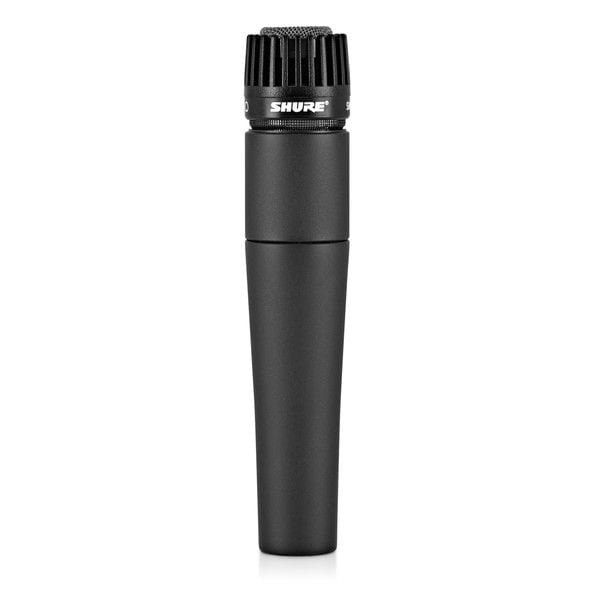
If you want to spend more: a Beyerdynamic M201 is the sophisticated choice, and an Audix i5 is the SM57’s closest rival. Neither is a reason to skip the 57.
The kick mic
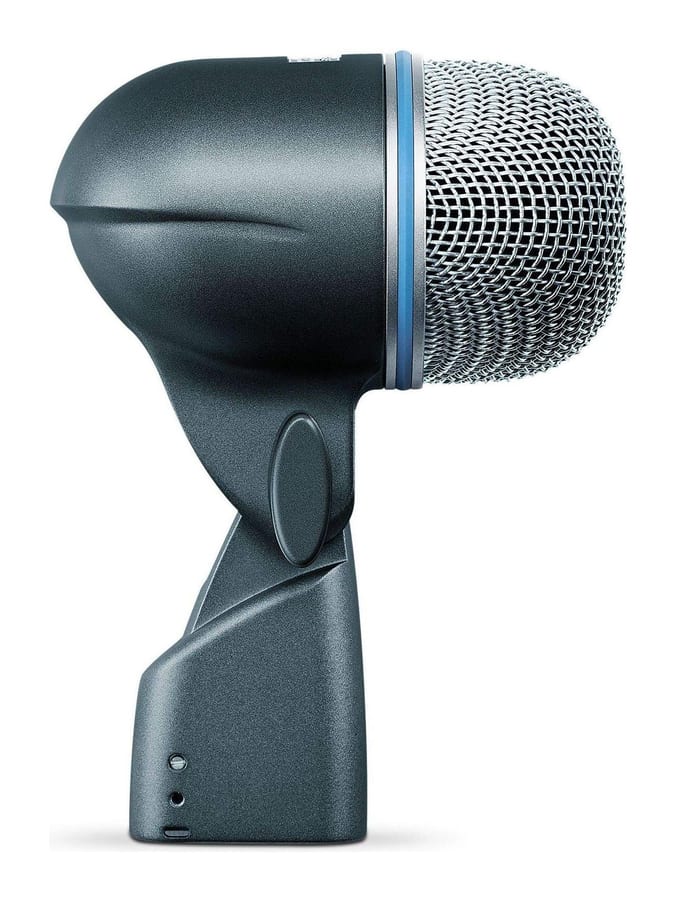
A kick needs a microphone that is built for it. A vocal mic in a kick drum sounds like cardboard. The dedicated kick mics all have a big low end, a scoop in the middle and a bump around the beater click, and the choice between them is taste.
- Shure Beta 52A. The safe pick, with a clean, modern punch. Takes a lot of level without complaint.
- AKG D112 MKII. The “egg”, and the rounder, warmer sound of the four. Great on vintage-sounding kits.
- Audix D6. The most scooped out of the box, which means it sounds mixed before you have touched a fader. Metal and modern rock drummers tend to land here.
- Sennheiser e602 II. The one you see on European stages, and a bargain second-hand.
Any of them. If you have no preference, the Beta 52A is the one most engineers would put in a stranger’s hands.
The overheads
This is where the money goes, and this is where cheap packs cut corners. Overheads need to be condenser mics, bought as a matched pair, and the better the pair the better the whole recording.
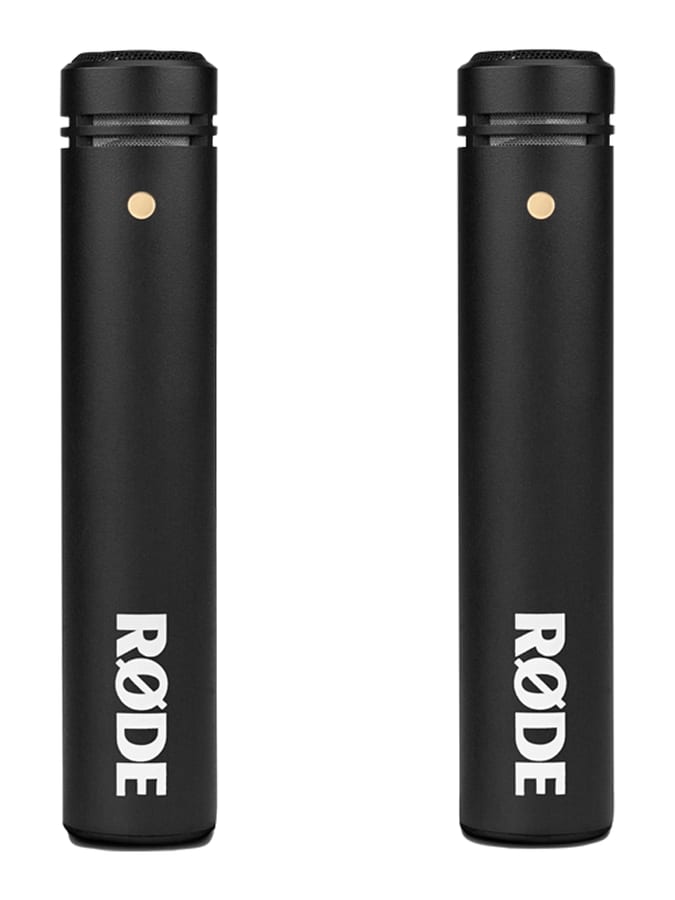
On a budget: Rode M5 pair. Matched small-diaphragm condensers for a price that would once have bought one. They are a little bright, which on cymbals is forgivable.
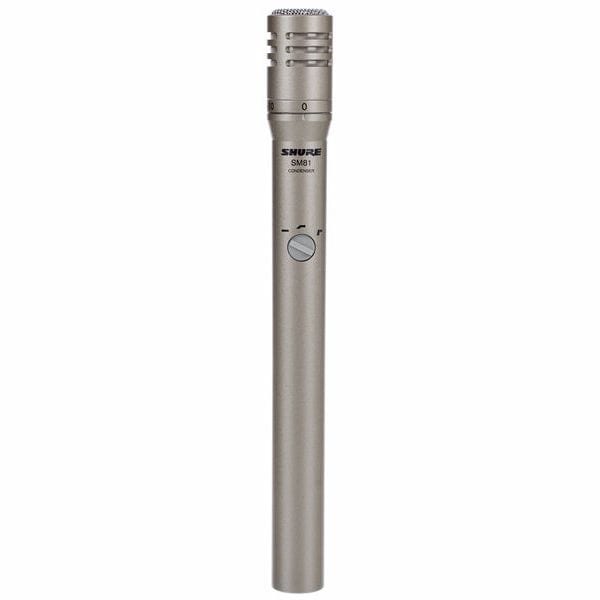
The standard: Shure SM81 pair. The SM81 has been an overhead mic since the seventies and will be one in another fifty years. Flat, honest and built like a stand. You pay for two, but you only ever pay once.
The alternative: a pair of large-diaphragm condensers. Two Audio-Technica AT2020s, or two of anything similar, work well as overheads and the AT2020 is often the cheapest condenser on any shelf. The sound is a touch bigger and less precise than a small-diaphragm pair. Plenty of engineers prefer it.
The ones to avoid: the unmatched, unnamed condensers in the cheapest drum mic bundles. They are the reason those bundles are cheap.
What about mic packs?
Good packs exist, and they are the cheapest way to go from four mics to seven.
The Shure PGA Drumkit 7 gives you a kick mic, a snare and tom mic in the SM57’s family, three more tom mics and a pair of condenser overheads, with the clips. The Audix DP7 is the step up: the D6 on kick, the i5 on snare, D2s and a D4 on the toms and a proper pair of ADX51 overheads. The Sennheiser e600 series pack sits in between.
The trap is the pack with seven mics for the price of one SM57. The kick and snare mics in those will be fine. The overheads will not, and overheads are the pair you would have spent the money on.
Stands, cables and the bits you forget
Every mic needs a stand and a cable, and overheads need tall stands with booms, which are the expensive kind. Budget for them. A short cable on an overhead is a stand falling into your cymbals at some point.
Kick mics want a short stand that gets inside or right in front of the port. Snare mics want a short boom or a clip-on mount on the rim. The audio interface guide covers the box all these cables plug into.
Where can I buy them?
The right shop depends on where you are: Guitar Center in the Americas, Gear4music in the UK, or Thomann for Europe and the rest of the world.
The used market is the best place for microphones of any kind. A twenty-year-old SM57 on Reverb works exactly like a new one, and a used pair of SM81s is one of the smartest buys in home recording.
Final thoughts
Four microphones: an SM57, a Beta 52A or one of its rivals, and the best pair of overheads you can afford. That list has not changed since your favourite records were made, and it will not change for your first album either.
Buy the overheads first if you can only afford one thing, because they are the recording. Then the kick, then the snare, then nothing for a while. Read how to record drums at home for where to put them, and tune the kit with the drum tuner before you hit record — the mics only hear what the drums are doing.
Drum mic FAQs
- What is the best mic for a snare drum?
- The Shure SM57. It has been the snare mic on more records than any other, it costs about the same as a cymbal stand, and it survives being hit. There are better-sounding snare mics but there is not a better first one.
- What mic should I use on a kick drum?
- A dynamic mic built for low frequencies: the Shure Beta 52A, the AKG D112 MKII, the Audix D6 or the Sennheiser e602 II. Each has a slightly different voice — the Audix is the most scooped and modern, the AKG the most rounded — but any of them will give you a kick sound that a vocal mic cannot.
- Are drum mic packs worth buying?
- The good ones, yes. A Shure PGA Drumkit 7 or an Audix DP7 gives you kick, snare, toms and overheads in one box for less than buying the parts, and the overheads in the better packs are real condensers. The very cheapest packs save money on exactly the mics that matter most — the overheads — so check what the pair in the box actually is.
- Do I need condenser mics for drum overheads?
- For the best results, yes. Overheads carry the cymbals and the overall picture of the kit, and condensers capture the high end that makes cymbals sound like metal rather than static. A matched pair of small-diaphragm condensers is the standard choice; a pair of large-diaphragm condensers works too and is often cheaper second-hand.
Keep reading
All Our Buying Guides
Audio interfaces for drums | How many inputs?
Which audio interface to buy for recording drums: how many mic inputs you need, the two- and eight-input standards, ADAT expansion and the e-kit case.

All Our Buying Guides
Drum VSTs | The best sounds for your e-kit
The best drum VSTs for an electronic kit: Superior Drummer 3, EZdrummer 3, Addictive Drums 2, GetGood Drums and Steven Slate Drums compared, plus the free ones.

How to
Connect an e-kit to a computer | USB, MIDI, latency
How to connect an electronic drum kit to a computer: the USB cable, MIDI versus audio, the buffer and driver settings that kill latency, and mapping the pads.