Audio interfaces for drums | How many inputs?
Which audio interface to buy for recording drums: how many mic inputs you need, the two- and eight-input standards, ADAT expansion and the e-kit case.
The audio interface is the box your microphones plug into and your computer records from. It is the least exciting purchase in home recording and the one that sets the ceiling on everything else.
For a singer, any interface works. For a drummer, the number on the front is the whole decision, because it is the number of microphones you can record at the same time.
So how many do you need, and which boxes should you be looking at? Let’s find out.
The only spec that matters: mic preamps
Interfaces list inputs in confusing ways. “18 inputs” on a Scarlett 18i20 means eight microphone preamps plus ten line and digital inputs that need other gear to use. The number you want is the mic preamp count, because every drum mic needs one.
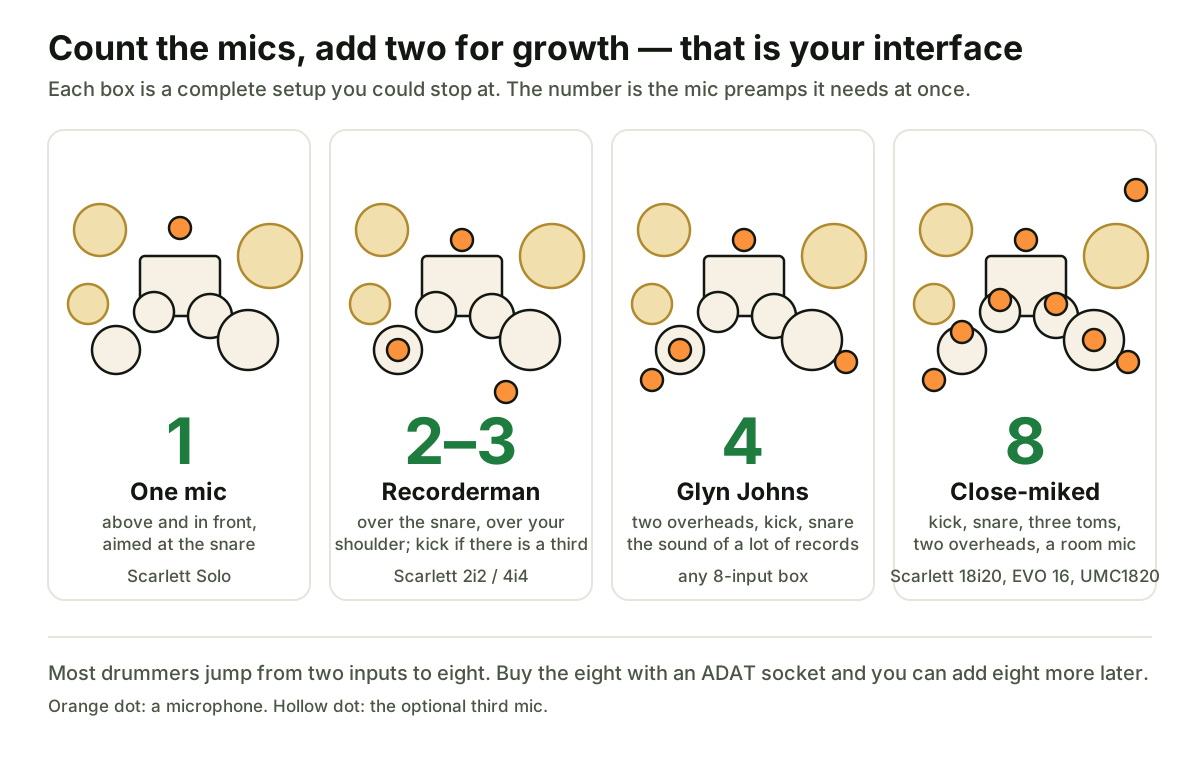
- One or two preamps covers a single mic, a stereo pair, or a mic plus a kick.
- Four preamps covers the four-mic Glyn Johns setup, which is where most home recordings get good.
- Eight preamps covers a close-miked kit: kick, snare, three toms, two overheads and a spare.
Two is the budget start, eight is the drum standard, and four is a strange middle ground that very few interfaces serve well. Most drummers jump from two to eight.
Two inputs: where to start
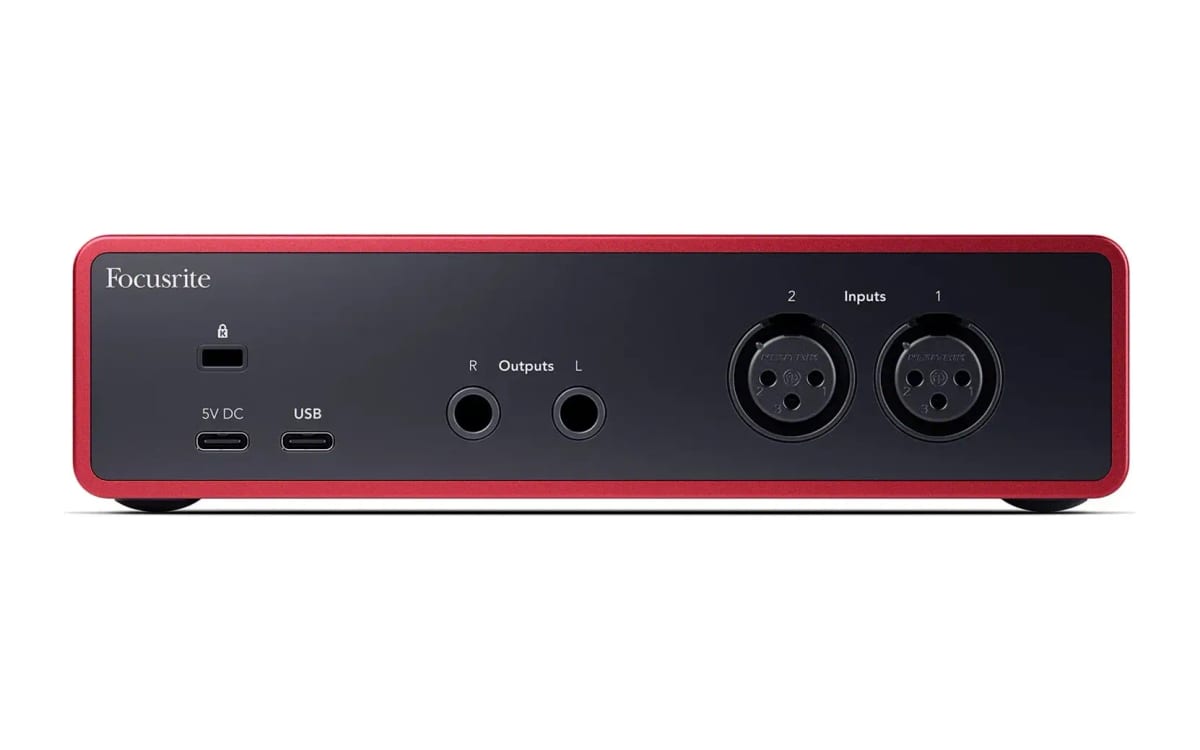
Focusrite Scarlett 2i2. The best-selling interface in the world for a reason: two good preamps, a clean driver, and it works. A Scarlett Solo has one mic input and is enough for the one-mic setup.
The Audient EVO 4 is the same shape with a slightly nicer preamp, and the Universal Audio Volt 2 adds a vintage-style compressor you will enjoy on a snare.
A two-input interface with a pair of overheads is a legitimate drum recording rig. Do not let anyone tell you that you need eight to start.
Eight inputs: the drum standard
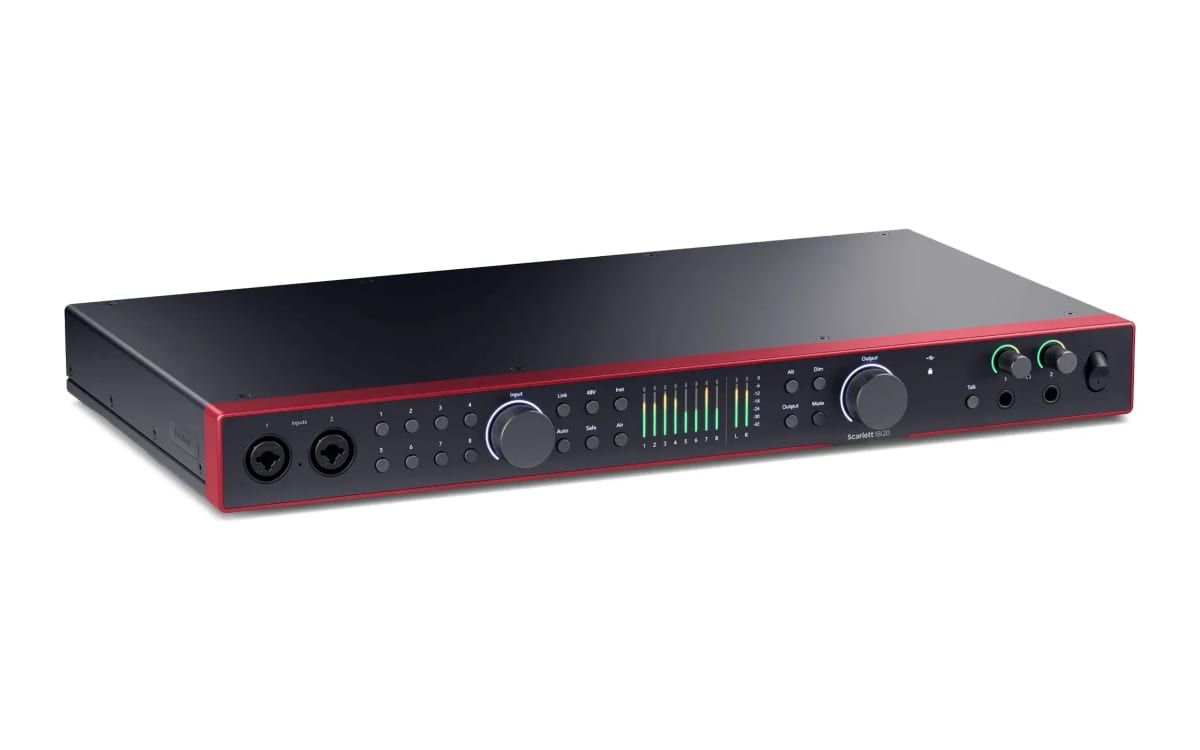
Focusrite Scarlett 18i20. Eight preamps, the same clean sound as the 2i2, an ADAT input to add eight more later, and rack-mountable. It is the default answer and there is nothing wrong with the default.
Audient EVO 16. Eight preamps with a feature drummers love: Smart Gain sets every input level automatically while you play. Hit the button, play for ten seconds, done.
PreSonus Studio 1824c. Eight preamps and a bundled DAW. A solid alternative if the price is right.
Behringer UMC1820. Eight preamps for a lot less, with Midas-designed preamps that sound far better than the price implies. The build is plastic and the software is basic, and neither matters on a recording.
Tascam US-16x08. Eight mic preamps plus eight line inputs for the same sort of money as the Behringer. The preamps are quieter than you would expect at the price.
If money is tight, the Behringer and Tascam record drums just as well as the Focusrite. The difference shows in the preamps’ headroom and the software, not in whether your kick sounds good.
Growing with ADAT
The reason the eight-input boxes have an optical socket on the back: ADAT. Plug in an eight-channel preamp like the Focusrite Scarlett OctoPre or the Behringer ADA8200 and you have sixteen inputs without replacing anything.
Sixteen is more than most home drummers ever use. But it is the reason to buy an interface with an ADAT input now rather than an interface without one, even if you only own four mics.
The electronic kit case
If you play an electronic kit, the interface question is different. The module already turns your playing into audio or MIDI, and most modern modules send both down a USB cable with no interface at all. Our e-kit to computer guide covers that path.
Where an interface helps an e-kit drummer is latency and headphone output. A decent interface’s driver is often quicker than the module’s, and the headphone amp will be better than the one in the module. A two-input interface is plenty for that.
Things to check before you buy
Direct monitoring. A switch that lets you hear the mics with no delay while you record. Every box above has it.
Phantom power. The 48V switch that condenser overheads need. Every box above has it, but check it is per-group or per-channel on the eight-input boxes, so you can run a ribbon mic without feeding it phantom.
The driver. On Windows, the interface’s own ASIO driver is what makes low latency possible. Focusrite, Audient and PreSonus are good at this. Behringer and Tascam are fine. Generic drivers are not.
Inputs on the back versus the front. Eight XLRs on the back of a rack unit is tidy. Eight on the front is easier to live with on a desk. Decide which one your room is.
Where can I buy one?
The right shop depends on where you are: Guitar Center in the Americas, Gear4music in the UK, or Thomann for Europe and the rest of the world.
Interfaces hold their value and turn up used on Reverb constantly, often from people who bought eight inputs and used two. Check the generation: a third-generation Scarlett is a bargain, a first-generation one has old drivers.
Final thoughts
Buy by preamp count. Two if you are starting with a mic or a pair, eight if you are miking the kit, and an ADAT socket on the eight so you never have to buy again. The Scarlett 18i20 is the safe answer, the Audient EVO 16 is the clever one, and the Behringer and Tascam are the ones that prove the preamps were never the problem.
Then spend what you saved on the four mics and a stand tall enough for the overheads.
Audio interface FAQs
- How many inputs do I need to record drums?
- Count your mics and add two for growth. One or two mics needs a two-input interface. The four-mic Glyn Johns setup needs four mic preamps. A fully close-miked kit with overheads and room mics needs eight, which is why the eight-preamp interfaces are the drum recording standard.
- What is the best audio interface for recording drums?
- For most home drummers, an eight-preamp interface: the Focusrite Scarlett 18i20, the Audient EVO 16, the PreSonus Studio 1824c or, on a budget, the Behringer UMC1820 or Tascam US-16x08. All give you eight mic inputs on one box. The Focusrite and Audient are the nicer preamps; the Behringer and Tascam do the job for a lot less.
- Can I record drums with a two-input interface?
- Yes, and well. Two inputs covers a stereo pair of overheads or a single mic plus a kick mic, both of which are complete setups. A Focusrite Scarlett 2i2 is the standard two-input interface and it is where most home recordings start.
- What is ADAT on an audio interface?
- An optical connection that adds eight more inputs from a separate preamp box. An interface with an ADAT input, like the Scarlett 18i20, can take a Scarlett OctoPre or a Behringer ADA8200 and jump from eight mic inputs to sixteen for the price of the extra box. It is the usual way to grow without replacing the interface.
Keep reading

All Our Buying Guides
Drum VSTs | The best sounds for your e-kit
The best drum VSTs for an electronic kit: Superior Drummer 3, EZdrummer 3, Addictive Drums 2, GetGood Drums and Steven Slate Drums compared, plus the free ones.
How to
Connect an e-kit to a computer | USB, MIDI, latency
How to connect an electronic drum kit to a computer: the USB cable, MIDI versus audio, the buffer and driver settings that kill latency, and mapping the pads.

Getting Started
Buying a drum kit for a child | A parent's guide
A parent's guide to a child's first drum kit: the right size by age, electronic or acoustic, the kits worth buying, noise, lessons and ear protection.