Buying a drum kit for a child | A parent's guide
A parent's guide to a child's first drum kit: the right size by age, electronic or acoustic, the kits worth buying, noise, lessons and ear protection.
Your child wants to play the drums. Somewhere between the excitement and the dread about the noise, you have to work out what to actually buy, and the drum shop is going to assume you know what a shell pack is.
So this is the guide for the person paying for it. The right size for the child’s age, the electronic-or-acoustic question that decides everything else, the kits worth the money, and the three cheap things that matter more than the kit.
Let’s start with the one that decides the rest.
Electronic or acoustic?
For most families, electronic. Not because it is a better instrument, but because it has a volume knob.
A drum kit is as loud as a motorbike, and the single most common reason a child stops drumming is that the kit becomes a problem for the house. An electronic kit plays into headphones, or quietly through a speaker, at any hour. It also folds into a corner and needs no tuning.
Go acoustic if you have a room the kit can live in, neighbours who will not mind, and a child who has already shown some staying power. An acoustic kit is the real thing, and a child who learns on one learns to control volume, which is a skill in itself. It is also louder than you think.
If you are torn, the electronic drum kit buying guide and the beginner drum kit buying guide go deeper on each.
The right size by age
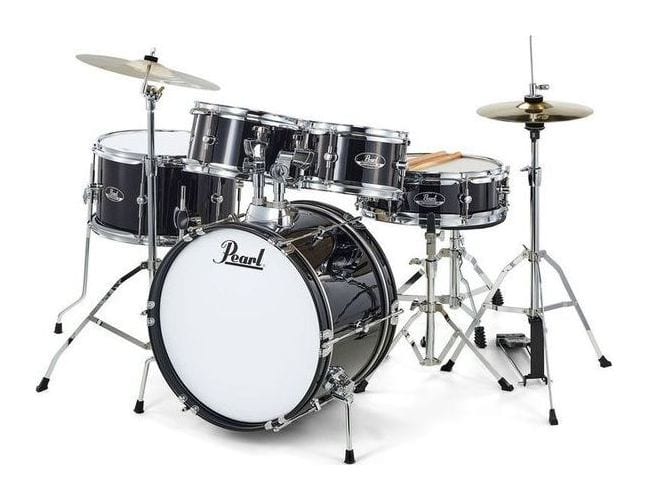
Five to seven. A junior acoustic kit with a 16-inch bass drum, or an electronic kit with the pads set low. Full-size kits are built for adult legs; a small child on one cannot reach the pedals and the throne. The Ludwig Junior and the Pearl Roadshow Jr are the two junior acoustics most shops stock, and both are real drums rather than toys.
Eight to eleven. A junior kit still fits, but a full-size electronic kit with the throne at the bottom of its range and the pads lowered will last longer. This is the age where most children start proper lessons.
Twelve and up. A full-size kit, electronic or acoustic. They will be an adult’s height before the kit wears out.
Sticks matter too: a 7A is the light, thin size for small hands, and Vic Firth make a Kidsticks model for the under-sevens. The drumstick size guide has the rest.
The kits worth buying
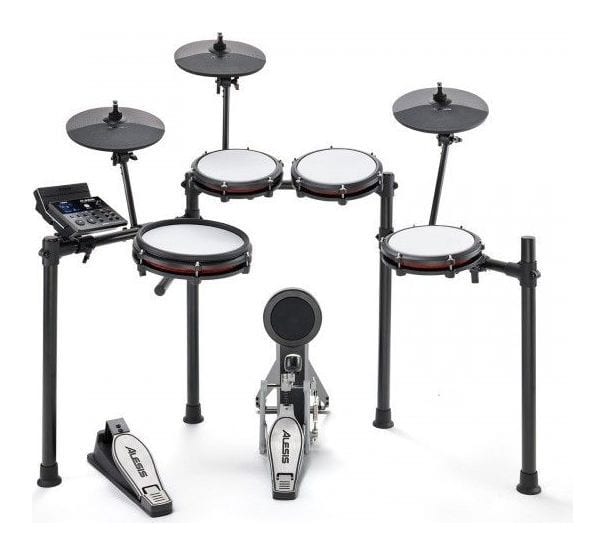
Electronic, around £300 to £450. The Alesis Nitro Max is the one most families end up with: mesh heads, a decent module, a proper kick pedal, and a price that makes it the standard. The Roland TD-02K costs a little more and buys the Roland name and a slightly nicer feel. Our head to head compares the Alesis with the Roland a step up.
Acoustic, around £350 to £450. The Pearl Roadshow is the complete beginner kit: drums, stands, pedal, cymbals, everything in one box from a company that makes kits for professionals. The Tama Imperialstar is the step up for a child who is clearly going to keep going.
Used. A second-hand Pearl Export or Tama Imperialstar often costs less than a new junior kit and will outlast it by decades. The used drums guide covers what to check.
Avoid anything under about £150 that calls itself a drum kit. The toy-shop kits with the paper-thin heads and the plastic cymbals sound bad enough to put a child off, and they break.
The three cheap things that matter more
Ear protection. Not optional, not negotiable, every session. A child’s ears are more easily damaged than an adult’s and a child will not tell you they are ringing. Children’s over-ear defenders, the kind sold for fireworks and festivals, rated around 25dB, cost less than a pair of sticks. On an electronic kit, the headphones are the protection: keep the volume at a level you would be happy with for an hour of music. The hearing guide explains why this matters so much more than it looks.
A throne that goes low enough. Most thrones bottom out too high for a small child, and a child sitting too high plays with their shoulders up and their feet dangling. Check the minimum height, or buy a junior throne. The throne guide has the height rule.
A practice pad. A rubber pad and a pair of sticks cost less than a meal out, and they are the best test of whether the interest is real: a child who plays on the pad for a month will play the kit; a child who does not, will not. The practice pad guide has the picks.
Lessons
A few lessons early with a real teacher fix the things no video can see: grip, posture, how hard to hit. Weekly is the usual pattern, and most teachers take beginners from six or seven. Between lessons, the beginner course on this site is free, played rather than read, and built for someone starting from nothing; Start Here is the six-step version.
The drum shop will know the local teachers. So will the school music department.
Noise, if you went acoustic
Low-volume cymbals and mesh heads turn an acoustic kit into one you can live with: the low volume cymbals guide and the mesh head guide cover both. A rug under the kit, a kit away from the shared wall, and an agreed hour a day do the rest.
Where can I buy one?
The right shop depends on where you are: Guitar Center in the Americas, Gear4music in the UK, or Thomann for Europe and the rest of the world.
Final thoughts
Electronic unless you have a good reason not to. The right size for the child’s legs, not the catalogue. One of the kits above rather than the one with the cartoon on the box. And ear defenders, a throne that goes low enough and a practice pad before anything else.
Then stand well back. A child with a drum kit and a reason to keep going is one of the better things that can happen to a house, once the house has got used to it.
Parents' drum kit FAQs
- What age can a child start drums?
- Around five or six on a junior kit or a pad, with short, playful sessions. Most teachers take beginners from six or seven, when a child can count to four in time and sit still for twenty minutes. There is no upper limit: a thirteen-year-old starting from nothing will be playing songs within months.
- Should I buy an electronic or acoustic drum kit for my child?
- Electronic, for most families. It has a volume knob and a headphone socket, which solves the noise problem that otherwise ends most children's drumming before it starts, it takes up less room, and a kit like the Alesis Nitro Max costs about the same as a decent acoustic beginner kit. Go acoustic if you have the space, the neighbours and a child who has already shown they will stick at it.
- How much does a child's first drum kit cost?
- Budget somewhere between £250 and £450 for a kit worth having, plus £50 or so for a throne, sticks and ear protection. Junior acoustic kits start lower; the electronic kits worth buying start around £300. Below £200 the kits tend to be toys with drum shapes, and they put children off.
- Do children need ear protection for drums?
- Yes, every time, with no exceptions. A child's ears are more easily damaged than an adult's and a child will not tell you they are ringing. Over-ear defenders made for children, rated around 25dB, cost less than a pair of sticks. For an electronic kit, keep the headphone volume where you would be happy to listen to music for an hour.
Keep reading
All Our Buying Guides
Audio interfaces for drums | How many inputs?
Which audio interface to buy for recording drums: how many mic inputs you need, the two- and eight-input standards, ADAT expansion and the e-kit case.

All Our Buying Guides
Drum VSTs | The best sounds for your e-kit
The best drum VSTs for an electronic kit: Superior Drummer 3, EZdrummer 3, Addictive Drums 2, GetGood Drums and Steven Slate Drums compared, plus the free ones.
How to
Connect an e-kit to a computer | USB, MIDI, latency
How to connect an electronic drum kit to a computer: the USB cable, MIDI versus audio, the buffer and driver settings that kill latency, and mapping the pads.