Drummers and hearing loss | The numbers, and the fix
How loud a drum kit really is, how long your ears can take it, what the research says, the first signs of damage, and the one habit that fixes it.

Every drummer knows the kit is loud. Very few know how loud, in numbers, or what the numbers mean for how long you have before it costs you.
So this is the short, unsentimental version. How loud, how long, what the research says, how to tell if it is already happening, and the one thing that fixes it.
None of it is medical advice. If your ears ring and do not stop, see an audiologist this week, not next year.
How loud is a drum kit?
Sound is measured in decibels, and the scale is logarithmic, which is what makes it confusing. An increase of 10dB sounds about twice as loud and carries ten times the energy.
Some reference points:
- 85dB: the level at which UK and US workplace rules require hearing protection for an eight-hour day. Heavy traffic, a busy restaurant kitchen.
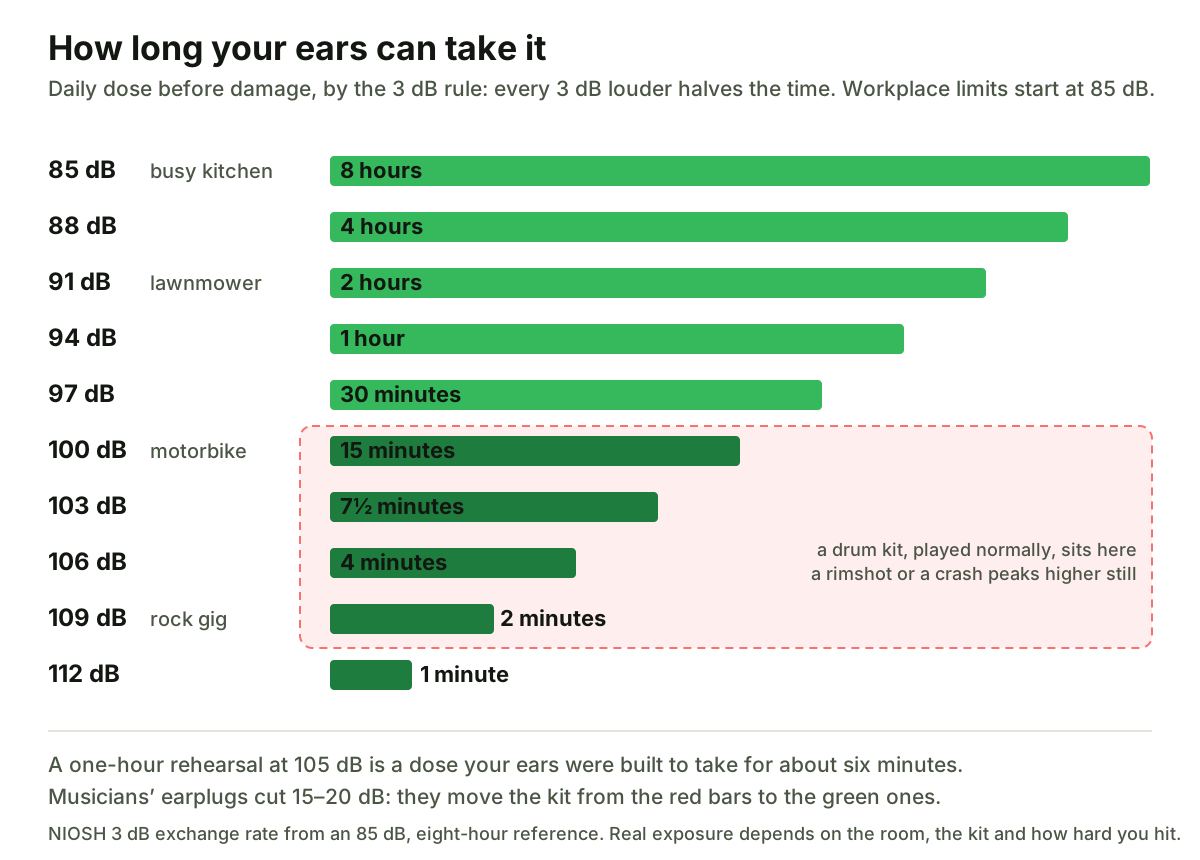
- 100dB: a drum kit played at moderate volume, measured at the drummer’s ears. A motorbike at close range.
- 110dB: the same kit played hard. A rock gig from the front row.
- 120dB and above: a rimshot, a crash cymbal, a snare in a small tiled room. The threshold of pain is around 130.
The number that matters is not the peak; it is the dose. Your ears can take 85dB for eight hours. Every 3dB above that halves the time. At 100dB that is about fifteen minutes. At 110dB it is under two.
A one-hour rehearsal at 105dB is a dose your ears were built to take for about seven minutes.
What the research says
Musicians are a studied group, because the damage is predictable. The largest study is a German one that followed several million people through their health insurance records and compared the professional musicians among them with everyone else. Musicians were nearly four times as likely to be diagnosed with noise-induced hearing loss, and more than half again as likely to have tinnitus.
Drummers do not get a separate line in most of these studies, but they do not need one. The drummer sits inside the loudest instrument on stage, closer to the cymbals than anyone else, and plays it with their arms.
What damage feels like
Ringing after playing. The hiss or whine in the hours after a loud session is a temporary threshold shift: the inner ear’s hair cells, bent flat by the noise, recovering. If it fades by the morning, it was a warning. If you get the warning every week, you are spending something you cannot refund.
Tinnitus that stays. The ringing that is there in a quiet room, at night, every night. Common among drummers, often permanent, and the thing almost every older drummer will tell you to avoid if you ask them.
Struggling in noise. Following one voice in a busy pub becomes hard years before a hearing test shows much, because the damage starts at the frequencies where consonants live.
Turning things up. If your family tells you the television is loud, that is a hearing test.
Phil Collins has talked about his hearing for decades, and he is not the only one: the list of drummers with tinnitus is most of the drummers you have heard of.
The fix
Cut the dose at the ear, every time, from the first count-in. That is the whole fix, and it costs about what a pair of sticks does.
A pair of musicians’ earplugs cuts 15 to 20dB evenly, which turns a 110dB kit into a 90dB one: loud, but a dose your ears can take for a rehearsal. The hearing protection guide goes through the options, from universal plugs to custom moulds to the Vic Firth isolation headphones that are the right answer for practising at home.
Three habits that help on top of the plugs:
- Get the kit out of the corner. A kit against two hard walls in a small room is louder at the throne than the same kit in the middle of a bigger one. Rugs and soft furniture matter.
- Play quieter. Dynamics are a skill, and the drummers with the best control play most of a set well below full volume. The tempo trainer’s accents are a place to practise it.
- Keep the e-kit sensible. An electronic kit in headphones can be turned up past anything an acoustic kit does, and the damage is identical.
Children
A child’s ears are more vulnerable than an adult’s and a child cannot tell you their ears are ringing. Ear defenders from the first lesson, every lesson, no exceptions. The parents’ guide covers it.
When to see someone
Ringing that lasts more than a day or two after playing. Any sudden change in hearing in one ear, which needs a doctor within days rather than weeks. Difficulty hearing conversation that your friends have noticed. A hearing test is quick, often free, and gives you a baseline to measure against in five years.
Final thoughts
The kit is a 100dB instrument, your ears have a budget of a few minutes a day at that level, and the budget never refills. Every drummer in their sixties who can still hear the hi-hat is one who put plugs in at twenty.
Buy the plugs. Wear them from the count-in. The rest of the drummer health section is about things that can be fixed later; this is the one that cannot.
Drummer hearing FAQs
- How loud is a drum kit?
- Loud enough to damage hearing in minutes. A kit played at normal rock volume runs around 100 to 110 decibels at the drummer's ears, with rimshots and crashes peaking higher. For comparison, 85 decibels is the level at which workplaces have to start protecting staff, and every 3 decibels above that halves the time your ears can take.
- Do drummers go deaf?
- Not deaf, usually, but drummers lose hearing earlier and faster than people who do not play. A large German insurance study found professional musicians were nearly four times as likely to develop noise-induced hearing loss as the general population, and well over half again as likely to have tinnitus. Drummers sit next to the loudest instrument in the band.
- What are the first signs of hearing damage from drumming?
- Ringing or hissing after playing that fades by the morning. That is a temporary threshold shift, and it is your ears telling you the dose was too high. Repeat it enough and the ringing stops fading. Difficulty following conversation in a noisy room is usually the next sign, and it arrives years before a hearing test flags anything.
- Can hearing recover after loud drumming?
- From a single loud session, usually — the ringing and muffled feeling clear within a day or two. What does not recover is the cumulative damage to the hair cells in the inner ear, which do not grow back. Every loud session spends some of a budget that never refills, which is why protection matters from the first lesson rather than the first symptom.
Keep reading

All Our Buying Guides
Audio interfaces for drums | How many inputs?
Which audio interface to buy for recording drums: how many mic inputs you need, the two- and eight-input standards, ADAT expansion and the e-kit case.

All Our Buying Guides
Drum VSTs | The best sounds for your e-kit
The best drum VSTs for an electronic kit: Superior Drummer 3, EZdrummer 3, Addictive Drums 2, GetGood Drums and Steven Slate Drums compared, plus the free ones.

How to
Connect an e-kit to a computer | USB, MIDI, latency
How to connect an electronic drum kit to a computer: the USB cable, MIDI versus audio, the buffer and driver settings that kill latency, and mapping the pads.