Headphones for electronic drums | What works
The best headphones for electronic drums: closed-back studio pairs, the drum-specific models with isolation built in, and why Bluetooth is out.
An electronic kit goes into your ears or it goes nowhere. The headphones are not an accessory to the kit: they are the kit’s speaker, and the pair you reach for decides whether it feels like playing drums or like playing a game about drums.
Most people plug in whatever they own. Earbuds, a Bluetooth pair, something from a flight. All three are wrong, and two of them are wrong in ways that make the kit unplayable.
So what works? Let’s start with the rule, then the shortlist.
The rule: wired, closed-back, under 100 ohms
Wired, because Bluetooth adds a delay that a drummer cannot play through. Somewhere between a tenth and a quarter of a second between hitting the pad and hearing it. There is no Bluetooth headphone that fixes this, including the expensive ones. A cable is the only answer.
Closed-back, because an electronic kit is not silent. The pads thwack, the kick pedal thumps, the hi-hat clatters, and open-back headphones let all of it straight in on top of the sound. Closed backs seal that out, which also means you can play quieter.
Under 100 ohms, because a module’s headphone socket is not powerful. High-impedance studio headphones, the 250 and 600 ohm versions, run quiet and thin from it. The 32 to 80 ohm versions of the same models are the ones to buy.
Everything below follows those three.
The studio standards
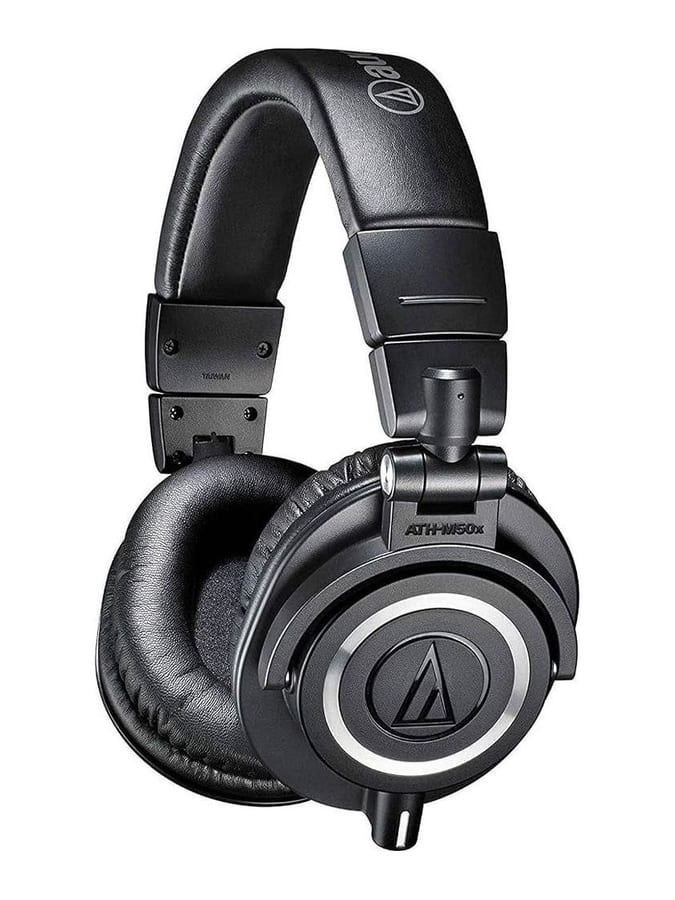
Audio-Technica ATH-M50x. The one you see in every home studio, and the right first pair for an e-kit. Closed, punchy, 38 ohms, folds up, and the cable detaches so a stick through it does not kill the headphones. A touch bass-heavy, which on drums is no bad thing.
Sony MDR-7506. Cheaper, lighter, flatter, and has been in studios since the nineties. Less bass than the M50x, more honesty. The coiled cable is long enough to reach the module from the throne, which matters more than it sounds.
Beyerdynamic DT 770 Pro, 80 ohm. The most comfortable of the lot for a long session, with velour pads that do not sweat, and a big, open sound for a closed headphone. Buy the 80 ohm version; the 250 is too quiet from a module.
Sennheiser HD 280 Pro. The isolation champion of the four. Clamps hard, seals well, and shuts out more pad noise than anything else at the price. The sound is dry and accurate rather than exciting.
Any of these four is a real upgrade on whatever you were using. The M50x is the default; the 7506 is the budget pick; the DT 770 is the comfortable one.
The drum-specific pairs
Three companies make headphones for drummers, and the difference is isolation. These are built to block an acoustic kit, with the sound quality second.
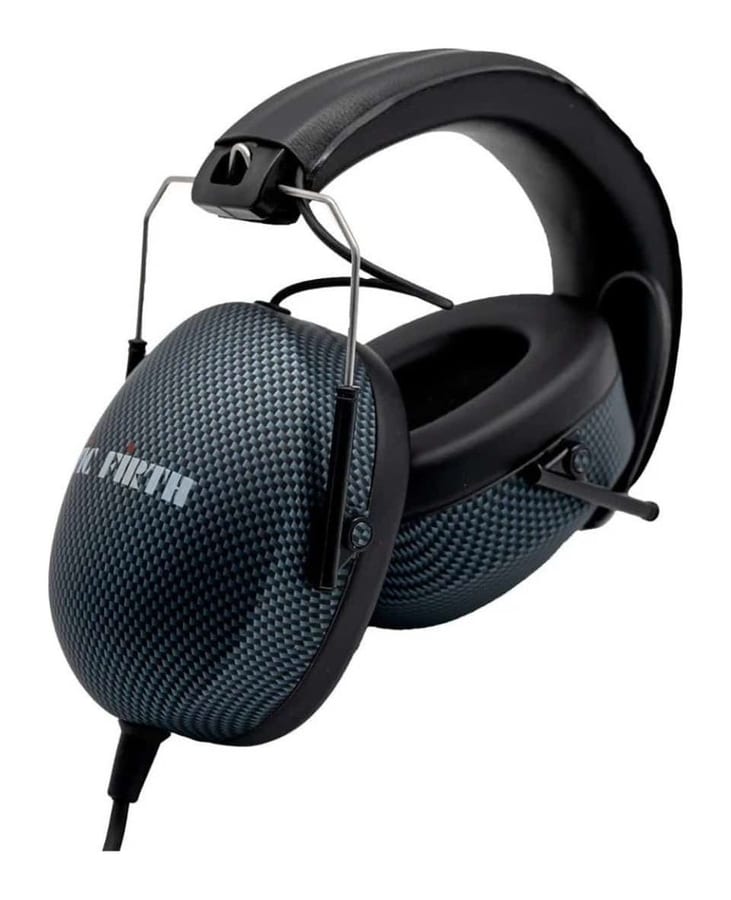
Vic Firth SIH2. Isolation headphones with around 25dB of attenuation and a proper headphone driver inside. If you play an acoustic kit as well as an electronic one, this is the pair: it protects your ears on the acoustic and plays the e-kit on the electronic. The sound is fine rather than great. The hearing protection guide has more on this category.
Roland RH-300V. Roland’s own, tuned for V-Drums, comfortable, and a good match for the module’s output. Pricier than the studio pairs for similar sound.
Alesis DRP100. Closed, isolating, and cheap. A reasonable pair for a beginner’s kit; the studio pairs sound better for a little more.
For an e-kit on its own, the studio pairs win on sound. Buy the drum-specific pairs for the isolation, and buy the SIH2 if you need both.
Earbuds and in-ears
Wired earbuds work, in the sense that there is no delay. They do not isolate, so the pad noise is as loud as the drums.
Proper in-ear monitors do isolate, and a pair of Shure SE215s with foam tips blocks as much as a closed-back headphone while being far lighter on your head. They are what you will wear if you ever play with in-ears on stage, and they are a good e-kit pair for the same reason. A step up in price from the studio headphones, and the cable sits behind the ear rather than dangling into the snare.
Plugging in
The module’s headphone socket is fine for most pairs. If you have gone the VST route, the headphones plug into the computer or the audio interface, not the module, because that is where the sound now is. An interface’s headphone amp is better than a module’s, and it drives the higher-impedance pairs properly. The audio interface guide covers which.
Whatever you plug into, a quarter-inch adapter lives permanently on the headphone cable, because every module and interface uses the big socket.
Where can I buy them?
The right shop depends on where you are: Guitar Center in the Americas, Gear4music in the UK, or Thomann for Europe and the rest of the world.
Final thoughts
Wired, closed, low impedance. Within those rules the ATH-M50x is the pair most drummers should buy, the MDR-7506 is the pair for less money, and the Vic Firth SIH2 is the pair for drummers who also hit real drums.
Then keep the volume sensible. An electronic kit in headphones can be turned up past anything an acoustic kit would do to your ears, and the damage is the same — the hearing guide has the numbers.
E-kit headphone FAQs
- Can I use Bluetooth headphones with electronic drums?
- No, not for playing. Bluetooth adds somewhere between 100 and 250 milliseconds of delay, and a drummer hears anything over about ten. The pad hit and the sound arrive so far apart that it is unplayable. Wired headphones only — Bluetooth is fine for listening back to a recording afterwards.
- What are the best headphones for an electronic drum kit?
- A closed-back studio pair: the Audio-Technica ATH-M50x, the Sony MDR-7506, the Beyerdynamic DT 770 Pro or the Sennheiser HD 280 Pro. All four isolate the pad noise, take the volume a module puts out, and tell you what the kit really sounds like. The Vic Firth SIH2 is the one to pick if you also play an acoustic kit, because it is built as hearing protection first.
- Do I need special drum headphones?
- Not for an electronic kit on its own. The drum-branded pairs — Vic Firth SIH2, Roland RH-300V, Alesis DRP100 — add isolation, which matters a lot next to an acoustic kit and a little next to an electronic one. For an e-kit alone, a good closed-back studio pair sounds better for the same money.
- Why are my headphones so quiet on my drum module?
- Impedance, usually. Headphones rated at 250 ohms or more need more power than a module's headphone socket gives, so they run quiet. Pick a pair rated at 80 ohms or lower, or run the headphones from an audio interface or a small headphone amp instead of the module.
Keep reading
All Our Buying Guides
Audio interfaces for drums | How many inputs?
Which audio interface to buy for recording drums: how many mic inputs you need, the two- and eight-input standards, ADAT expansion and the e-kit case.
All Our Buying Guides
Drum VSTs | The best sounds for your e-kit
The best drum VSTs for an electronic kit: Superior Drummer 3, EZdrummer 3, Addictive Drums 2, GetGood Drums and Steven Slate Drums compared, plus the free ones.
How to
Connect an e-kit to a computer | USB, MIDI, latency
How to connect an electronic drum kit to a computer: the USB cable, MIDI versus audio, the buffer and driver settings that kill latency, and mapping the pads.