Hearing protection for drummers | Plugs to in-ears
Hearing protection drummers will actually wear: musicians' earplugs, custom moulds, isolation headphones and in-ears, compared by how much they cut.

A drum kit runs at the volume of a chainsaw. Not a loud one, an ordinary one. Every drummer has been told this and most of us nodded and carried on, because hearing damage is slow and the gig is tonight.
The damage is also permanent. The hearing loss guide has the numbers; this guide is about the gear, because the only protection that works is the protection you put in before the count-in.
So what should you buy, and what will you actually wear? Let’s go through the options from the pocket to the audiologist.
How much do you need to cut?
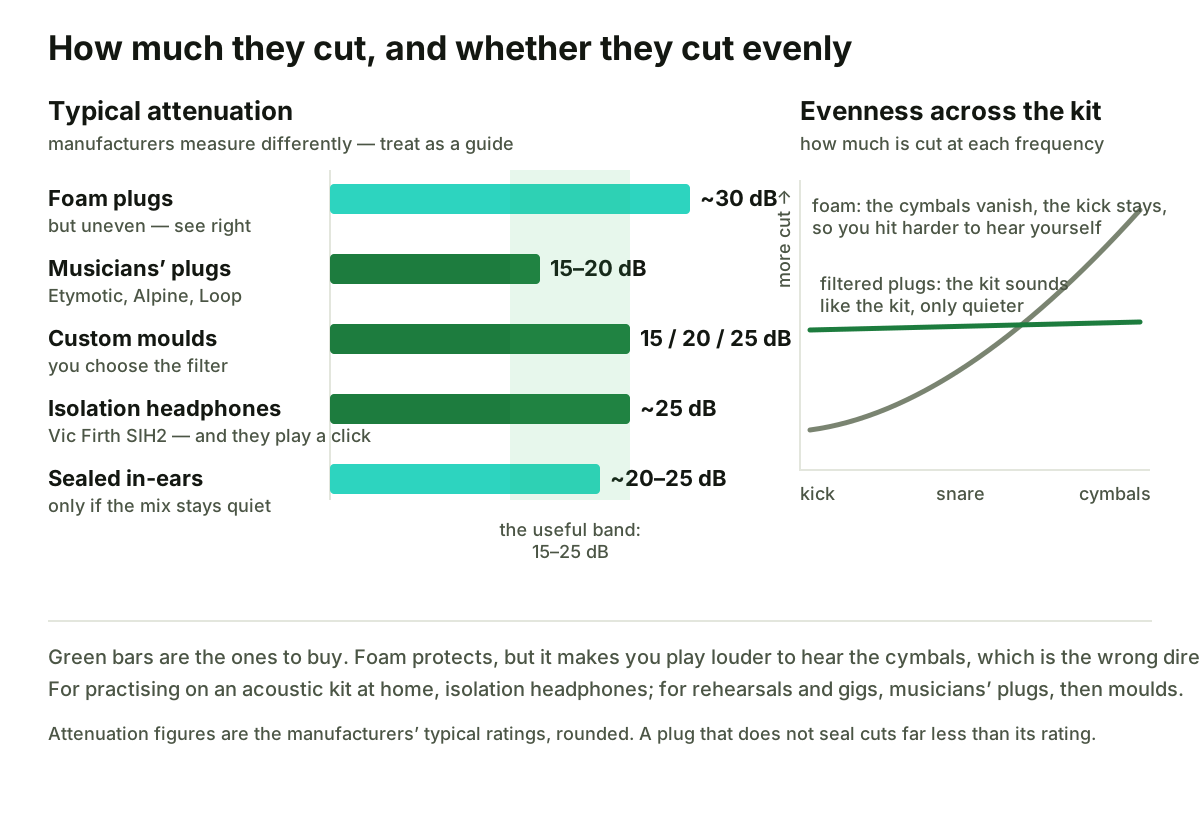
Somewhere between 15 and 25dB. A kit in a small room peaks well above 110dB, and a cut of 20dB brings it down to roughly the level of heavy traffic, which your ears can take for a rehearsal.
Every product below has a number, and the number is the point. The manufacturers measure it differently, so treat the figures as a guide rather than a spec, and go by whether a practice leaves your ears ringing. If it does, the number was not enough.
Foam plugs
The pound-a-pair plugs from the chemist. They cut a lot, often 30dB or more, and they cut it unevenly: the top end goes, the low end stays, and the kit sounds like it is underwater. Drummers respond by hitting harder, which is the opposite of the point.
Keep a pair in the stick bag for emergencies. Do not make them the plan.
Musicians’ earplugs
The right answer for most drummers. A silicone plug with a filter in the middle that cuts every frequency by roughly the same amount, so the kit sounds like the kit, only quieter. You can still hear the hi-hat, the vocalist and the drummer next door.
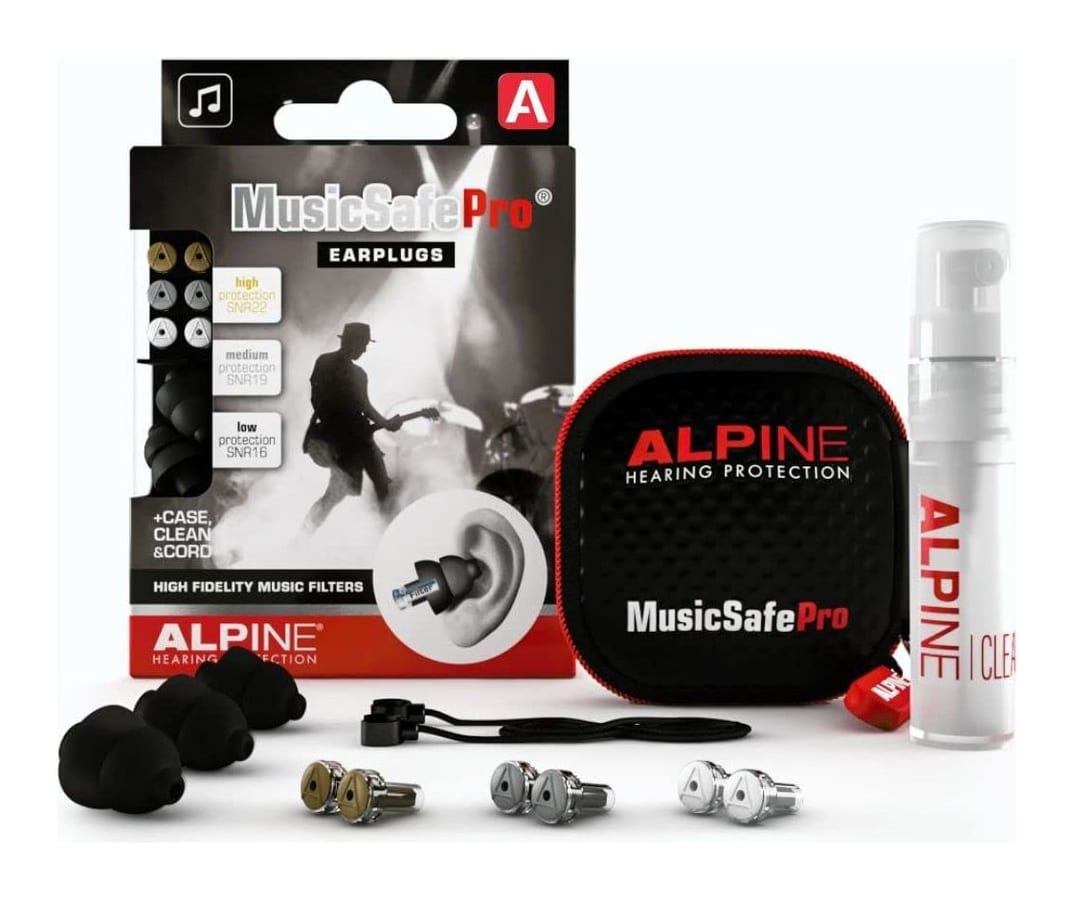
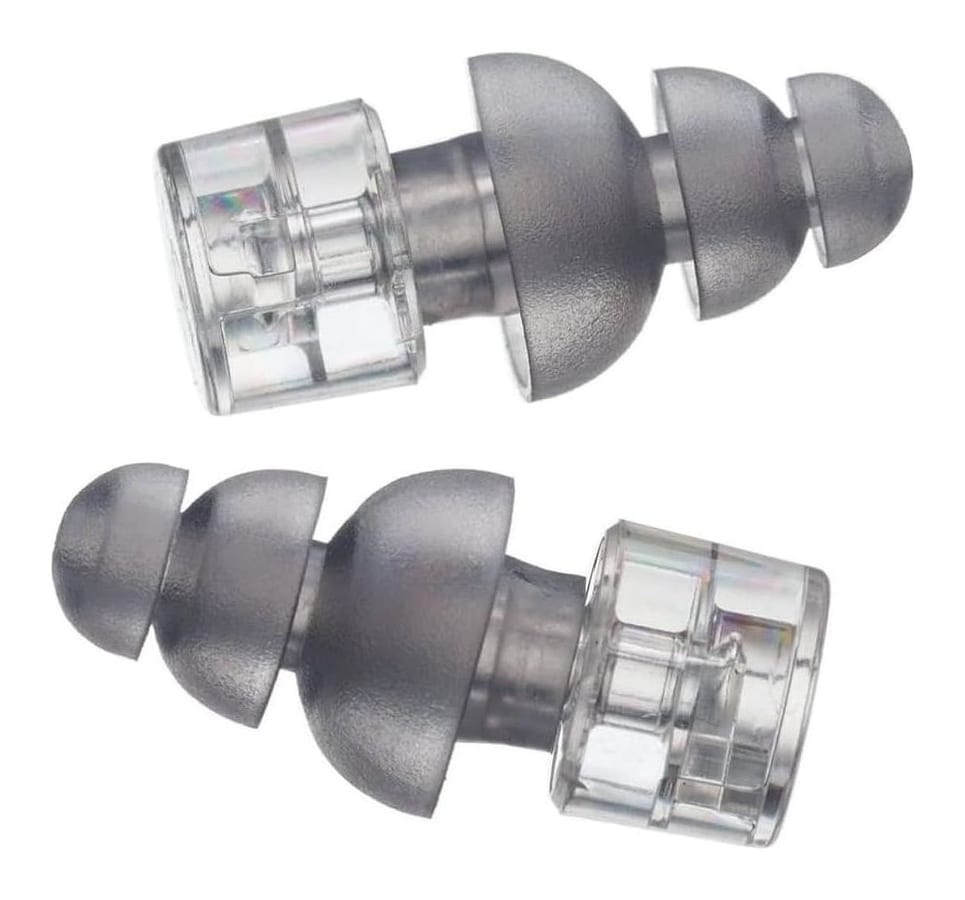
- Etymotic ER20XS. The standard for years. Around 20dB of flat-ish cut, a low profile that fits under headphones, and a case that goes on a keyring.
- Alpine MusicSafe Pro. Comes with interchangeable filters at different levels, so you can run a lighter cut for a quiet rehearsal and a heavier one for a loud gig.
- Loop Experience. The ones that look like jewellery, with a ring you can grab to get them out. Around 18dB, comfortable enough to forget, which is the reason people wear them.
- Vic Firth High-Fidelity Hearing Protection. Vic Firth’s own, with a flat filter and a drummer’s price.
Any of them is a massive step up from foam, and they cost about the same as a pair of sticks. Buy two pairs, because you will lose one.
Custom-moulded plugs
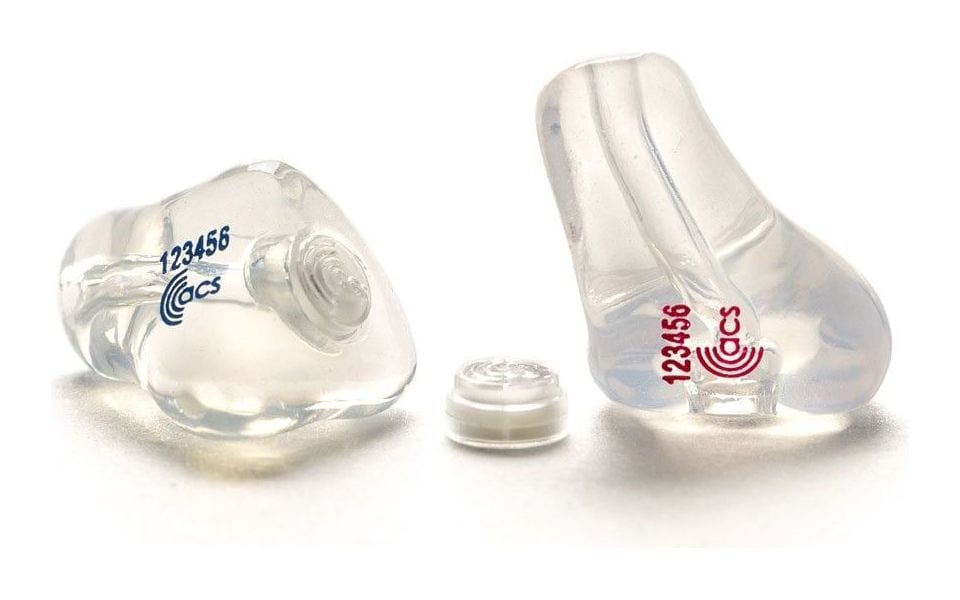
An audiologist takes an impression of your ear canal and makes plugs that fit exactly, with a filter rated at 15, 20 or 25dB that you choose. ACS and a number of other labs make them, and most good hearing clinics will do the impressions.
The seal is better than any universal plug, so the cut is consistent and they stay comfortable for hours. They are the plugs touring drummers wear. They also cost several times what the universal ones do and need remaking every few years as your ears change shape.
The right order: universal plugs first, moulds once you have proven to yourself that you wear them.
Isolation headphones
Ear defenders with a speaker inside. They block the kit like a pair of workshop ear protectors, and they play a click, a backing track or your electronic kit through the drivers.
Vic Firth SIH2. The one. Around 25dB of isolation and a usable headphone, for about the price of a pair of musicians’ plugs and a decent cable. If you practise on an acoustic kit at home, this is the single most useful thing in this guide.
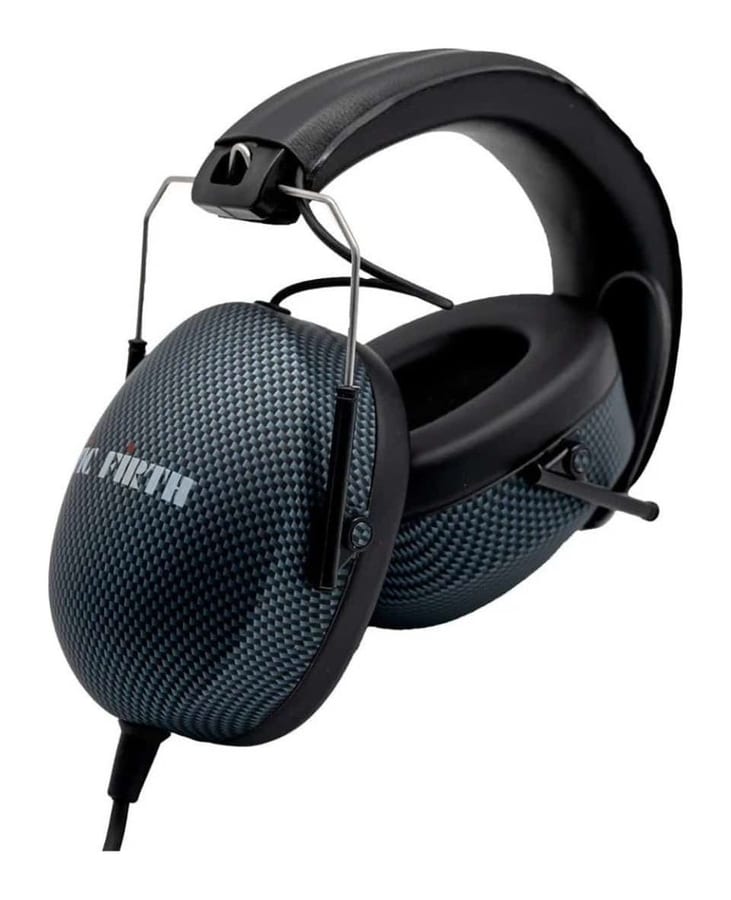
KAT Percussion KTUI26 and the similar budget pairs do the same job with a cheaper driver.
They are big, they are warm, and they are the only option that protects your ears and plays music into them at once. For a practice room they are unbeatable. For a gig, most drummers move on to in-ears.
In-ear monitors
Earphones that seal the canal like an earplug and play the monitor mix. The seal does the protecting, the drivers do the playing, and you control the volume. This is how most touring drummers now hear the band.
Shure SE215. The entry point: a proper seal with foam tips, a cable that loops over the ear, and enough isolation to replace plugs on a stage. A step up in price from the plugs; a step down from custom moulds.
Custom-moulded in-ears from the same labs that make the plugs are the pro version, and they cost like it.
The thing to know about in-ears: they only protect you if you keep the monitor mix quiet. Turn them up to compete with the stage and you have paid for earplugs and then defeated them.
What to wear where
- Practising at home on an acoustic kit: Vic Firth SIH2.
- Rehearsals and small gigs: musicians’ earplugs, Etymotic or Alpine.
- Regular gigging: custom moulds, or in-ears with a sensible mix.
- An electronic kit: no plugs needed, but keep the headphones at a volume that would be fine for an hour of music. The e-kit headphones guide covers the pairs.
- Teaching a child: proper ear defenders, from the first lesson, every lesson. The parents’ guide explains why.
Where can I buy them?
The right shop depends on where you are: Guitar Center in the Americas, Gear4music in the UK, or Thomann for Europe and the rest of the world.
Final thoughts
Fifteen to twenty decibels, evenly, every time you sit down. The musicians’ plugs do it for the price of sticks, the isolation headphones do it while playing you a click, and the moulds do it for years.
Pick the one you will wear, and wear it from the count-in. The hearing loss guide is where the numbers are, and it is not a long read, because the conclusion is the same every time.
Hearing protection FAQs
- What are the best earplugs for drummers?
- For most drummers, a pair of musicians' earplugs with a flat filter: Etymotic ER20XS, Alpine MusicSafe Pro or Loop Experience. They cut around 15 to 20dB evenly across the frequencies, so the kit sounds like the kit, only quieter. Custom-moulded plugs from an audiologist are the upgrade once you know you will wear them.
- Are foam earplugs good enough for drumming?
- They protect your ears, and that beats nothing. But foam plugs cut the high frequencies far more than the lows, so the cymbals vanish and the kick stays, which makes you hit harder to hear yourself. Musicians' plugs with a flat filter fix that for not much more money.
- What are isolation headphones for drummers?
- Headphones built as ear defenders first, with a speaker inside. The Vic Firth SIH2 is the standard: around 25dB of isolation, and a headphone driver so you can play along to music or a click. They are the best option for practising at home on an acoustic kit, and the only one that protects and plays at once.
- Do drummers need custom-moulded earplugs?
- Need, no. Want, usually. Custom moulds from an audiologist seal better than universal plugs, so the attenuation is more consistent and they are comfortable for a four-hour gig. They cost several times the universal plugs and need remaking every few years as your ears change. Buy the universal ones first and the moulds once you have proven you wear them.
Keep reading

All Our Buying Guides
Audio interfaces for drums | How many inputs?
Which audio interface to buy for recording drums: how many mic inputs you need, the two- and eight-input standards, ADAT expansion and the e-kit case.

All Our Buying Guides
Drum VSTs | The best sounds for your e-kit
The best drum VSTs for an electronic kit: Superior Drummer 3, EZdrummer 3, Addictive Drums 2, GetGood Drums and Steven Slate Drums compared, plus the free ones.

How to
Connect an e-kit to a computer | USB, MIDI, latency
How to connect an electronic drum kit to a computer: the USB cable, MIDI versus audio, the buffer and driver settings that kill latency, and mapping the pads.