Beginner drum kits | How to buy your first kit
Everything you need to buy your first drum kit with confidence — what's in the box, what the sizes mean, and the kits we'd actually spend money on.
Buying your first drum kit should be one of the best days of your life. Ask any drummer about their first kit and watch their face change.
It is also the purchase where the drum industry is at its most confusing. Shell packs, complete kits, “fusion” sizes, hardware packs, cymbals that come with the kit and cymbals that very much don’t — there is a lot of jargon between you and actually hitting things.
So let’s cut through it. What do you actually get, what do the numbers mean, and which kits are worth your money in 2026? Let’s find out.
What actually comes in the box?
This is the single biggest trap for a first-time buyer, so we’re putting it first. Drum kits are sold three different ways:
Complete kits include the drums, the stands, the pedals, the cymbals — everything except (usually) a throne and sticks. This is what you want as a beginner. The Pearl Roadshow is the classic example.
Kits with hardware include the drums and the stands, but no cymbals. The Pearl Export is sold this way. Budget another chunk for cymbals — our cymbal buying guide covers that.
Shell packs are just the drums. No stands, no pedals, no cymbals. The pictures on the website will show a gorgeous full kit; the box will contain five drums and silence. Shell packs are for drummers who already own everything else.
Always read the “what’s included” list, never the photo. And almost nothing includes a throne or sticks, so leave £50 or so in the budget for those.
What do the sizes mean?
Drum sizes are written as diameter x depth in inches, and the number that matters most is the bass drum.
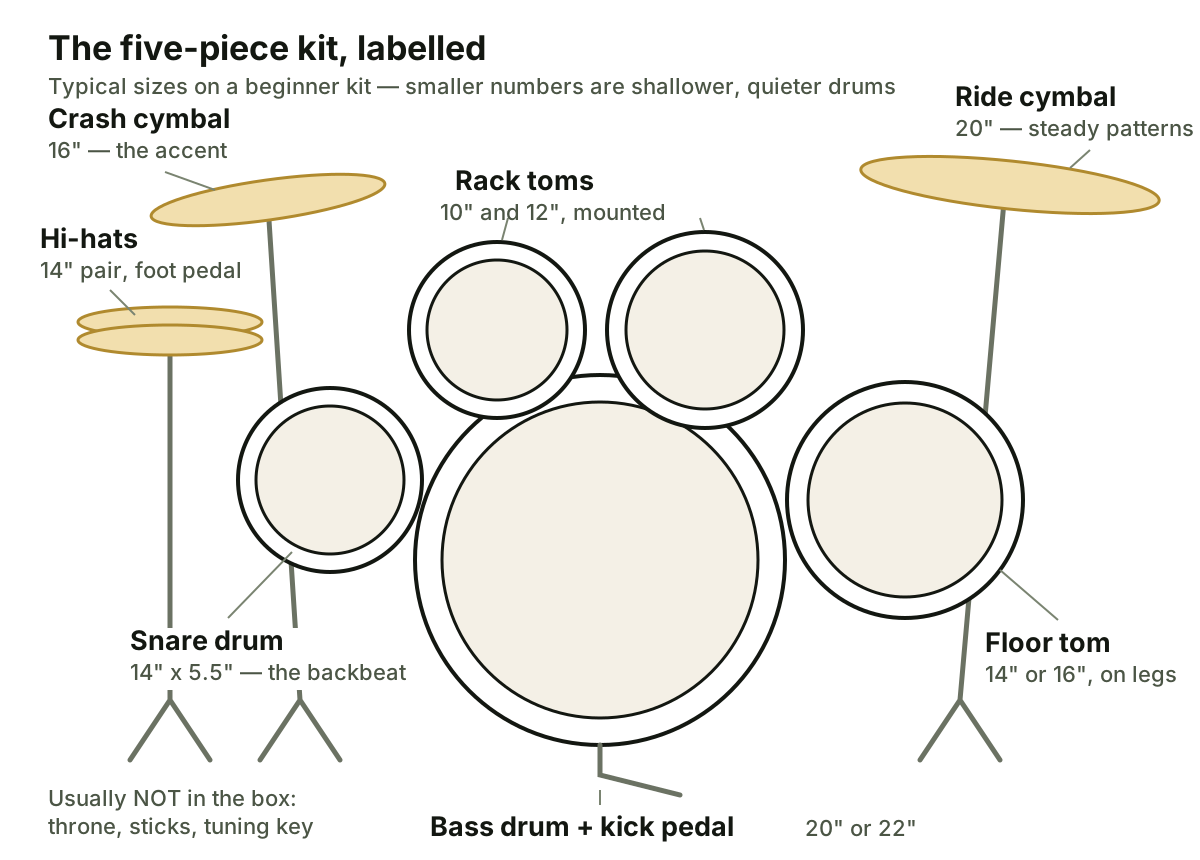
A 22” bass drum is the standard “rock” size — big, deep and what most full-size kits ship with. A 20” kick (often sold as a “fusion” configuration with 10” and 12” toms) is slightly smaller, slightly more focused, and a great shout for smaller rooms and smaller drummers. Both are correct. Don’t let anyone tell you otherwise.
For kids roughly ten and under, junior kits with 16” or 18” bass drums exist and are worth it — a small drummer fighting a full-size kit learns bad habits before they learn drums.
How much should you spend on a first drum kit?
Here’s the honest version of the market in 2026:
| Budget | What you get | Our picks |
|---|---|---|
| Under £250 / $300 | Unbranded kits that fight you — loose fittings, paper-thin cymbals | Buy used instead |
| £300–£450 / $400–$550 | Proper complete kits from real brands | Pearl Roadshow, Ludwig Accent |
| £500–£750 / $650–$950 | Better shells, noticeably better hardware and cymbals | Tama Imperialstar, Yamaha Rydeen |
| £700+ / $900+ | Intermediate kits you’ll never outgrow, cymbals sold separately | Pearl Export, Tama Superstar Classic |
The £300–£450 tier is where we’d point most adult beginners. Below that, the money saved comes straight out of the parts you touch — pedals that squeak, hi-hat stands that wobble, cymbals that sound like bin lids. A bad kit has ended more drumming careers than a lack of talent ever has.
The kits we’d actually buy
Pearl Roadshow — the default first kit
There’s a reason every drum shop keeps a Roadshow on the floor. Around £350–£400 / $450–$500 gets you real poplar shells, all the stands, a kick pedal, hi-hats and a crash-ride, from the same company that makes kits for touring professionals. The included cymbals are the weak point — they always are at this price — but everything else will survive years of enthusiasm.
Ludwig Accent Drive — the same idea, different badge
Ludwig’s complete kit undercuts the Roadshow slightly in most shops and carries the most famous name in drumming. Sound and build are much of a muchness with the Pearl — buy whichever is cheaper the week you’re shopping, in the finish you’d rather look at every day. You will look at it a lot.
Tama Imperialstar — the one worth stretching for
The Tama Imperialstar is the best answer to “buy once, cry once” in beginner drums. Around £600–£700 / $750–$850 buys 100% poplar shells, Tama’s genuinely excellent hardware — the kick pedal is a class above anything else at the price — and, crucially, Meinl HCS cymbals including a separate ride. It’s the only kit in this class where the included cymbals are not a punchline. We wrote a full Imperialstar guide if you want the deep dive.
Pearl Export — the step-up
The best-selling drum kit in history, and our pick if you already know you’re serious. Around £650–£750 / $800–$900 with hardware, but cymbals are extra — a Meinl HCS or Sabian B8X pack adds £130–£200. You get poplar/mahogany shells with Pearl’s pro-level mounting system, and a kit that will still be your kit in ten years. Our Pearl Export guide has the full story.
The right shop depends on where you are: Guitar Center in the Americas, Gear4music in the UK, or Thomann for Europe and the rest of the world.
Should you buy a used first kit?
Honestly? Quite possibly, yes. Drums age brilliantly, and the used market is full of barely-played kits from the previous wave of beginners. A used Export with decent cymbals often costs the same as a new Roadshow, and it’s simply a better kit.
The catch is that you’re the quality control, and as a beginner you don’t yet know what a stripped lug or a keyholed cymbal looks like. We wrote a whole guide on exactly this — buying used drums online — including the eight questions to ask every seller. Read it before you open Facebook Marketplace.
What about the noise?
The question every new drummer’s household asks. An acoustic kit is loud — genuinely, neighbour-botheringly loud — and pretending otherwise causes arguments.
You have two good options. Quieten the acoustic kit with mesh heads and low volume cymbals, which keeps the real feel at a fraction of the volume. Or go electronic from day one — our electronic drum kit buying guide covers that whole world, and for a flat or a shared wall it’s often the right call.
The first upgrades that actually matter
Whatever you buy, the same two upgrades transform a beginner kit:
- Heads. Stock beginner heads are thin and lifeless, and they’re the entire top surface of your sound. £80 or so of proper heads — see our drum head buying guide — plus twenty minutes with the drum tuner is the biggest sound-per-pound improvement in drumming.
- Cymbals. When the starter cymbals begin to annoy you (they will), that’s the sign you’re progressing. Upgrade the hi-hats first — you play them more than everything else combined.
What you should not do is buy more drums. A well-tuned five-piece with decent cymbals beats a wall of toms every single time.
Final thoughts
Buy a complete kit from a real brand, in the £300–£450 range if the budget is tight and the Imperialstar tier if it isn’t. Spend what you saved on decent heads, a comfortable throne and a couple of lessons. Then play the thing every day.
Not sure which way to jump? Tell the Gear Guru your budget and situation and it’ll point you at a shortlist — or have a look at what the pros started on over in the Rig Vault. Almost all of them began on exactly the kind of kit we’ve just talked about. Nice.
Keep reading
All Our Buying Guides
Best drum tuners (2026) | Tune-Bot, DrumDial & a free option
The best drum tuners compared — Tune-Bot, DrumDial, Tama Tension Watch and tuning apps — plus when our free online drum tuner does the job for nothing.
Head to Head
Axis A21 vs DW 9000 | Direct drive or chain?
The direct-drive benchmark against the chain-drive default: footboard, cam, feel at speed, servicing, availability and price, with a verdict on every row.
Head to Head
Electronic cymbal pads | Is Roland worth it?
Three ways to add a ride or crash pad to your e-kit, side by side: zones, choke, feel, module compatibility and price — and whether Roland is worth it.