Cymbal buying guide | Your first proper set
Packs vs individual cymbals, brass vs B8 vs B20, the sizes that matter and the cymbal sets we'd actually buy at every budget.
Here’s a secret the drum industry doesn’t put on the posters: your cymbals are your sound. Drums can be tuned, headed and dampened into almost anything. A cymbal sounds like itself forever.
It’s also where beginner kits cheat hardest. The drums in a starter kit are usually fine — the cymbals bundled with them are usually terrible, and they’re terrible on purpose, because cymbals are where the cost was cut.
So how do cymbals actually work, what should you buy first, and when is it worth spending real money? Let’s find out.
What cymbals do you actually need?
Three things, in this order:
- Hi-hats (14”) — the pair on the stand with the foot pedal. You play these more than everything else on the kit combined. If you upgrade one thing ever, upgrade these.
- A crash (16” or 18”) — the accent, the exclamation mark.
- A ride (20”) — the steady patterns when the hi-hats get a rest.
That’s the classic setup, and it’s why cymbals are sold in exactly that combination as packs. Splashes, chinas, stacks and second crashes are all wonderful — later. (On a tight budget, a single 18” crash-ride genuinely covers jobs two and three for a while.)
How does a cymbal make its sound?
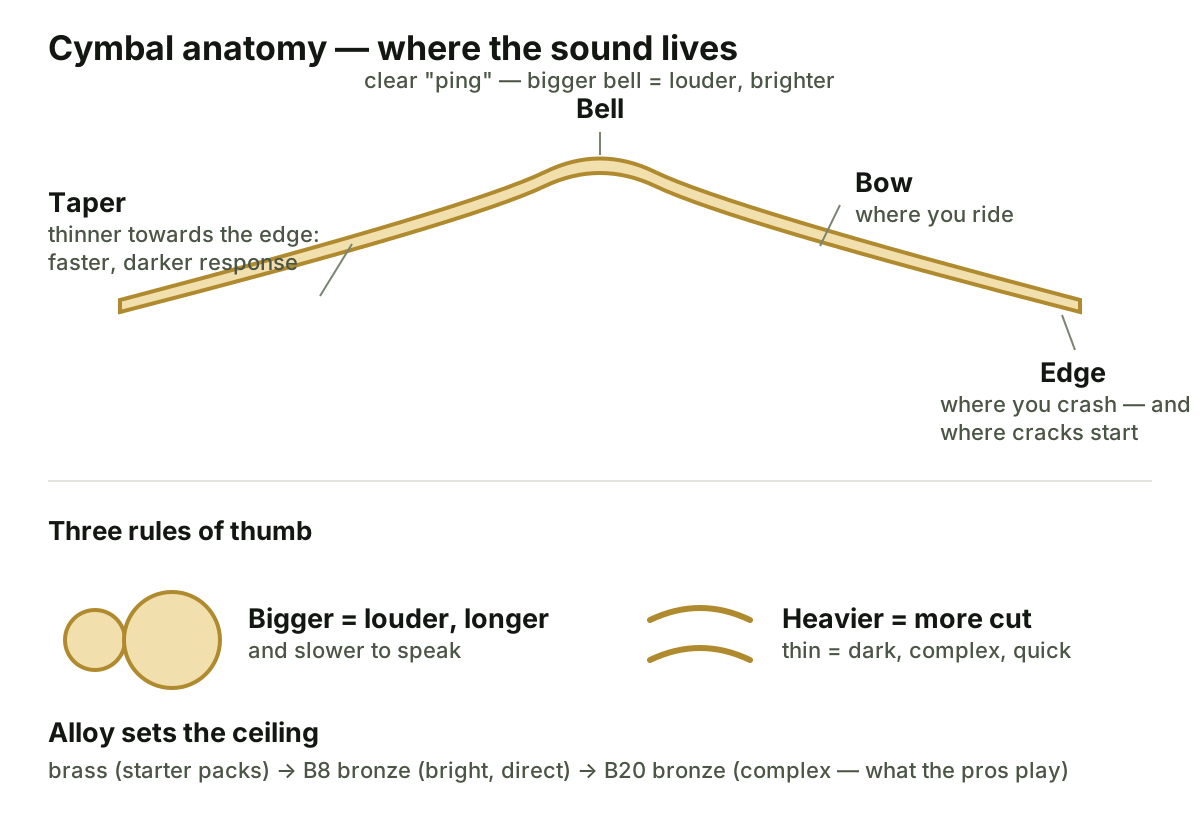
Three levers move everything:
Size. Bigger = louder, longer sustain, slower to respond. Smaller = faster and quieter.
Weight. Heavier = brighter, more cut, more ping. Thinner = darker, more complex, quicker to speak and to die away. This is why a thin 18” crash and a heavy 18” ride are different instruments.
Alloy. Brass is what starter-kit cymbals are made of, and it’s why they sound like trays. B8 bronze (8% tin) is bright and direct. B20 bronze (20% tin) is the complex, musical stuff nearly every professional cymbal is cast from. As you move up the ranges, you’re mostly buying more tin and more hand-work.
Packs or individual cymbals?
For your first proper set: a pack, without question. Packs from the big four (Zildjian, Sabian, Meinl, Paiste) are voiced to sound good together and cost 15–25% less than buying the same cymbals separately.
Individual cymbals are for later, when you know your taste and want to replace the pack piece by piece. That’s the fun bit, and it never really ends. Ask any drummer how many cymbals they own, then watch them not answer.
The packs we’d actually buy
| Budget | Our pick | Alloy | The short version |
|---|---|---|---|
| ~£120 / $150 | Meinl HCS | Brass | The best of the cheap seats |
| ~£230 / $280 | Sabian B8X or Paiste PST 5 | B8 | First “real cymbal” sound |
| ~£400 / $500 | Zildjian I Family or Meinl Classics Custom | B8/B10 | Loud, bright, gig-ready |
| ~£650–£850 / $800–$1,000 | Zildjian A Custom, Sabian AAX, Meinl Byzance | B20 | Cymbals for life |
Meinl HCS — the honest starter set
If the budget stops near £120, the HCS pack (14” hats, 16” crash, plus a ride in the bigger boxes) is the one brass set that’s consistently musical. It’s what Tama bundles with the Imperialstar, and that’s no accident.
Sabian B8X / Paiste PST 5 — the first real upgrade
B8 bronze, real bell sounds, crashes that shimmer instead of clang. For a practising beginner this tier is honestly enough for a couple of years. Between the two, let your ears (or the price that week) decide — they’re closer than the forums admit.
Zildjian I Family / Meinl Classics Custom — the loud middle
Proper gigging cymbals at a middle-class price. The I Family is the modern successor to the old ZBT/ZHT lines and sounds far beyond its cost; Classics Custom’s brilliant finish and aggressive voice have made it a metal favourite. If you play loud music on a budget, land here.
The B20 tier — where cymbals become “your” sound
Around £650+ for a pack (or building piece by piece), you reach the cymbals that professionals actually record with. The Zildjian A Custom is the modern rock reference — the most-played Zildjian series in our entire Rig Vault. The Sabian AAX and HHX ranges cover bright-modern and dark-smoky respectively. And Meinl’s Byzance series — hand-hammered, endlessly varied — is what Benny Greb, Anika Nilles and Luke Holland built their signature sounds on.
A tip at this level: buy the pack or buy used, one great cymbal at a time. Which brings us to…
The right shop depends on where you are: Guitar Center in the Americas, Gear4music in the UK, or Thomann for Europe and the rest of the world.
Why used cymbals are the best deal in drumming
A well-treated cymbal does not wear out. A twenty-year-old A Custom crash is, functionally, an A Custom crash — at half the price. Used cymbals on Reverb are the single biggest saving available to a drummer building a set.
The one rule: no cracks. Check the edge, check around the bell, ask for a photo of the cymbal held up against the light. Our used gear guide covers the full inspection list, including keyholing and what a fair price looks like.
What about practice?
Cymbals are the loudest part of the kit, and there’s a whole product category built to fix that: quiet cymbals with holes through them that keep real stick feel at conversation volume. We’ve written a dedicated guide to low volume cymbals — the perfect partner to mesh heads for flat-friendly practice. And if small gigs are the problem rather than practice, Sabian’s FRX range exists for exactly that.
Final thoughts
Buy a pack that matches your budget tier, upgrade the hi-hats first when the itch arrives, and let the used market carry you into B20 territory sooner than you thought possible. And before you buy anything over £200, listen to it — a YouTube demo through decent headphones will tell you more than any spec sheet ever will.
Still torn? Tell the Gear Guru what music you play and what’s in the kitty — or go and see exactly which cymbals your favourite drummers stack over in the Rig Vault. Their answers might surprise you.
Keep reading
All Our Buying Guides
Best drum tuners (2026) | Tune-Bot, DrumDial & a free option
The best drum tuners compared — Tune-Bot, DrumDial, Tama Tension Watch and tuning apps — plus when our free online drum tuner does the job for nothing.
Head to Head
Axis A21 vs DW 9000 | Direct drive or chain?
The direct-drive benchmark against the chain-drive default: footboard, cam, feel at speed, servicing, availability and price, with a verdict on every row.
Head to Head
Electronic cymbal pads | Is Roland worth it?
Three ways to add a ride or crash pad to your e-kit, side by side: zones, choke, feel, module compatibility and price — and whether Roland is worth it.