Drum head buying guide | Coated vs clear & more
Single vs double ply, coated vs clear, Remo vs Evans vs Aquarian — how to choose drum heads, and the setups that actually work.
Here’s the cheapest sound upgrade in all of drumming, and hardly anyone does it: change your heads.
Heads are the entire playing surface of your drum. They’re where the stick lands, where the tone starts, and — on most kits — they’re either the tired originals or whatever was cheapest at the time. Around £80–£150 re-heads a whole five-piece, and the difference is not subtle. A £400 kit with great heads, tuned properly, will embarrass a £1,500 kit with dead ones.
The catch is the wall of options. Ambassador, Emperor, G1, G2, EMAD, Powerstroke, coated, clear… it looks like a chemistry exam. It’s actually three simple decisions. Let’s take them one at a time.
Decision one: single-ply or double-ply?
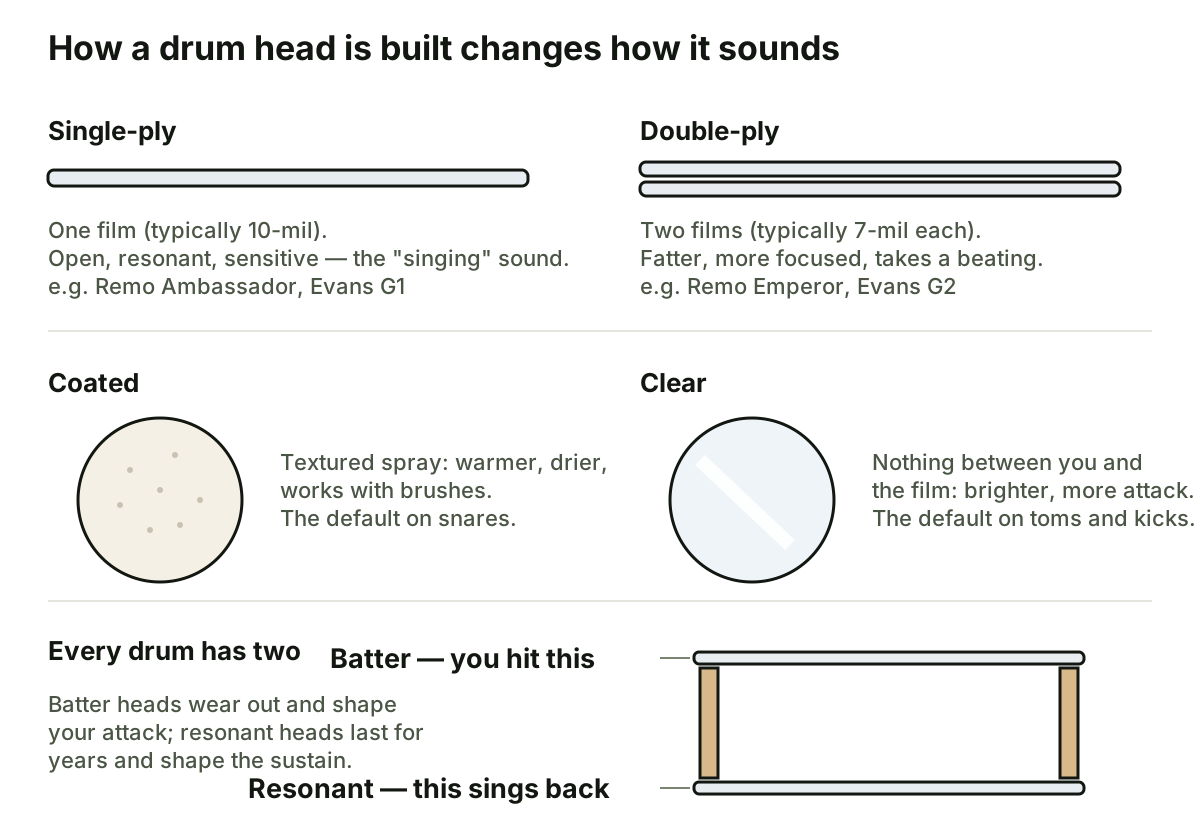
Single-ply heads (one film, usually 10-mil) are open, sensitive and resonant. Every ghost note speaks, the drum sings. The trade-off is durability and a bit less control — hit hard every night and they dent sooner.
Double-ply heads (two 7-mil films) are fatter, more focused and noticeably tougher. Less ring to fight, more punch, at the cost of a little sensitivity. This is the sound of most rock records you know.
Rule of thumb: light-to-medium players and jazzier styles, single-ply. Hard hitters and rock/metal, double-ply. Genuinely torn? Double-ply on toms, single-ply on the snare is the classic compromise.
Decision two: coated or clear?
Coated heads have that sprayed white texture. It warms and dries the sound slightly, and it’s what brushes need to make any sound at all. On snare drums, coated is the default to the point of being a rule.
Clear heads are brighter with more attack, and they’re the usual choice on toms and bass drums where you want projection.
Nobody was ever sacked for coated on the snare, clear on toms and kick. Which is exactly why it’s the factory setup on half the kits ever sold.
Decision three: which brand?
Here’s the secret — the big three make near-equivalents of each other’s classics, and they’re all excellent:
| The sound | Remo | Evans | Aquarian |
|---|---|---|---|
| Open single-ply | Ambassador | G1 | Texture Coated |
| Fat double-ply | Emperor | G2 | Response 2 |
| Controlled single-ply | Powerstroke P3 | EC1 / dot heads | Studio-X |
| Pre-muffled kick | Powerstroke P3 bass | EMAD | Super-Kick |
Remo is the heritage choice — and, tellingly, the most-played brand across every rig documented in our Rig Vault, full stop. The Coated Emperor alone appears on more of those rigs than any other single piece of gear on this site. Evans’ EMAD, with its movable damping ring, is arguably the best bass drum head ever designed. Aquarian is the value-and-durability pick that drummers quietly swear by. You will not go wrong with any of the three; you’ll just develop opinions.
Expect to pay roughly £15–£22 / $18–$28 per head, and a bit more for kick heads.
So what should you actually buy?
For almost everyone re-heading a kit for the first time:
- Snare batter: coated single-ply (Coated Ambassador or G1). The reference snare sound of the last sixty years — and if your snare needs something more specific, the deep-dive section below has you covered.
- Tom batters: clear or coated double-ply (Emperors or G2s). Fat, forgiving, durable.
- Kick batter: a pre-muffled head (Powerstroke P3 or EMAD). Instant “record” kick sound, no pillow engineering degree required.
- Resonant heads: the thin bottom heads shape sustain rather than attack, and they last for years. If yours are original and ancient, replace them once with standard reso heads (Ambassador weight, snare-side on the snare) and forget about them for a long time.
Going deeper: snare batter heads
The snare is where head choice matters most and where the options multiply fastest, so it deserves its own section. Every trick in snare head design is one of three ideas: more plies (durability and fatness), a dot (a reinforcing patch that focuses the sound and toughens the centre), or built-in control (rings and vents that dry the drum out before you touch a piece of gaffer tape).
Here’s the landscape, from open to dead:
| Head | Build | Who it’s for |
|---|---|---|
| Remo Coated Ambassador / Evans G1 | Single ply | The open, sensitive reference — jazz to classic rock |
| Remo Coated Emperor / Evans G2 | Two plies | Harder hitters who want fat with less ring |
| Remo CS Coated Black Dot | Single ply + dot | Focused centre, big rimshots — the Bonham look and feel |
| Evans Power Center Reverse Dot | Single ply + underside dot | The modern rock/pop default — crack without losing the coating feel |
| Remo Emperor X | Two thick plies + bottom dot | The tank. Metal and marching-adjacent hitters who destroy everything else |
| Evans Genera HD Dry | Two plies + control ring + vents | Dry, tight funk crack with the ring gone before you tune a lug |
| Remo Powerstroke P77 | Two plies + control ring | Pre-controlled backbeat without the vented dryness |
How to choose from that lot without overthinking it:
If you love ghost notes and dynamics, stay single-ply — Ambassador or G1, and only add a dot (Power Center Reverse Dot) if the centre keeps denting. The dot toughens exactly where you hit while the edges stay sensitive, which is why the reverse-dot has quietly become the default on modern rock records.
If you hit hard and tune high, go two plies or a dot — and if you’ve ever actually broken an Emperor, the Emperor X is Remo’s “fine, have it your way” head. It’s noticeably darker and drier than a standard Emperor, so treat that as a sound choice, not just an armour upgrade.
If your snare rings and it annoys you, buy the control built in — HD Dry or P77 — before you resort to tape and moongel. Just know that dry heads are a one-way door for that drum’s character: brilliant for tight funk and gospel-style playing, frustrating if you later want the drum to open up.
One more snare-specific tip: the snare-side head underneath (a 2–3-mil film so thin it’s see-through) affects wire response more than people think. If your ghost notes feel woolly on an otherwise good drum, a fresh Hazy 300 or Snare Side down there is a £15 fix.
And if you want to see the pattern in the wild — coated single-ply on almost every documented snare, with dots and dry heads showing up under the heaviest hitters — the Rig Vault settles a lot of head arguments.
The right shop depends on where you are: Guitar Center in the Americas, Gear4music in the UK, or Thomann for Europe and the rest of the world.
One thing not to buy: used heads. A head is a consumable, like guitar strings. Whatever the listing says, someone else has already used up the good part.
When should you change your heads?
When any of these are true:
- There are visible dents or a cloudy patch where the stick lands.
- The coating has worn through to shiny film in the middle.
- The drum won’t hold a tuning, or tuning it has stopped making a difference.
- You honestly can’t remember doing it.
Gigging weekly? Snare batter every couple of months. Practising at home? A yearly re-head of the batters keeps a kit alive. And every new head deserves ten minutes with the drum tuner — heads and tuning are one purchase, not two.
What about quiet practice?
There’s a fourth kind of head worth knowing about: mesh. Woven heads that feel close to the real thing at a fraction of the volume — the flat-dweller’s best friend, on acoustic kits and electronic kits alike. We’ve a whole mesh head buying guide for that, and pairing them with low volume cymbals makes a kit genuinely neighbour-proof.
Final thoughts
Coated single-ply on the snare, double-ply on the toms, a pre-muffled kick batter, and a tuning session to finish the job. That’s the whole trick, it costs less than a single cymbal, and it will transform a tired kit beyond what seems reasonable.
Heads are also the cheapest way to experiment — this year’s snare head choice is next year’s strong opinion. Ask the Gear Guru if you want a recommendation for your exact kit and style, or go and see which heads the pros stretch over their drums in the Rig Vault. Spoiler: it’s Emperors. It’s so often Emperors.
Keep reading
All Our Buying Guides
Best drum tuners (2026) | Tune-Bot, DrumDial & a free option
The best drum tuners compared — Tune-Bot, DrumDial, Tama Tension Watch and tuning apps — plus when our free online drum tuner does the job for nothing.
Head to Head
Axis A21 vs DW 9000 | Direct drive or chain?
The direct-drive benchmark against the chain-drive default: footboard, cam, feel at speed, servicing, availability and price, with a verdict on every row.

Head to Head
Electronic cymbal pads | Is Roland worth it?
Three ways to add a ride or crash pad to your e-kit, side by side: zones, choke, feel, module compatibility and price — and whether Roland is worth it.