Practice pads | The best ones and how to use them
The best drum practice pads, from the Evans RealFeel to the Drumeo P4: how the surface changes what you learn, how to mount one, and what to practise on it.
Every drummer who has ever been any good has spent hours on a lump of rubber. The practice pad is where the hands get built, and it is the only piece of drum gear you can use in a flat at midnight, in a hotel room, on the kitchen table.
It is also cheap, which means most people buy the first one they see. There is a bit more to it than that.
So which pad, which surface, how do you mount it, and what do you actually do on it? Let’s find out.
What a pad can and cannot do
A pad teaches your hands. Rudiments, stick control, evenness between the hands, speed, endurance, the relaxed grip that makes all of those possible. Twenty minutes a day on a pad is worth more to your hands than two hours a week on the kit.
A pad does not teach your feet, your sound, or how to move round a kit. Treat it as hand practice, keep the kit for the rest, and log both in the practice log.
The surface decides the lesson
Gum rubber is the standard: a firm, bouncy surface that rebounds like a tightly tuned snare. It makes doubles easy, which is good for learning them and bad for building the muscles that play them on a real drum.
Soft rubber bounces less. Every stroke has to be made rather than let happen, which builds the hands faster and sounds quieter. Harder work, better results, and the right surface once your singles are even.
Mesh and drum heads on tunable pads give the feel of a real head and the noise of one. Good for drummers who find rubber pads too fast.
The two-sided pads give you the first two for the price of one, which is why they are the pick.
The pads worth buying
Evans RealFeel 12-inch two-sided. The standard. Gum rubber on one side, a quieter, slower recycled rubber on the other, a wooden base, an 8mm thread. Buy this and you are done.
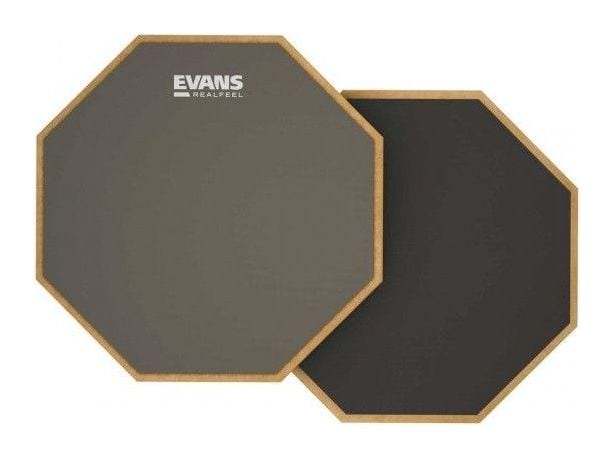
Vic Firth 12-inch double-sided pad. The same idea from the stick people: a soft side and a hard side, the same thread. Interchangeable with the Evans for most purposes; buy whichever is cheaper.
Vater Chop Builder. A single-sided gum rubber pad with a reputation for a particularly snare-like feel. A favourite of teachers.
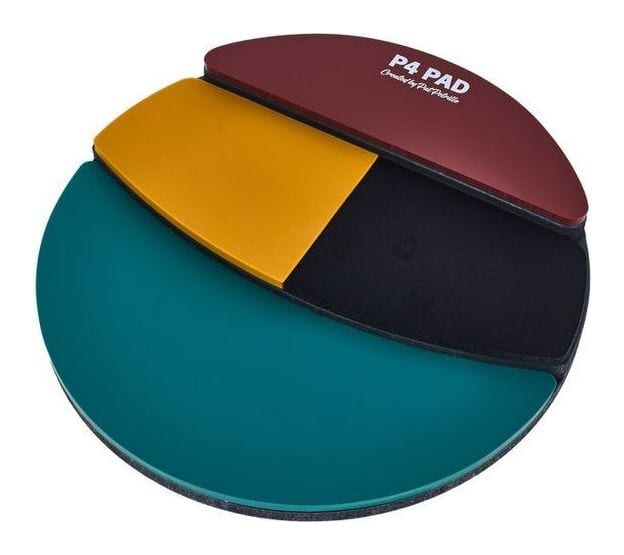
Drumeo P4. Four surfaces of different hardness on one pad, laid out so you can move between them like moving round a kit. Expensive for a pad; clever, and good for drummers who find a single surface boring.
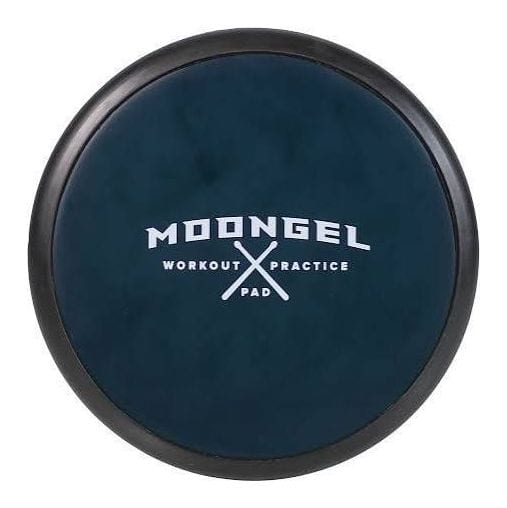
RTOM Moongel Workout Pad. The soft one. The gel surface barely bounces, so every stroke is work, and it is near silent. Ten minutes on this is a workout; the hands it builds are the point.
Remo Tunable Practice Pad. A real tunable head on a frame, for drummers who want the feel of a snare rather than rubber. Louder than the rubber pads.
Marching pads like the Offworld Invader and the Vic Firth Heavy Hitter are built for the harder stroke of a marching snare. Great if that is your world; too hard for most kit drummers.
Mounting it
A pad on a table works for ten minutes. A pad at snare height on a stand works for an hour, because your body is where it would be at the kit.
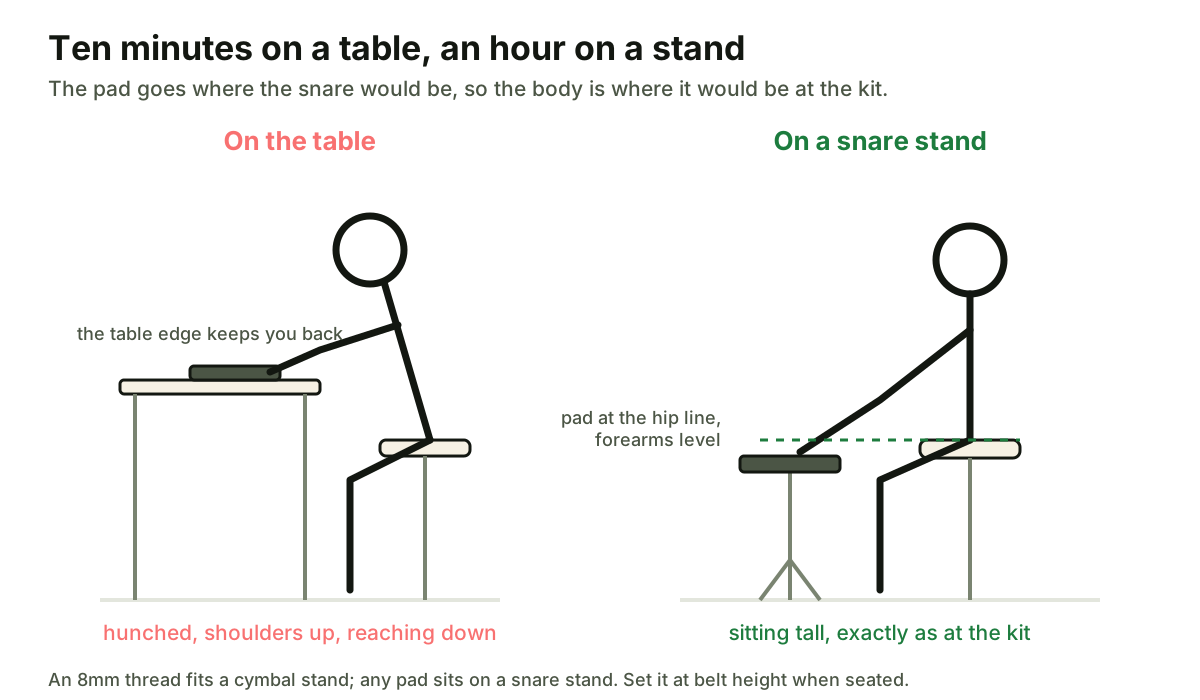
A snare stand is the most stable mount and takes any pad. A cymbal stand takes any pad with an 8mm thread, which is most of them. A pad stand, sold for the purpose, is a cymbal stand by another name and often cheaper.
Set the pad at the height your snare sits at: about belt height when seated, so the sticks lie flat on the surface with your forearms level. The posture guide covers why that matters.
What to actually practise
A pad with no plan is a drum you tap while watching television. A plan:
- Singles, slow, even. The single stroke roll at a tempo where both hands sound identical. Five minutes.
- Doubles, with the rebound. The double stroke roll, letting the stick bounce for the second note. Five minutes.
- One rudiment you are working on. The rudiment trainer plays it back with the hands at different pitches, so you can hear whether yours match. Ten minutes.
- Tempo climb. Pick the one that went best, set the tempo trainer to climb four beats a minute every eight bars, and see where it falls apart. Note the number.
Twenty-five minutes, every day, on the sofa. That is how hands get built, and the practice home will chart the tempo numbers climbing week on week.
Where can I buy one?
The right shop depends on where you are: Guitar Center in the Americas, Gear4music in the UK, or Thomann for Europe and the rest of the world.
Final thoughts
The Evans RealFeel or the Vic Firth two-sided pad, on a snare stand, at snare height, with a plan. That is the whole purchase and it costs less than a cymbal stand.
Start on the bouncy side, move to the quiet side when your singles are even, and keep the pad somewhere you will see it. The pad that lives in the drawer builds nothing; the one by the sofa builds a drummer.
Practice pad FAQs
- What is the best drum practice pad?
- The Evans RealFeel 12-inch two-sided pad, for most drummers. The gum rubber side bounces like a snare, the recycled rubber side is quieter and harder work, and it mounts on any snare stand. The Vic Firth 12-inch double-sided pad is the same idea and just as good. Buy whichever is cheaper on the day.
- Is a practice pad as good as a real drum for practising?
- For hands, yes — rudiments, control, speed and endurance all develop on a pad, and the pad lets you do it at midnight. What it cannot teach is sound, dynamics across the kit, and the feet. Use the pad for the hands every day and the kit for everything else when you can.
- How do I mount a practice pad?
- On a snare stand, which is the most stable option, or on a cymbal stand if the pad has an 8mm thread in the base, which the Evans, Vic Firth and most others do. A table or your knee works for a short session; a stand at snare height is what lets you practise properly for an hour.
- Do I need a quiet practice pad?
- If you practise where people sleep, yes. The quietest pads are the soft rubber ones — the Evans RealFeel's dark side, the Vic Firth Heavy Hitter's soft side, the RTOM Moongel Workout Pad — and they are also the ones that make your hands work hardest, which is no bad thing. A hard, bouncy pad is louder and easier.
Keep reading
All Our Buying Guides
Audio interfaces for drums | How many inputs?
Which audio interface to buy for recording drums: how many mic inputs you need, the two- and eight-input standards, ADAT expansion and the e-kit case.

All Our Buying Guides
Drum VSTs | The best sounds for your e-kit
The best drum VSTs for an electronic kit: Superior Drummer 3, EZdrummer 3, Addictive Drums 2, GetGood Drums and Steven Slate Drums compared, plus the free ones.
How to
Connect an e-kit to a computer | USB, MIDI, latency
How to connect an electronic drum kit to a computer: the USB cable, MIDI versus audio, the buffer and driver settings that kill latency, and mapping the pads.