Posture at the kit | Throne height, back pain, the spine
How to set up a drum kit so it does not hurt: throne height, pedal distance, snare and cymbal heights, the neck, and what drummers who had surgery learned.
Nobody teaches drummers how to sit. We learn grip, we learn rudiments, we learn songs, and we learn to sit from whatever throne came with the kit, at whatever height it came out of the box, with the drums where they looked right in the catalogue.
Then thirty years later the back goes. Larry Mullen Jr. had neck surgery and rebuilt his technique from nothing. Gary Husband had five hours of spinal surgery. Phil Collins stopped playing altogether. Not everyone who sets up badly ends up there; everyone who ends up there wishes they had set up better.
So here is how to set up a kit around a body rather than a photo. None of it is medical advice, and if your back already hurts, a physio who treats musicians is worth more than this page.
Start with the throne
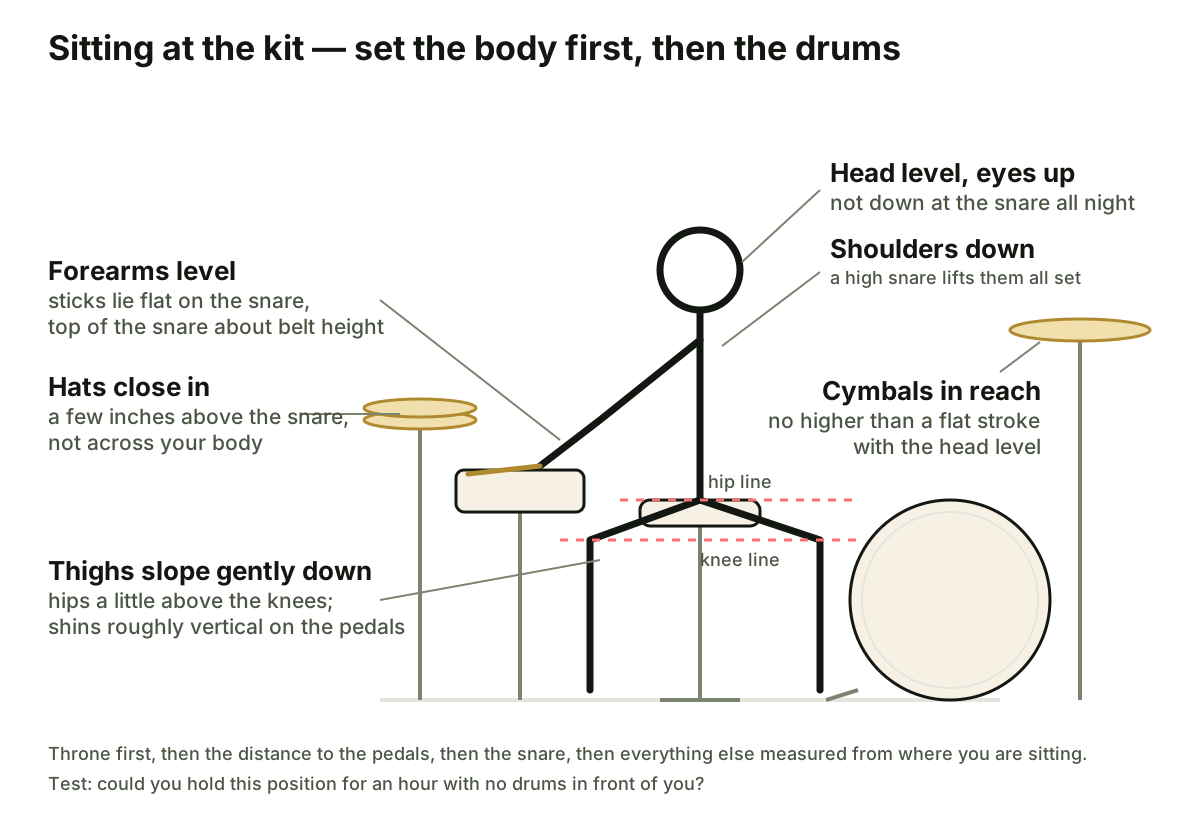
Everything is measured from the seat, so the seat comes first. Hips slightly above the knees, thighs sloping gently down to the pedals, weight on the sitting bones, not slumped back onto the tailbone. For most drummers that is higher than they currently sit.
The drum throne guide covers the height rule, the seat shapes and the thrones worth buying. If yours wobbles, sags or will not go high enough, it is the first thing to replace: a throne you brace against for two hours is a throne that is hurting you.
Distance to the pedals
Sit at the right height, put your feet on the pedals, and look at your knees. A little more than a right angle, with your shins roughly vertical, is right. Knees up around your chest means you are too close or too low. Legs stretched out means you are too far.
The snare should then sit between your knees, which is where the kit gets built from.
Snare height
With the sticks resting on the snare, your forearms should be about level, elbows loosely at your sides, shoulders down. A snare that is too high pushes the shoulders up for the whole session, and shoulders held up for an hour is where most neck tension starts. Too low and you hunch down to it.
A good check: the top of the snare roughly at belt height when seated, tilted very slightly towards you or dead flat.
Hi-hat and ride
Both should be within reach of the arm without the shoulder moving forward. The hi-hat usually wants to be a few inches above the snare and close enough that you are not reaching across your body. The ride is the one most often set too far and too high: bring it in, bring it down, and angle it so the bead lands flat without you lifting the arm.
If you twist your torso to reach the ride, your spine is doing that twist a thousand times a night.
Cymbals and toms
Crashes high enough to clear the toms and no higher. A cymbal that needs a reach up and a head tilt back to hit is a cymbal that is loading your neck every time. Toms close enough to reach without leaning, angled so a flat stroke finds the centre.
Set the kit up as compact as it will go, then move things out only where your arms tell you to. The drummers who play the longest tend to play small kits close in.
The neck
Two neck habits do most of the damage. Looking down at the snare for the whole set, which loads the back of the neck with the weight of your head, and headbanging, which does what it sounds like. Keep the head level and the eyes up as much as the music allows. Nobody is going to tell you not to headbang; your neck in your fifties will.
The core, and getting up
A drummer’s lower back is supported by the core muscles, and if they are not doing the job the spine does it instead. You do not need a gym: a few minutes of basic core work a few times a week is enough to make a difference you can feel on the throne.
And get up. Every forty-five minutes of practice, stand, walk, reach up, roll the shoulders. The posture is not the problem; holding one posture for three hours is.
Warm up the body as well as the hands
The wrist guide covers the hands. For the back: shoulder rolls, a gentle twist each way, a reach to the ceiling, a hamstring stretch, two minutes, before you sit down. It feels unnecessary right up until the day it is not.
When to see someone
Back or neck pain that is there in the morning rather than only after playing. Pain that runs down an arm or a leg, or any numbness or tingling, which is a nerve and needs a doctor. Any back pain that has not improved after two weeks of a better setup. A physio who works with musicians will watch you play and spot the thing you cannot see.
Final thoughts
Throne first, then distance, then snare, then everything else measured from your body. Set it up compact, keep your head level, get up every forty-five minutes, and give the core ten minutes a week.
That is most of what separates the drummers still touring at seventy from the ones who stopped, and it costs nothing but an evening with a drum key. The drummer health section has the ears and the hands; the back is the one you fix by moving the furniture.
Drumming posture FAQs
- Why does my back hurt after drumming?
- Usually because the kit is set up around where the drums look good rather than where your body is. A throne that is too low rounds the lower back, a snare that is too high lifts the shoulders, cymbals that are too high or too far make you reach, and a ride on the wrong side twists the spine. Fix the throne height first — everything else is measured from it.
- What is the correct drumming posture?
- Sit tall with the hips slightly above the knees, the weight on the sitting bones rather than the tailbone, shoulders down and relaxed, forearms roughly level when the sticks rest on the snare, and everything you hit within reach without leaning. The test is whether you could hold the position comfortably for an hour with no drums in front of you.
- How far should I sit from the drums?
- Far enough that your knees sit at a little more than a right angle with your feet on the pedals, and close enough that the snare sits between your knees without you reaching for it. If the throne is at the right height, the distance usually sorts itself out: too close and your knees come up, too far and you lean forward.
- Can drumming cause neck problems?
- It can contribute, mostly through headbanging, looking down at the snare for hours, and cymbals set high enough that the head tilts back to hit them. Larry Mullen Jr. and Gary Husband have both had major spinal surgery after decades of touring. Keep the cymbals at a height you can hit with your head level, and remember that neck pain is one of the signs to see a doctor about rather than play through.
Keep reading

All Our Buying Guides
Audio interfaces for drums | How many inputs?
Which audio interface to buy for recording drums: how many mic inputs you need, the two- and eight-input standards, ADAT expansion and the e-kit case.

All Our Buying Guides
Drum VSTs | The best sounds for your e-kit
The best drum VSTs for an electronic kit: Superior Drummer 3, EZdrummer 3, Addictive Drums 2, GetGood Drums and Steven Slate Drums compared, plus the free ones.

How to
Connect an e-kit to a computer | USB, MIDI, latency
How to connect an electronic drum kit to a computer: the USB cable, MIDI versus audio, the buffer and driver settings that kill latency, and mapping the pads.