DW drums | Every series explained (2026)
DW drums explained: Design, Performance, Collector's and DWe kits, the 5000 and 9000 pedals, where they are made, and what Roland owning DW means for you.
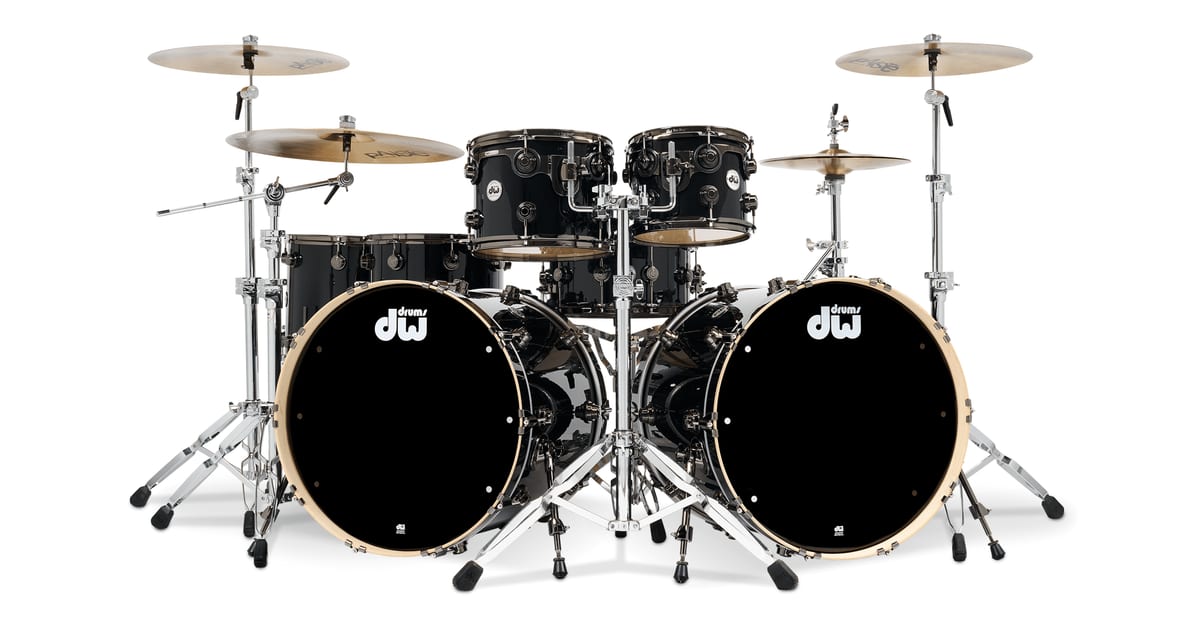
There is a reason so many of the biggest rigs in rock are DW.
Walk past a stadium stage and the odds are good you will see that little round DW badge. Dave Grohl, Travis Barker, Tommy Lee and Neil Peart have all played them, and the DW 5000 pedal is under the feet of more working drummers than probably any other pedal.
But DW is no longer just a boutique custom shop. There are now four kit series, an acoustic-electronic hybrid, a whole family of pedals, and a parent company called Roland. So what does DW actually make in 2026, and which series is right for you? Let’s find out.
Who are DW?
DW stands for Drum Workshop, and it started as exactly that.
In 1972, Don Lombardi opened a small drum teaching studio in Santa Monica, California, and called it Drum Workshop. One of his students, John Good, began taking lessons the same year. The two started tinkering with gear, and the first DW product was a height-adjustable trap-case seat.
Then, in 1977, the owner of Camco Drum Co. offered Lombardi all of Camco’s machinery, dies and moulds, everything except the Camco name. Lombardi bought it, and reintroduced the Camco 5000 bass drum pedal under the DW name. DW says the DW 5000 proper was released in 1979, and it became the industry-standard pedal.
DW spent the eighties as a hardware company. Its first drum catalogue arrived in 1989, and in 1998 it bought shell presses for its Oxnard, California factory, which became the California Custom Shop. John Good, now DW’s resident “woodologist”, has led the shell side ever since.
Who owns DW now?
Roland does. Roland agreed to buy all of Drum Workshop in September 2022, for a reported $65 million, and DW joined the Roland group that autumn. It carries on as a wholly owned subsidiary.
At the time, that deal brought DW’s family of brands under Roland:
- DW Drums and Hardware
- PDP (Pacific Drums & Percussion), DW’s affordable brand. See our PDP drums guide.
- Latin Percussion (LP)
- Slingerland, which DW bought from Gibson in 2019
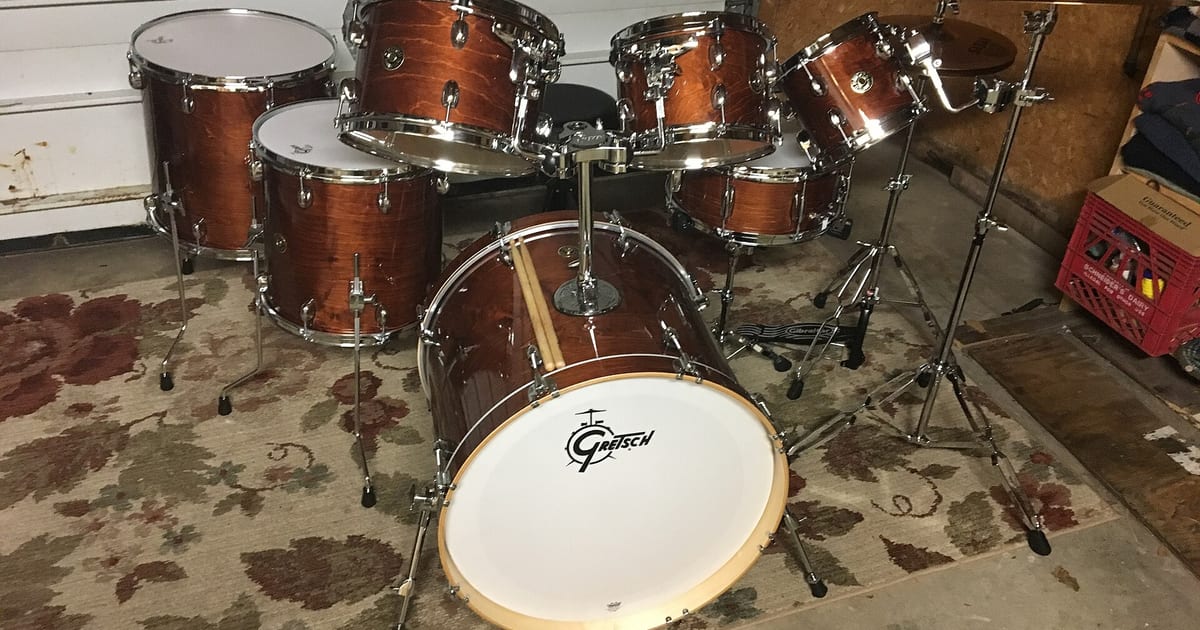
DW also made Gretsch drums from 2015, under a licence from the Gretsch family, who own the brand. That changed in January 2024, when GEWA Music took over the licence and the Ridgeland, South Carolina factory. So DW no longer builds Gretsch kits. Our Gretsch drums guide has the full story.
So far the main visible effect for drummers has been DWe, the acoustic-electronic kit that works with Roland modules. More on that below.
What is DW’s shell secret?
Two ideas run through almost every DW drum.
Timbre matching. DW taps every shell to find its natural pitch, then puts kits together so the drums step down in even intervals from the smallest tom to the bass drum. The aim is a kit that sounds like one instrument rather than a set of drums that happen to match.
Grain orientation. Most drum shells have every ply’s grain running horizontally around the shell. DW experimented with plies cut vertically and diagonally too, and found that mixing them lowers the shell’s pitch and boosts the low end. That became DW’s Specialized Shell Configuration (SSC), and it is behind the HVLT, HVX and X-Shell names you will see on the spec sheets.
DW has pushed the idea further with PurpleCore, a shell built around short-grain plies.
What is the full DW drum kit line-up?
At the time of writing, DW’s acoustic range is four series, plus DWe.
DW Design Series
The Design Series is the most affordable kit with the DW badge, and it was designed at the California Custom Shop to bring the DW sound to more people.
The shells are 100% North American maple, built with DW’s HVLT construction: eight plies (ten on snares) of 1/32” maple with the grain alternating horizontally and vertically. The edges are cut at 45 degrees on the toms and 60 degrees on the bass drum and snare. You also get UV-cured lacquers, Mini-Turret lugs, DW’s STM suspension tom mounts and True-Pitch tuning rods.
There are acrylic Design kits, concert toms and snares in the range too. Our full DW Design Series guide goes through them all.
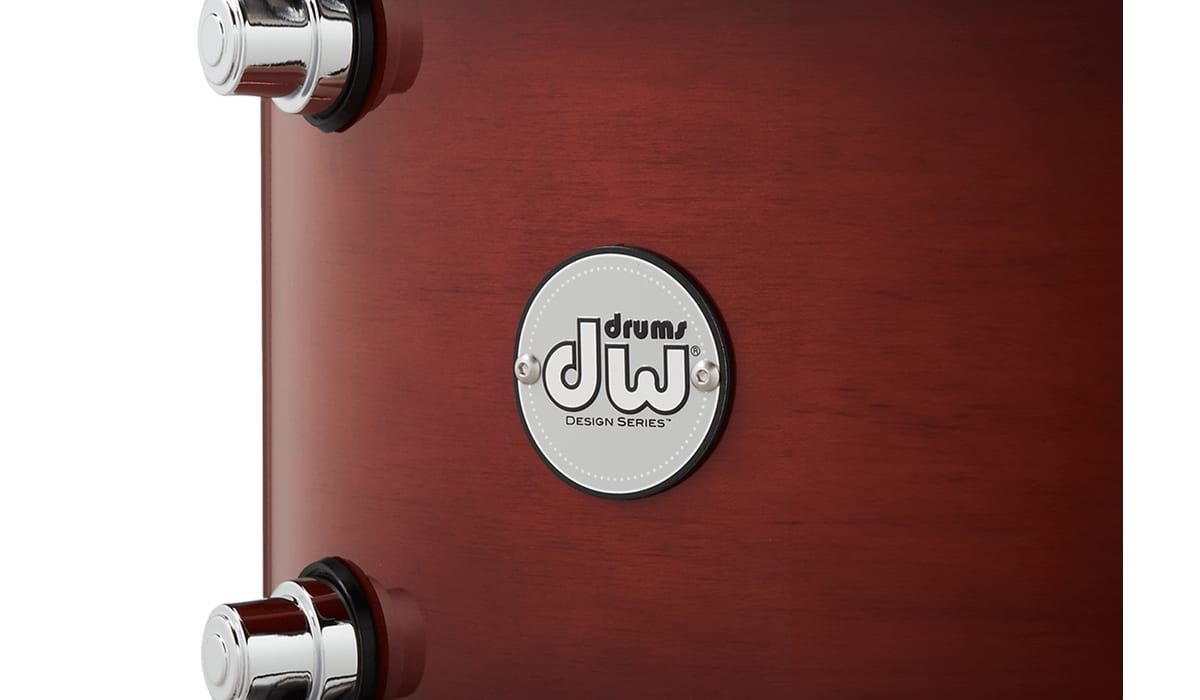
DW Performance Series
The Performance Series is handcrafted in Oxnard from 100% North American hard rock maple, and it uses DW’s patented HVX shell, with plies running horizontally, vertically and diagonally for a low, punchy fundamental.
Think of it as the Collector’s sound with fewer choices. There is a set menu of sizes and finishes, but the drums come from the same California factory. That makes it the sweet spot of the range for a lot of gigging drummers. DW does special runs here too, like the Black Oyster Glass Performance kit.
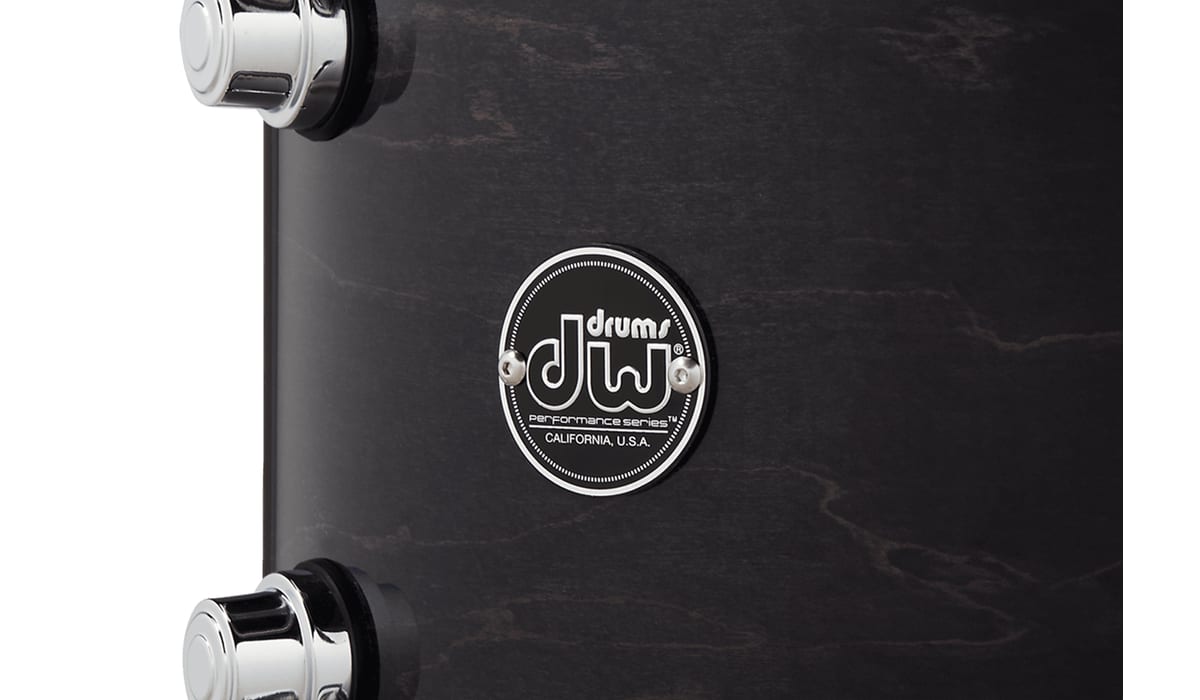
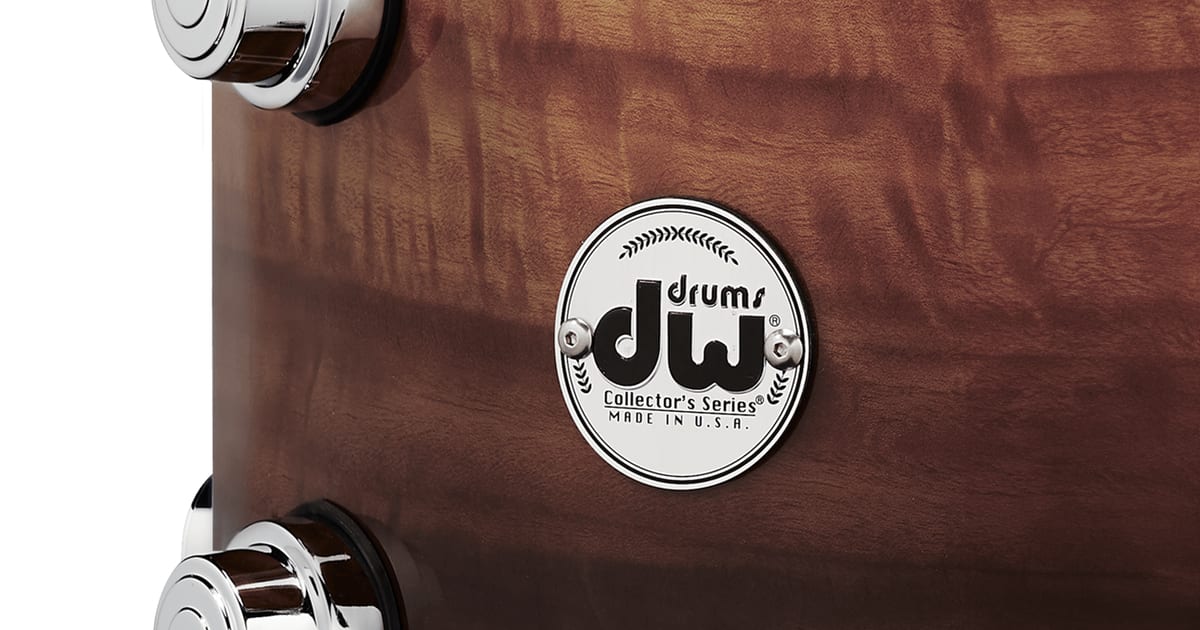
DW Collector’s Series
The flagship. Every Collector’s kit is built to order in Oxnard, and you choose almost everything: the wood, the shell construction, the sizes, the finish and the hardware colour.
The woods include Pure Maple, Pure Birch, Pure Cherry, Pure Oak and Pure Purpleheart, plus maple/mahogany hybrids and the SonicPly maple and aluminium shell. There are also curated configurations, like the Jazz shells in a gum hybrid and the Santa Monica, a return of DW’s original all-maple recipe.
It deserves its own guide, so we wrote one: DW Collector’s Series.
DWe
DWe is DW’s acoustic-electronic kit. It was unveiled at DW’s 50th anniversary event in 2022 and went on sale in November 2023.
The idea is clever. DWe is a real 100% maple acoustic kit, built in DW’s California custom shop, with wireless triggers inside. Swap the heads, and it becomes an electronic kit that plays through DW’s own Soundworks software or a compatible Roland module. Launch pricing was reported at $4,499 and up, so it is not cheap.
If you are mostly after an electronic kit, our Roland V-Drums guide is a better place to start.
What snare drums does DW make?
Snares run right across the range. The Design Series includes maple and brass snares. The Performance Series has its own snares to match the kits. And the Collector’s Series covers everything from pure woods to stainless steel and bell brass, and a Collector’s bell brass snare turns up on more than one rig in our vault.
If you want the DW snare sound without buying a kit, a Design or Performance snare is a lovely upgrade for any setup.
What about DW pedals and hardware?
DW was a pedal company first, and it shows. The current pedal families are:
- 2000 Series. The entry point.
- 3000 Series. A medium-weight, all-metal pedal with a dual-chain Accelerator drive.
- 5000 Series. The industry standard, and the pedal that built DW. Our DW 5000 guide has the details.
- 6000 Series. A lightweight, retro-styled pedal for vintage and bop kits.
- 9000 Series. The flagship chain pedal with an infinitely adjustable cam. See our DW 9000 guide, and how it does against Axis in a head-to-head.
- MFG Series. Precision-machined pedals made in Oxnard, including the MDD direct-drive pedal. Our direct-drive pedal guide explains the difference.
DW’s stands and hi-hats broadly follow the same numbering, with heavier, more adjustable hardware as the numbers rise.
Who plays DW drums?
A lot of people. Our Rig Vault lists DW Collector’s kits under Dave Grohl, Travis Barker, Tommy Lee and Neil Peart, and the DW 5000 pedal turns up on more rigs than almost any other piece of hardware.
That is part of DW’s appeal. When you buy one, you are buying the kit you have seen on a thousand stages.
How does DW compare with Pearl, Tama and Yamaha?
The big Japanese makers and DW come at drums from opposite directions.
Pearl, Tama and Yamaha cover every price point. They make beginner kits by the hundred thousand, and their pro kits sit at the top of a long ladder. Pearl has the Export and the Reference, Tama has the Imperialstar and the STAR, and Yamaha runs from the Rydeen to the Recording Custom. See our Pearl drums guide, Tama drums guide and Yamaha drums guide for the full ladders.
DW does not really play at the bottom of the market under its own name. That job goes to PDP. The DW badge starts at the Design Series and goes up from there, so you could argue DW is closer to a custom shop than to a mass-market drum company.
That shapes what you get:
- Choice. No other big brand lets you spec a kit the way DW’s Collector’s Series does. Wood, shell recipe, sizes, finish and hardware colour are all yours to pick.
- Finishes. DW’s lacquers, sparkles and exotic veneers are a big part of why people buy them. They are often the first thing you notice on a stage.
- The sound. DW kits are known for a big, warm, punchy maple sound that records well. Plenty of drummers will tell you a top Pearl, Tama or Yamaha sounds just as good. They are probably right. At this level, it is taste.
The flip side is price. Pound for pound, a Japanese pro kit often gives you more drum for the money. You pay a premium for the DW badge and the custom-shop experience, and whether that is worth it is up to you.
Which DW kit should I buy?
Here is the short version.
- The DW sound on a budget: Start with PDP’s Concept Maple, or go straight to the Design Series if you want the DW badge.
- A gigging kit you will keep for life: Performance Series.
- Your dream kit, exactly as you want it: Collector’s Series.
- One kit for acoustic and electronic: DWe.
The only downside to DW is price. Even the Design Series costs more than a lot of other brands’ mid-range kits, and the Collector’s Series can cost as much as a small car. If you want help choosing between DW and the rest, see our best drum brands guide, or ask our Gear Guru.
Where can I buy DW drums?
Design Series kits are stocked by most big music shops. Performance and Collector’s kits are usually ordered through an authorised DW dealer, and DW has a dealer locator on its site.
The right shop depends on where you are: Guitar Center in the Americas, Gear4music in the UK, or Thomann for Europe and the rest of the world.
DW kits also turn up regularly on the used market, often for a lot less than new. Have a look at used DW drums on Reverb and check the Reverb price guide first.
Final thoughts
DW went from a teaching studio in Santa Monica to the drum company half of rock’s biggest names play, and it got there by caring about the details: timbre matching, grain orientation and pedals that just work.
Our honest caveat is the price. DW is a premium brand and you pay for the badge as well as the craft. If that stretches you too far, PDP gets you a lot of the DW recipe for much less.
For everything DW in one place, head to our DW drums hub.
DW drums FAQs
- Are DW drums made in the USA?
- The Collector's Series and Performance Series are handcrafted at DW's factory in Oxnard, California, and DW calls its drums American-made custom drums. DW's other brands are a different story: PDP kits are made overseas (retailers list China) to hit lower prices. If where it is made matters to you, check the badge on the series you are buying.
- Who owns DW drums?
- Roland. The Japanese electronics company agreed to buy all of Drum Workshop in September 2022, for a reported $65 million, and DW became part of the Roland group that autumn. DW carries on as a wholly owned subsidiary, and the deal also brought in PDP, Latin Percussion and Slingerland. DW also ran Gretsch Drums under licence at the time, but that licence passed to GEWA Music in January 2024.
- What is the cheapest DW drum kit?
- The Design Series is the most affordable kit with the DW badge, with 100% North American maple shells and many Collector's-style features. Below that, DW's sister brand PDP makes the Concept Maple and other kits for much less.
- Why are DW drums so expensive?
- The top-end Collector's Series is built to order in California, with hand-selected woods, timbre-matched shells and hand-applied finishes, and you can spec almost every detail. That is a lot of skilled labour. The Design and Performance series bring the price down by limiting the options, not by cutting corners on the shells.
- Is DW better than Pearl or Tama?
- Not better, just different. DW is a custom-shop brand, so its strength is choice and finish, while Pearl and Tama cover every price point with mass-produced kits. At the top end, a DW Collector's, Pearl Reference or Tama STAR are all world-class drums. Our best drum brands guide compares them.
Keep reading
All Our Buying Guides
Best drum brands (2026) | Every budget ranked
The best drum kit brands in 2026, from Yamaha, Pearl and Tama to Ludwig, DW, Gretsch, Sonor, Mapex and PDP, with the right pick for every budget.
DW Collector's Series
DW Collector's Series | Guide (2026)
DW's Collector's Series explained: the pure woods, SSC shell options, curated Jazz and Santa Monica shells, finishes, prices, and who it is really for.
Gretsch Drums
Gretsch Catalina Maple | The complete guide
The Gretsch Catalina Maple is the cheapest way into a maple Gretsch kit. Shells, hardware, sizes, finishes and prices, and who it suits.