DW 5000 pedal | The industry standard (2026)
The DW 5000 pedal explained: Accelerator vs Turbo vs single chain, XF and double versions, prices, and how it compares with the 3000, 9000 and MDD.
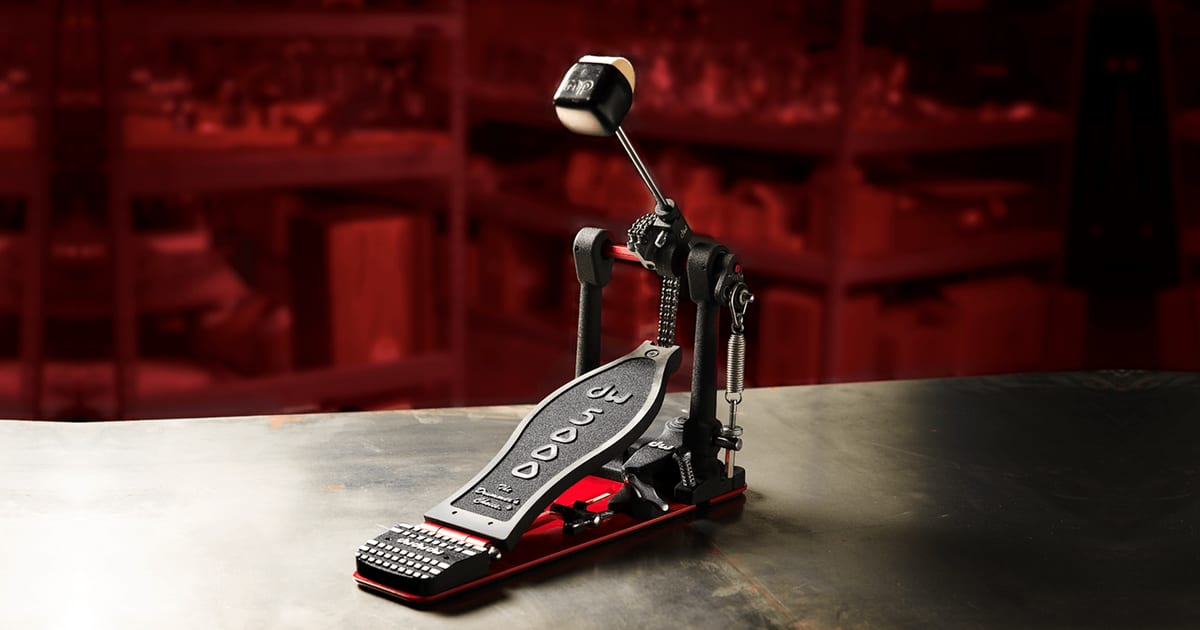
If there is one bass drum pedal every drummer has played, it is the DW 5000.
It is on backline riders, in rehearsal rooms and in studios all over the world. DW calls it “the industry standard”, and for once the marketing is hard to argue with. Our Rig Vault data agrees: it is one of the most-played pieces of hardware across every rig we have documented.
So what makes the 5000 so popular, which version should you buy, and is it still worth it next to the 9000? Let’s find out.
Where did the DW 5000 come from?
The 5000 is older than DW drums.
In 1977, the owner of Camco Drum Co. offered DW founder Don Lombardi all of Camco’s machinery, dies and moulds, everything except the name. Lombardi bought it and reintroduced the Camco 5000 nylon strap pedal under the DW name.
DW then reworked it, and according to DW’s own history the DW 5000 was released in 1979 “with improved performance, consistency, and adjustability”. Over time it moved from a strap to a chain-and-sprocket drive, and it became the pedal the rest of the industry measured itself against. (Sources differ on exactly when the chain version arrived, so we will not pretend to know the date.)
It was the product that built DW. The drums came a decade later. Our DW drums guide tells the rest of the story.
What is the DW 5000 like today?
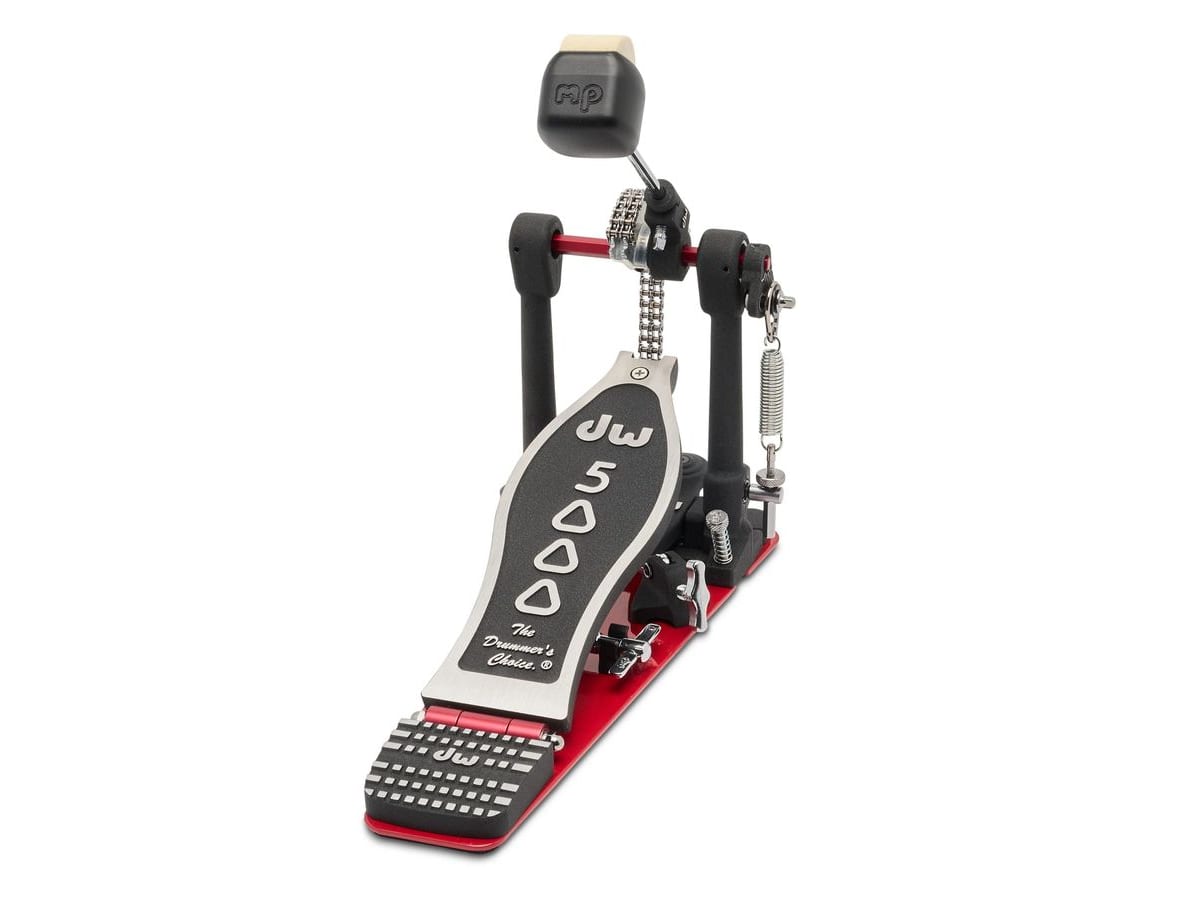
The current 5000 has been updated a few times, but it still feels like a 5000. The key features are:
- Tri-Pivot Toe Clamp. Three independent, rotating rubber pads grip the bass drum hoop from the top and the bottom. It holds onto almost any hoop thickness, wood or metal.
- Delta Ball-Bearing Hinge. A lightweight aluminium hinge, and a DW patent.
- Dual-Bearing Spring Rocker. Lets the spring follow the motion of each stroke, for a smoother, quicker feel.
- Aluminium hex shafts, pedal plates and linkages.
- The Two-Way beater. Felt on one side, plastic on the other, so you can flip it for a softer or punchier sound.
There is nothing exotic here. That is the point. It is a simple, tough pedal that does what you ask and keeps doing it.
Which DW 5000 should I buy?
The single pedal comes in three drive versions, and this is the decision that matters.
Dual-Chain Accelerator (5000AD4)
The Accelerator uses an eccentric (offset) sprocket. DW says it creates “an indirect relationship between the sprocket and the footboard, shortening the length of the stroke, and increasing velocity”. In plain English, the beater speeds up as it travels, so the pedal feels quick and punchy.
This is the most popular version, and if you are not sure, start here.
Dual-Chain Turbo (5000TD4)
The Turbo uses a round sprocket. The beater moves at the same rate as your foot all the way through the stroke, which gives a smooth, even, linear feel. Players who like to feel exactly where the beater is often prefer it.
Single-Chain Accelerator (5000AH4)
The same Accelerator cam on a single chain. It is the classic 5000 look and slightly lighter, and it is usually the cheapest of the three. A single chain is still plenty strong for most players.
The other versions
There is a 5000 for almost everything:
- XF. An extended footboard for more leverage and more room for heel-toe technique, in single and double versions.
- Double pedal, including a left-footed version.
- Heelless, with no heel plate, for players who play entirely on the balls of their feet.
- Sidekick, a pedal for playing from the side.
- Direct Link cajon pedal, for playing a cajon with your foot.
There is also a 5000 Series low boy hi-hat stand, if you want one to match.
How does the 5000 compare with the 3000, 9000 and MDD?
DW makes a pedal at every price, so here is where the 5000 sits.
| Pedal | What it is | Who it suits |
|---|---|---|
| DW 3000 | Medium-weight, all-metal, dual-chain Accelerator | Budget-conscious players who want the DW feel |
| DW 5000 | The industry standard, choice of three drives | Almost everyone |
| DW 9000 | Flagship chain pedal with an infinitely adjustable cam and floating rotor | Players who love to tweak |
| DW MDD | Machined direct drive, made in Oxnard | Speed players and direct-drive fans |
The 3000 is the closest to the 5000 for less money. It has a dual-chain Accelerator drive and DW’s 101 beater, but it is a medium-weight pedal, and DW does not list the 5000’s Tri-Pivot clamp or Delta hinge among its features.
The 9000 is the upgrade. Its EZ Infinite Adjustable Cam lets you dial anything from Accelerator to Turbo, a floating rotor puts bearings inside the cam, and the Delta II hinge uses two ball bearings. It is the pedal for drummers who want to fine-tune everything. Our DW 9000 guide and our Axis A21 vs DW 9000 head-to-head go into detail.
The MDD (Machined Direct Drive) is part of DW’s MFG range, precision machined from aircraft-grade aluminium in Oxnard. It has no chain at all. Our direct-drive pedal guide explains why some drummers love that, and Axis is the other big name in that world.
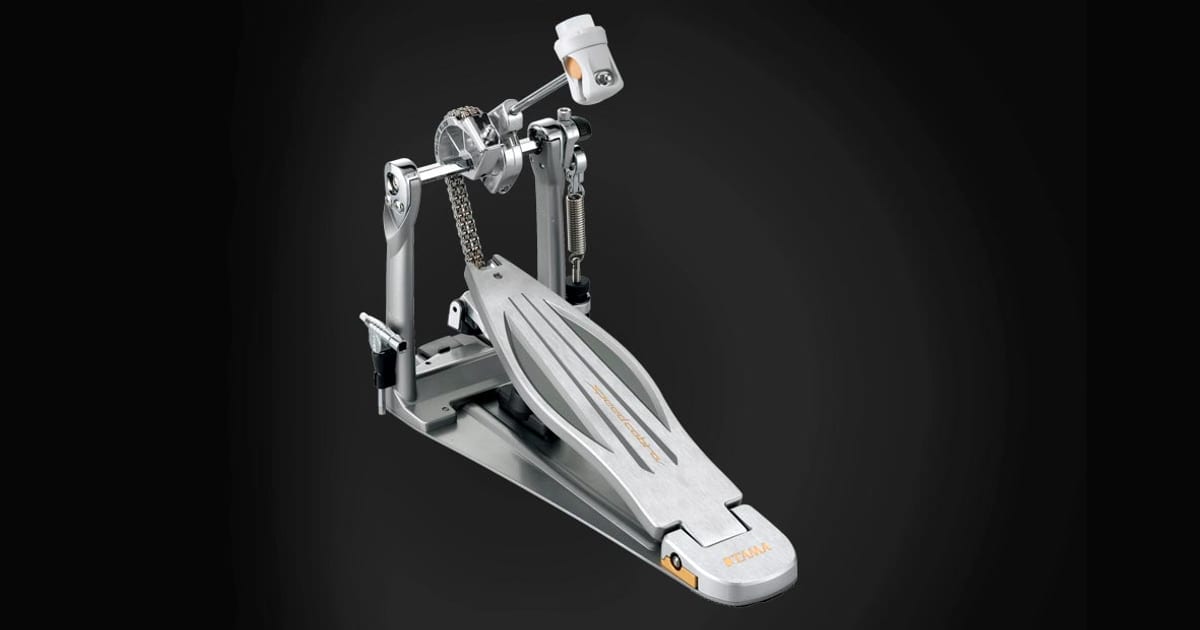
And if you are cross-shopping brands, Tama’s Speed Cobra is the 5000’s biggest rival.
Who plays the DW 5000?
Who doesn’t? Our Rig Vault lists the DW 5000 under Dave Grohl, Taylor Hawkins and Chad Smith, who has only ever needed a single pedal. Travis Barker’s rig has featured the 5000 for years, latterly the Turbo single.
That spread of players, from punk to funk-rock to stadium rock, says everything about how versatile it is.
How much does a DW 5000 cost?
At the time of writing, DW’s advertised US prices for the 5000 single pedals run from about $200 to $260, depending on which drive you choose. UK prices are in a similar range in pounds. Double pedals and XF versions cost more.
It is not the cheapest pedal you can buy. But it is one you will likely never need to replace, and that is worth paying for.
Where can I buy one?
Almost every drum shop in the world stocks the DW 5000.
The right shop depends on where you are: Guitar Center in the Americas, Gear4music in the UK, or Thomann for Europe and the rest of the world.
Because so many have been sold, the used market is huge and prices are low. Check used DW 5000 pedals on Reverb and the Reverb price guide. Just check the hinge and the chain for wear, and make sure you know which drive you are getting.
Final thoughts
The DW 5000 earned its “industry standard” tag the hard way, by being reliable, comfortable and easy to set up for more than four decades. If you want one pedal that will do everything and last for years, it is still one of the safest buys in drumming.
Our honest caveat is that it is a simple pedal by modern standards. If you love fine-tuning, the 9000 or a direct-drive pedal will give you more to play with.
For the rest of DW’s range, see our DW drums guide, and for how DW stacks up overall, read our best drum brands guide.
DW 5000 FAQs
- What is the difference between the DW 5000 Accelerator and Turbo?
- The cam. The Accelerator (AD4) uses an eccentric sprocket that shortens the stroke and speeds the beater up as it travels, so it feels quick and punchy. The Turbo (TD4) uses a round sprocket for an even, linear feel that many players find more natural. Both are dual-chain. There is also a single-chain Accelerator (AH4).
- What is the difference between the DW 5000 and 9000?
- The 9000 is DW's flagship chain pedal. It adds an EZ infinitely adjustable cam that you can set anywhere between Accelerator and Turbo, a floating rotor with bearings inside the cam, and the Delta II hinge. The 5000 has a fixed cam choice and is simpler and cheaper. See our DW 9000 guide for more.
- How much does a DW 5000 pedal cost?
- At the time of writing, DW's US advertised prices for the 5000 single pedals run from about $200 to $260 depending on the version. UK prices are in a similar range in pounds, and the double pedal costs a good deal more. Used 5000s are everywhere and much cheaper.
- Is the DW 5000 good for beginners?
- Yes. It is easy to set up, very reliable and has a familiar feel, which is why it is in so many studios and backlines. It costs more than a basic pedal, but it is the kind of pedal you buy once. If budget is tight, the DW 3000 brings a similar dual-chain Accelerator design for less.
Keep reading
Bass drum pedals
Tama Speed Cobra 910 | Pedal guide (2026)
The Tama Speed Cobra 910 explained: the long footboard, LiteSprocket and Recessed Setting, how it differs from the Iron Cobra, and the cheaper 310.
Head to Head
Axis A21 vs DW 9000 | Direct drive or chain?
The direct-drive benchmark against the chain-drive default: footboard, cam, feel at speed, servicing, availability and price, with a verdict on every row.
Hardware
Pearl Curved Boom Arm Stand | Worth it in 2026?
Pearl's curved Boomerang boom stand launched in 2021. Here is what it does, what it costs in 2026 and whether a curved arm belongs on your kit.