Yamaha drums | Every kit explained (2026)
Yamaha drums from the Rydeen to PHX: every current kit, the birch sound, the snares and hardware, and which Yamaha kit suits your playing and budget.
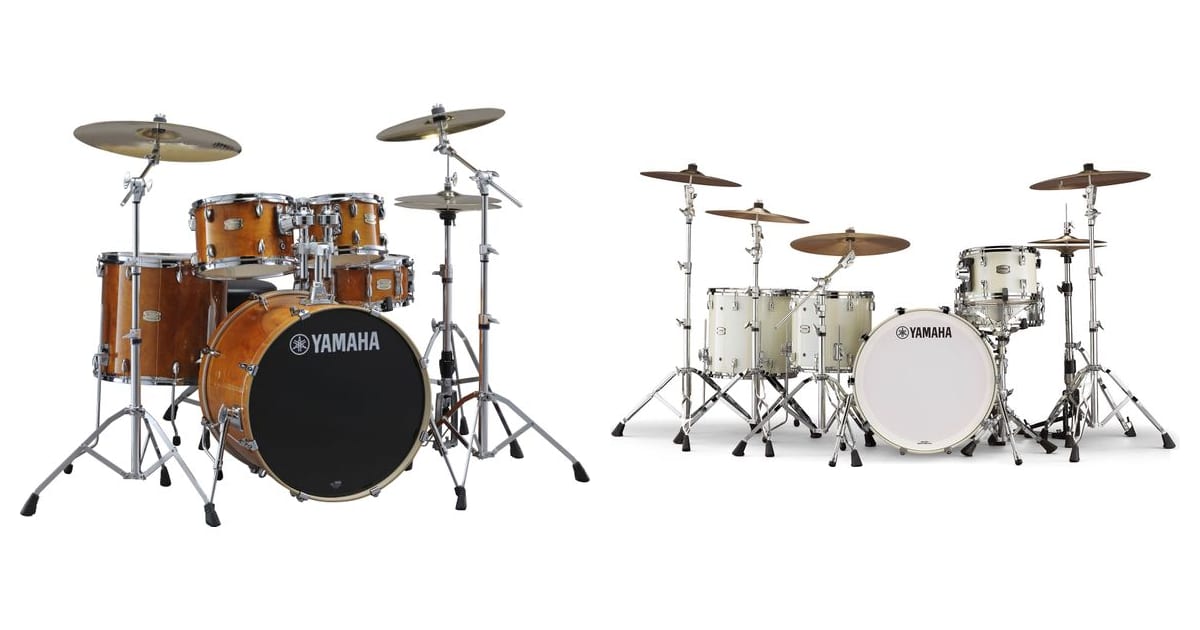
Yamaha is the drum company that does everything properly. The finishes are flawless, the hardware outlasts the drums, and a tom mount bought in 1980 still fits a Yamaha kit bought last week.
They are not the loudest brand in the room, though. Yamaha rarely chases trends, and its line-up changes slowly. That is exactly why so many working drummers, from session players to touring rock drummers, have stayed with them for decades.
So what does Yamaha make in 2026, how do the kits differ, and which one is right for you? Let’s find out.
A short history of Yamaha drums
Yamaha started making drums in 1967 with the D20 and D30 kits, built at its factory in Hamamatsu, Japan. Even then it used what it calls the Air Seal System: the plies are fitted into a mould with angled, staggered joints and an air bag is inflated inside the shell to press it perfectly round. It is still how Yamaha shells are made.
The big moments came in the 1970s. In 1976 Yamaha introduced its ball clamp and the “system drum” idea, standardising every rod and pipe across its range so that any Yamaha tom, clamp or stand fits any other. In 1977 it launched the YD9000, an all-birch kit with one-piece lugs and a sprayed piano-style finish at a time when everyone else was wrapping maple shells in plastic.
Steve Gadd and Cozy Powell were early adopters, and the kit’s tight, focused sound suited the studio so well that drummers started calling it “the recording kit”. Yamaha later made the name official, and the Recording Custom has been in the catalogue in one form or another ever since. Yamaha describes it as the most recorded drum set in history, and given the records it has been on, that is hard to argue with.
Since then the milestones have kept coming: the Tour Custom (1984), Maple Custom (1991), the Stage Custom (mid-1990s), Oak Custom (2002), the flagship PHX (2008), the Live Custom (2013) and the Absolute Hybrid Maple (2014).
What is the Yamaha sound?
Birch. That is the short answer. Yamaha championed birch when maple was the default, and its classic kits have a tight, punchy attack with a short decay and a slightly scooped midrange. Each drum speaks clearly and doesn’t smear into the next one, which is why engineers like them.
That is not the whole story any more. The current range covers maple (Tour Custom), oak (Live Custom Hybrid Oak) and hybrid shells (Absolute Hybrid Maple and PHX). But if you want “that Yamaha sound”, you want birch, and you can get it at almost any price.
The current Yamaha drum kit line-up
Here is every acoustic kit Yamaha lists at the time of writing, from cheapest to most expensive. Prices move a lot, so treat the ranges as a rough guide.
Rydeen
The Rydeen is Yamaha’s entry kit. It comes as a five-piece shell pack with a 14”x5.5” snare, in two sizes: a 22” bass drum version (RDP2F5) with 10”, 12” and 16” toms, and a 20” version (RDP0F5) with a 14” floor tom. There are eight wrap finishes, including glitters.
What you are paying for here is Yamaha’s hardware standard: genuine Yamaha tom and pipe clamps and the 22.2mm system, so the kit can grow with Yamaha stands and clamps later. It is a sensible first kit. Just remember that “shell pack” means no stands or cymbals, so budget for those. Our beginner drum kit buying guide walks you through what else you need.
Stage Custom Birch
The Stage Custom Birch is the kit most people mean when they say “a Yamaha”. It has six-ply, 7.2mm all-birch shells, a hand-applied lacquer finish, Yamaha’s Absolute lugs with an internal lock to stop tension rods backing off, and the YESS tom mount. Those parts come straight off Yamaha’s more expensive kits.
The five-piece shell packs come with a matching snare, and you can buy add-on drums from 8” to 24”. There are also two spin-offs: the Stage Custom Hip, a compact kit with a 20”x8” bass drum and a 13” floor tom fitted with snare wires, and the three-piece Stage Custom Bop Kit with an 18” kick.
Expect to pay around $900 in the US for a five-piece shell pack with snare, and a similar figure in pounds in the UK. It is a lot of drum for the money, and we go into it in depth in our Yamaha Stage Custom Birch guide. If you are cross-shopping it with a Tama, read Stage Custom vs Superstar Classic.
Tour Custom
The Tour Custom is Yamaha’s mid-priced maple kit. It has six-ply, 5.6mm all-maple shells with 45-degree edges, YESS mounts, Absolute lugs and 2.3mm Inverse Dyna Hoops, which bend inward slightly to tame overtones.
The selling point is the finish. It is a thin satin lacquer that shows off the grain and lets the shells resonate, and the colours (candy apple, chocolate, butterscotch and friends) are some of the nicest at the price. Shell packs come in 22”, 20” and 18” bass drum versions, without a snare. Yamaha sells Tour Custom snares in 14”x5.5” and 14”x6.5”.
If you want warm, versatile maple and you don’t care about the birch heritage, this is the one.
Live Custom Hybrid Oak
The Live Custom Hybrid Oak is built for loud rooms. Its seven-ply shell sandwiches a dense phenolic sheet between plies of oak, which gives a big, punchy, projecting sound. The bass drums have weights at the lug points to tighten the low end.
It also has one of the most striking finishes Yamaha makes, based on the Japanese Uzukuri technique: the soft grain is sanded back, the shell is coated in black and sanded again, so the oak grain stands out in relief. The hardware is dark silver, the shells are black inside, and the toms use the YESS III mount. It looks like a rock kit because it is one.
Recording Custom
The legend. The current Recording Custom was redesigned with Steve Gadd and launched in 2016. It has six-ply North American birch shells with 30-degree bearing edges, weighted one-piece high-tension lugs, YESS mounts and Remo Ambassador coated heads on the toms.
The sound is classic Yamaha birch made fatter and rounder, and it responds to a huge range of tunings. There is a deep list of shell sizes, matching birch snares and a range of metal snares in aluminium, brass and stainless steel. At NAMM 2026 Yamaha added three new finishes: Red Autumn Gloss, Polar White Gloss and Silver Sparkle.
It is a professional kit with a professional price, at around $4,000 to $4,600 for a four-piece shell pack in the US. Read our full Yamaha Recording Custom guide for the sizes and the Steve Gadd story.
Absolute Hybrid Maple
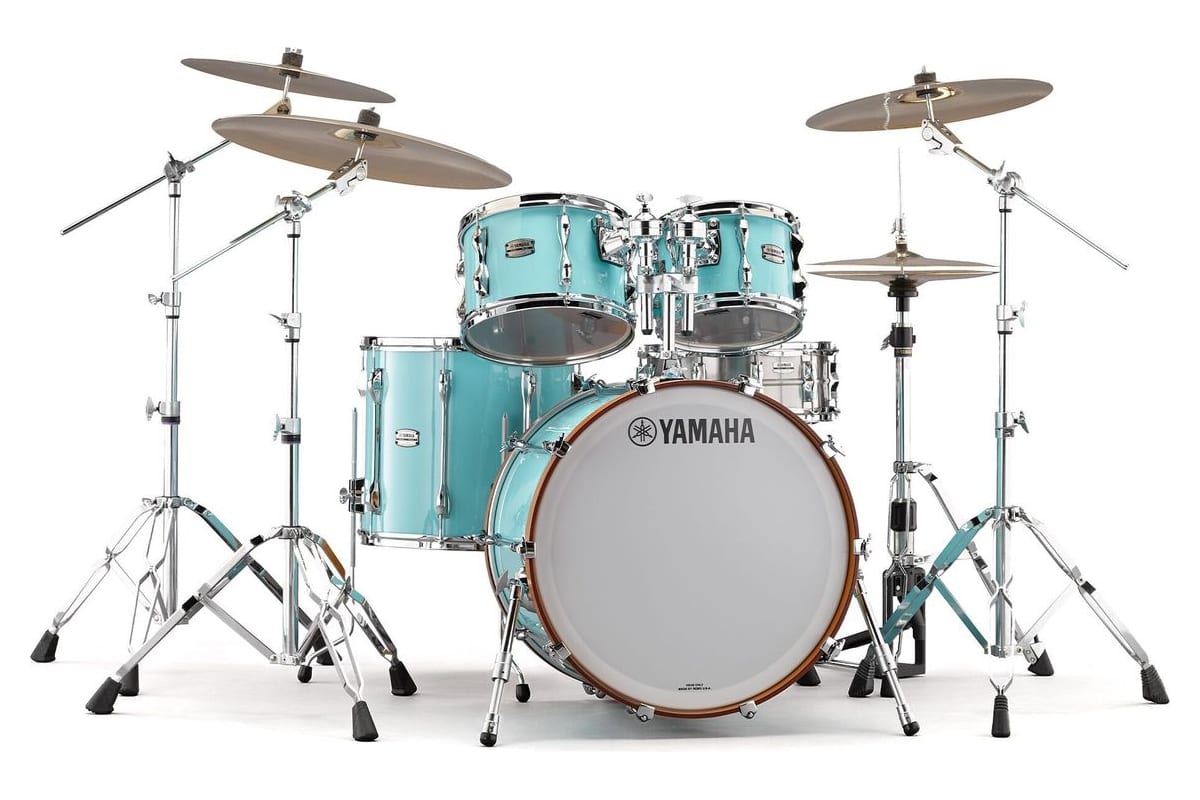
The Absolute Hybrid Maple takes the hybrid idea from the PHX and brings it down a price band. Its shells have a core ply of wenge, a very hard African wood, sandwiched between maple. The aim is a drum that stays clear and full from the quietest ghost note to a rimshot.
The details are lovely: hook lugs with a tiny footprint, the YESS III mount, 3mm aluminium die-cast hoops, a 30-degree edge on the bass drum and a 45-degree edge on the toms and snare, and a “Vintage Natural” interior finish. Larnell Lewis, Matt Cameron, Kendrick Scott and Richard Spaven are among the players Yamaha lists on it.
PHX
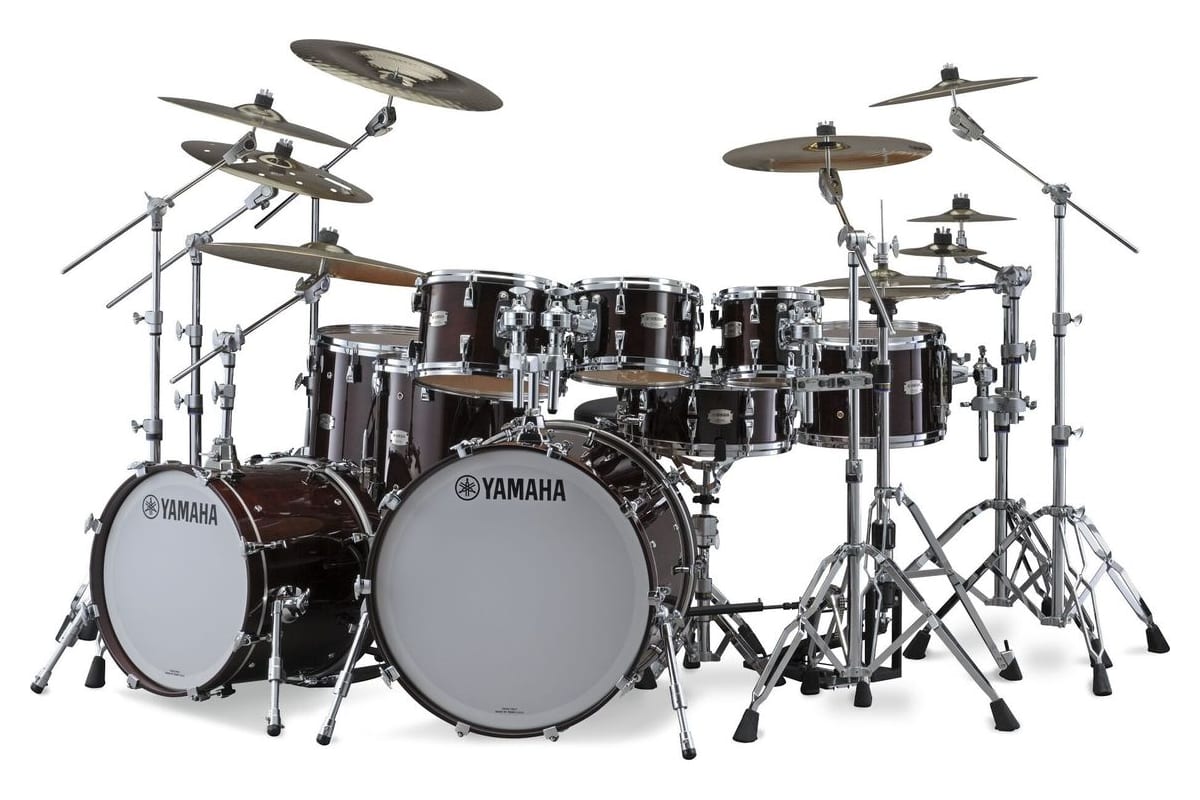
The PHX is the flagship. Yamaha says it was built to answer one artist’s wish list: louder, fatter, more sensitive. The shell is a gradient of hardness: a jatoba core, then kapur on each side, then maple on the inside and outside.
Every bearing edge is cut at 30 degrees, but the radius at the top differs between toms, floor toms and bass drum to shape each one’s attack. The finishes are wiped, sprayed, sanded and buffed by hand, and the hook lugs and aluminium hoops come in chrome or gold. Dave Weckl, Antonio Sanchez, Manu Katché and Tommy Aldridge are on the PHX artist list. If you have to ask the price, you already know.
Which Yamaha kit should you buy?
Here is our quick guide.
- First kit on a budget: Rydeen, plus a hardware pack.
- First “proper” kit, or a gigging workhorse: Stage Custom Birch. It is the best value in the range.
- Warm maple sound and beautiful finishes for less: Tour Custom.
- Loud rock and live work: Live Custom Hybrid Oak.
- The classic birch studio sound: Recording Custom.
- Maximum dynamic range and a no-compromise kit: Absolute Hybrid Maple or PHX.
Not sure which brand to look at in the first place? Our best drum brands guide compares Yamaha with Pearl, Tama, Ludwig, DW and the rest, and our Gear Guru will happily talk you through the shortlist.
What about Yamaha snare drums?
Yamaha makes snares to match most of its kits: Stage Custom Birch, Tour Custom, Live Custom Hybrid Oak, Absolute Hybrid Maple and Recording Custom (birch). There is also a Stage Custom steel snare at the budget end, and the Recording Custom metal snares in aluminium, brass and stainless steel, which are excellent all-rounders.
At NAMM 2026 Yamaha also announced a limited Roy Haynes Centennial snare, a hand-hammered 14”x5.5” copper drum built in Hamamatsu. Only 100 are being made worldwide, so you will need to be quick.
What about Yamaha hardware?
This is where Yamaha quietly beats almost everyone. The ball clamp, the hex rods and the 22.2mm pipe standard date back to 1976, and the hardware is famously reliable. The world’s big backline companies stock Yamaha for a reason.
For 2026 Yamaha refreshed much of its range, with updated snare and cymbal stands and new parts led by the SS9WR snare stand and its Flip Grip basket. We covered the launch in our Yamaha 2026 hardware news story. Yamaha also brought back the FP720, a classic belt-drive pedal from the 1990s.
Does Yamaha make electronic drums?
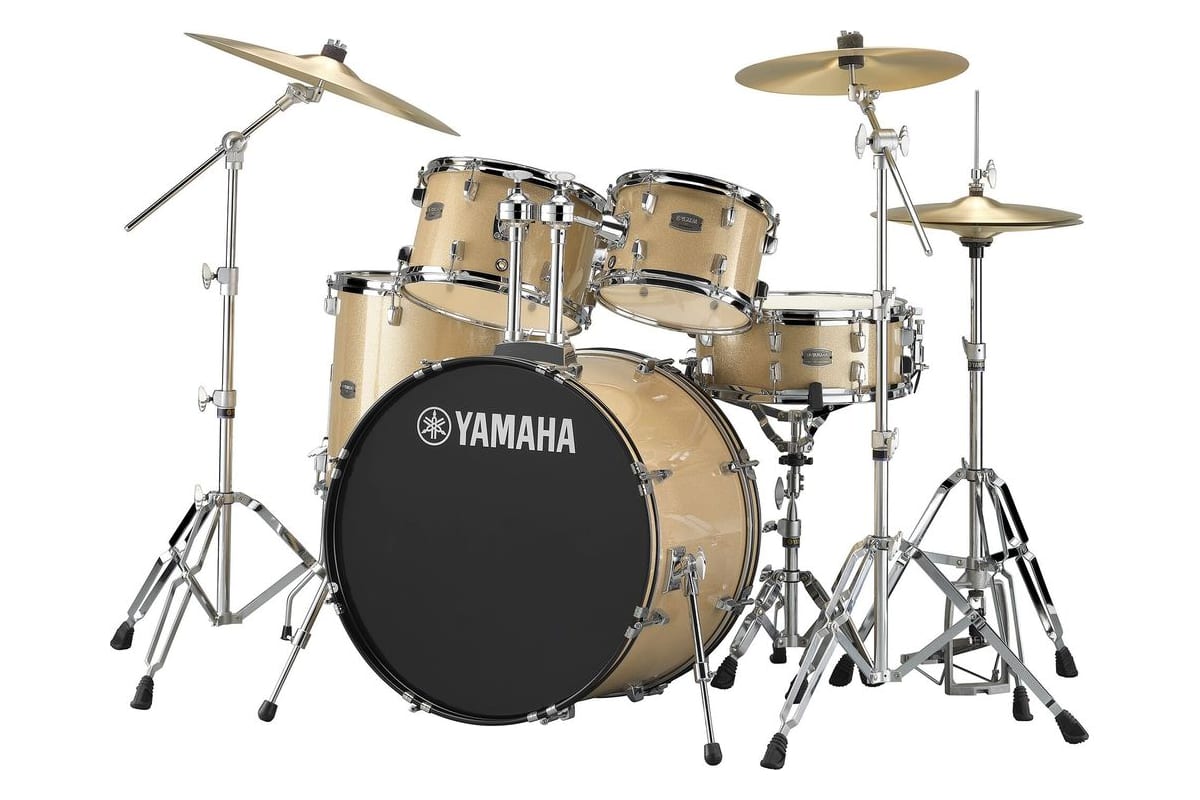
Yes, and very good ones. The DTX range runs from the DTX402 starter kits up to the DTX10 with its wooden shells and the flagship DTX-PROX module. Our Yamaha DTX electronic drums guide covers every kit.
Yamaha also makes the EAD systems, which turn an acoustic kit into a recording and hybrid rig with one microphone and trigger unit on the bass drum. Start with our Yamaha EAD10 guide, then read EAD10 vs EAD20 vs EAD50 to see which one you need.
Who plays Yamaha drums?
A lot of very good drummers. Steve Gadd has played Yamaha since 1976 and co-designed the current Recording Custom; see Steve Gadd’s rig in the Rig Vault. Larnell Lewis of Snarky Puppy has been a Yamaha artist since 2005, and Matt Cameron of Soundgarden and Pearl Jam has played Yamaha for most of his career.
Yamaha’s current artist pages also list Dave Weckl, Antonio Sanchez, Manu Katché, Kendrick Scott, David Garibaldi and Slayer’s Paul Bostaph, which tells you how wide the stylistic net is.
Where can I buy one?
The right shop depends on where you are: Guitar Center in the Americas, Gear4music in the UK, or Thomann for Europe and the rest of the world.
Yamaha kits hold their value and turn up used all the time, especially older Recording Customs and Stage Customs. Have a look at used Yamaha drums on Reverb and read our guide to buying used drums online first.
Final thoughts
Yamaha is the safe choice in the best sense of the word. Every kit in the range is well made, the hardware is the best in the business, and even the cheaper kits share parts with the expensive ones. The only downside is that Yamaha is rarely the most exciting brand on the shop floor. It just quietly does the job, for decades.
If we had to pick one, it would be the Stage Custom Birch for most people and the Recording Custom for anyone who wants the sound on all those records. Browse the rest of the brand on our Yamaha drums hub, or see how it stacks up against the Pearl drums line-up.
Yamaha drums FAQs
- Are Yamaha drums good?
- Yes. Yamaha has made drums since 1967 and its kits are known for consistent build quality, superb finishing and some of the best hardware in the business. The Recording Custom is one of the most recorded kits in history, and the Stage Custom Birch is one of the best-value step-up kits you can buy.
- Where are Yamaha drums made?
- Yamaha drum production started in Hamamatsu, Japan, in 1967. Most of the current range, including the Recording Custom, is now built in Yamaha's own drum factory in China, while special and limited pieces, such as the 2026 Roy Haynes snare, are still made in Hamamatsu.
- What is the best Yamaha drum kit for a beginner?
- The Rydeen is Yamaha's entry kit and comes as a five-piece shell pack with a snare. If you can stretch further, the Stage Custom Birch is the kit most drummers never need to replace, with all-birch shells and the same mounts and lugs as Yamaha's pro kits.
- What is Yamaha's top drum kit?
- The PHX is Yamaha's flagship, with a hybrid shell of jatoba, kapur and maple and hand-applied finishes. Just below it sit the Absolute Hybrid Maple and the Recording Custom, which many pros prefer for its classic birch sound.
- Does Yamaha still make the Recording Custom?
- Yes. The current Recording Custom was redesigned with Steve Gadd and launched in 2016, with six-ply birch shells, 30-degree bearing edges and weighted high-tension lugs. Yamaha added three new finishes for it at NAMM 2026.
Keep reading
All Our Buying Guides
Best drum brands (2026) | Every budget ranked
The best drum kit brands in 2026, from Yamaha, Pearl and Tama to Ludwig, DW, Gretsch, Sonor, Mapex and PDP, with the right pick for every budget.
DW Collector's Series
DW Collector's Series | Guide (2026)
DW's Collector's Series explained: the pure woods, SSC shell options, curated Jazz and Santa Monica shells, finishes, prices, and who it is really for.
DW Drums
DW drums | Every series explained (2026)
DW drums explained: Design, Performance, Collector's and DWe kits, the 5000 and 9000 pedals, where they are made, and what Roland owning DW means for you.