Yamaha Recording Custom | Full guide (2026)
The Yamaha Recording Custom is the birch kit on countless records. The history, Steve Gadd's 2016 redesign, the shells, sizes, snares and prices explained.
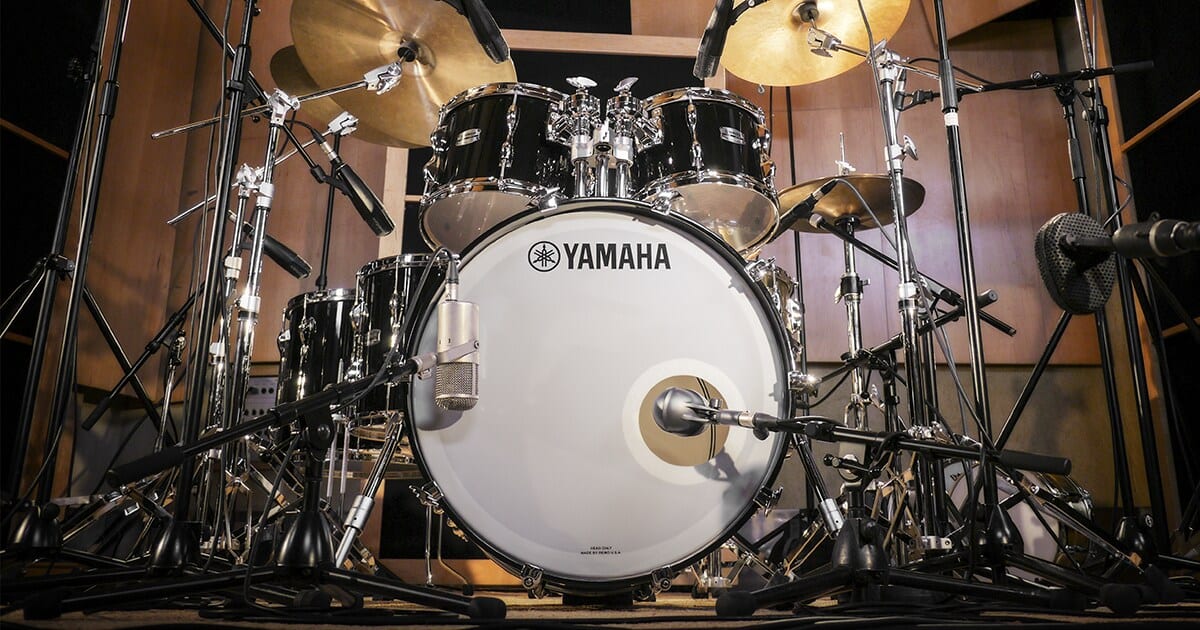
Some drum kits are famous for a player. The Yamaha Recording Custom is famous for a sound. It is that tight, punchy, beautifully focused birch tone you have heard on hundreds of records, from 1970s New York sessions to modern pop.
It has been in Yamaha’s catalogue, in one version or another, for almost fifty years. The current kit was redesigned with Steve Gadd and launched in 2016, and Yamaha gave it three new finishes at NAMM 2026.
So what makes it special, what do you get, and is it worth the money? Let’s find out.
Where did the Recording Custom come from?
In 1977 Yamaha launched the YD9000. At the time, maple was the wood everyone used, following the American jazz drums of the era. Yamaha’s own research into pianos and wind instruments had pointed it towards birch instead.
The YD9000 had 100% birch shells, one-piece high-tension lugs and a sprayed piano-style finish rather than the plastic covering most kits used. The result was a tight, well-defined sound that top players adopted almost straight away, including Steve Gadd and Cozy Powell.
Because it sounded so good under microphones, drummers started calling it the “recording” kit, and Yamaha later made Recording Custom the official name. A lacquered YD9000R followed in 1979, and an ultra-deep YD9000RD in 1983.
Who is Steve Gadd, and what did he change?
Steve Gadd is probably the most copied session drummer of the last fifty years, from Paul Simon’s “50 Ways to Leave Your Lover” to Steely Dan’s Aja. He has played Yamaha since 1976, and the Recording Custom has been part of his sound for most of that time.
For the current version, Gadd met Yamaha’s R&D team over roughly three years. Yamaha quotes him on the result: “They still feel like the Recording Custom, when you take them out of the box they don’t feel new, they feel comfortable and I think that’s good.”
The changes are small on paper but add up:
- 30-degree bearing edges with a rounded R1.5 profile, which Gadd chose for a sharper response and a wide tuning range.
- Weighted one-piece high-tension lugs. The extra mass soaks up unwanted shell noise without muffling, and gives a rounder, deeper note.
- A lifted bass drum. Gadd prefers a raised 20” kick, so Yamaha lifted the bass drum off the floor and lengthened the beater rod to centre the beater.
You can see the kits he plays today in Steve Gadd’s rig in the Rig Vault.
What are the shells made of?
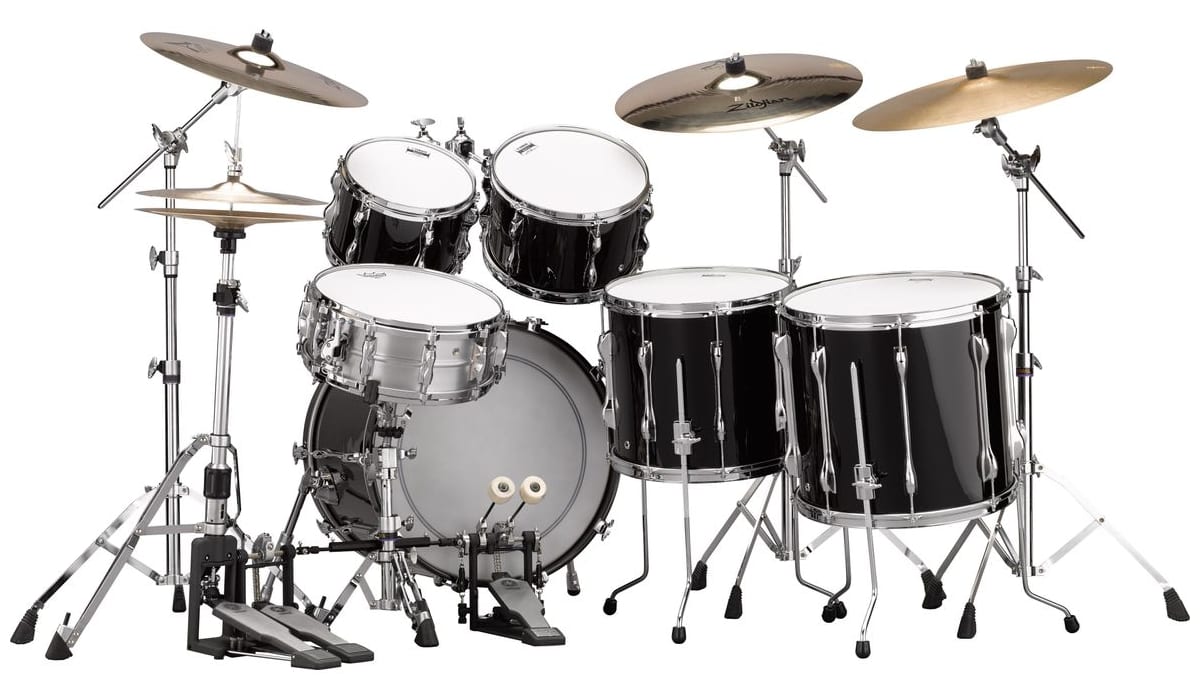
North American birch, six plies, with a dark brown painted interior. Yamaha uses its Air Seal System, the same shell-forming process it has used since 1967, which presses the plies against the mould with an inflated air bag for a perfectly round shell.
Birch gives the Recording Custom its character: a quick attack, controlled decay and clear separation between drums. Yamaha’s own description is that “each stroke is clearly delineated”, and that birch keeps drums from interfering with each other when they are set up side by side. That is exactly what an engineer wants.
What hardware comes on the drums?
- Weighted one-piece high-tension lugs
- 1.6mm triple-flange steel hoops on the toms and floor toms, and wooden hoops on the bass drum
- YESS tom mounts, which hold the drum with minimal contact so it resonates freely
- Open-type floor tom brackets with wing bolts
- Die-cast bass drum claws with insertion plates for noise-free tuning
- Convertible bass drum legs
The heads are proper ones, too: Remo Ambassador Coated on top of the toms with clear Ambassadors underneath, a Remo Powerstroke 3 coated batter on the bass drum and a smooth white PS3 front head with the Yamaha logo. Coated heads are a big part of the warm, classic tone.
What sizes are available?
The Recording Custom is sold as individual drums and as packages, so you can build almost any kit.
- Bass drums: 18”x14”, 20”x16”, 22”x14”, 22”x16”, 22”x18” and 24”x14”
- Toms: 8”x7.5”, 10”x7.5”, 10”x9”, 12”x8”, 12”x10”, 13”x9”, 13”x11”, 14”x12” and 16”x14”
- Floor toms: 14”x13”, 16”x15” and 18”x16”
The classic Gadd-style four-piece is a 22” kick with 10”, 12” and 16” toms. Shops also sell 20” bass drum four-pieces, and Yamaha offers tom packages with a floor tom, two rack toms and a tom holder.
What about the Recording Custom snare drums?
They are some of the best-value pro snares around, and you don’t need the kit to enjoy one.
- Birch: 14”x5.5” and 14”x8”
- Aluminium: 14”x5.5” and 14”x6.5”
- Brass: 13”x6.5”, 14”x5.5” and 14”x6.5”
- Stainless steel: 14”x5.5” and 14”x7”
The metal snares in particular are workhorses: bright, sensitive and easy to tune. The brass 14”x6.5” is a favourite all-rounder.
What finishes can you get?
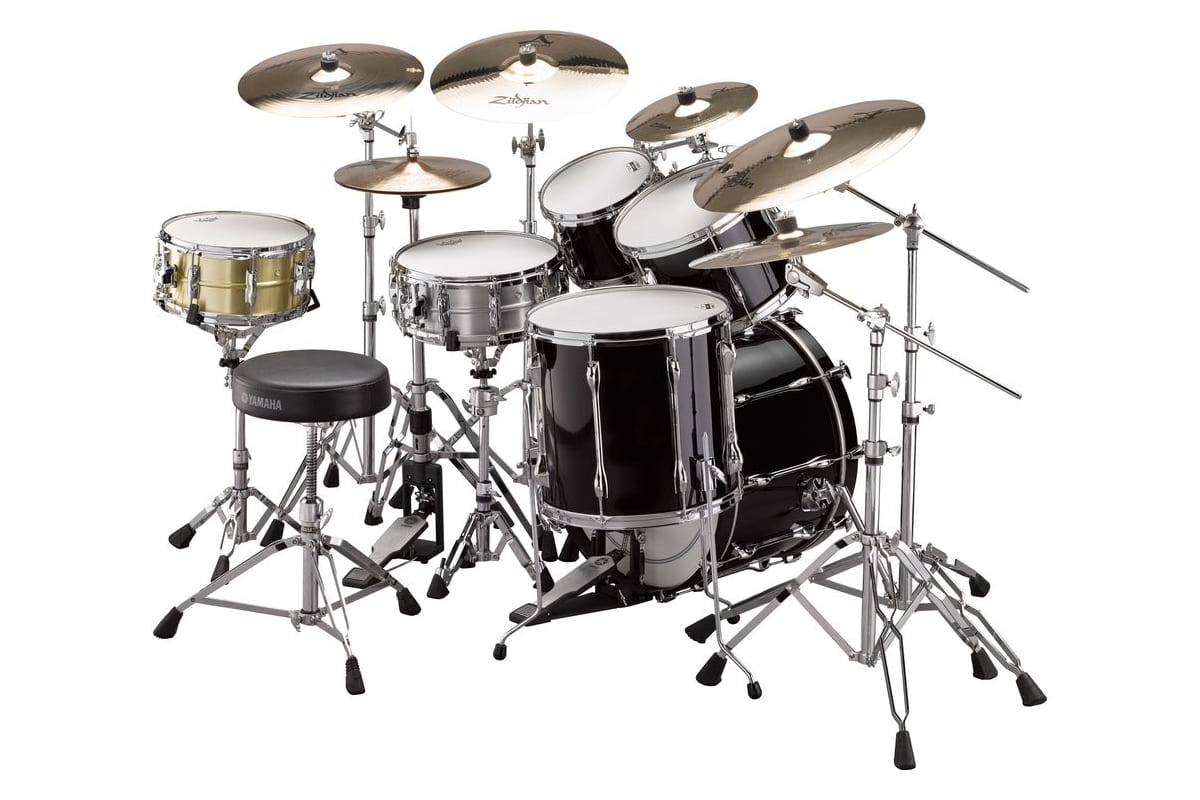
Recording Custom finishes are glossy, even and very Yamaha. Long-running colours include Solid Black, Classic Walnut, Real Wood and Surf Green, and some shops carry exclusive finishes. At NAMM 2026 Yamaha added three more: Red Autumn Gloss, Polar White Gloss and Silver Sparkle.
Who plays a Recording Custom?
Beyond Gadd, Yamaha’s current Recording Custom artist list includes Akira Jimbo, Tower of Power’s David Garibaldi, Slayer’s Paul Bostaph and Kansas’s Phil Ehart. That is jazz-fusion, funk, thrash and arena rock, which tells you how versatile the kit is.
How much does it cost?
It is a professional kit with a professional price. At the time of writing a four-piece shell pack with a 22” bass drum sells for roughly $4,000 to $4,600 in the US depending on finish. UK prices are well into four figures as well. Snares are much more affordable, and are a good way into the sound.
If that is too much, the Stage Custom Birch gives you birch shells and Yamaha hardware for a fraction of the price, and our Yamaha drums guide covers the kits in between.
Recording Custom vs Absolute Hybrid Maple
This is the choice most Yamaha buyers at this level face. The Recording Custom is the classic birch sound: tight, focused and fast. The Absolute Hybrid Maple has maple shells with a dense wenge core, hook lugs and aluminium hoops, and is built for a wider dynamic range and a rounder, fuller tone.
If you know and love the sound on those classic records, get the Recording Custom. If you want a more modern, open sound, try the Absolute Hybrid. Gadd himself has played both.
Where can I buy one?
The right shop depends on where you are: Guitar Center in the Americas, Gear4music in the UK, or Thomann for Europe and the rest of the world.
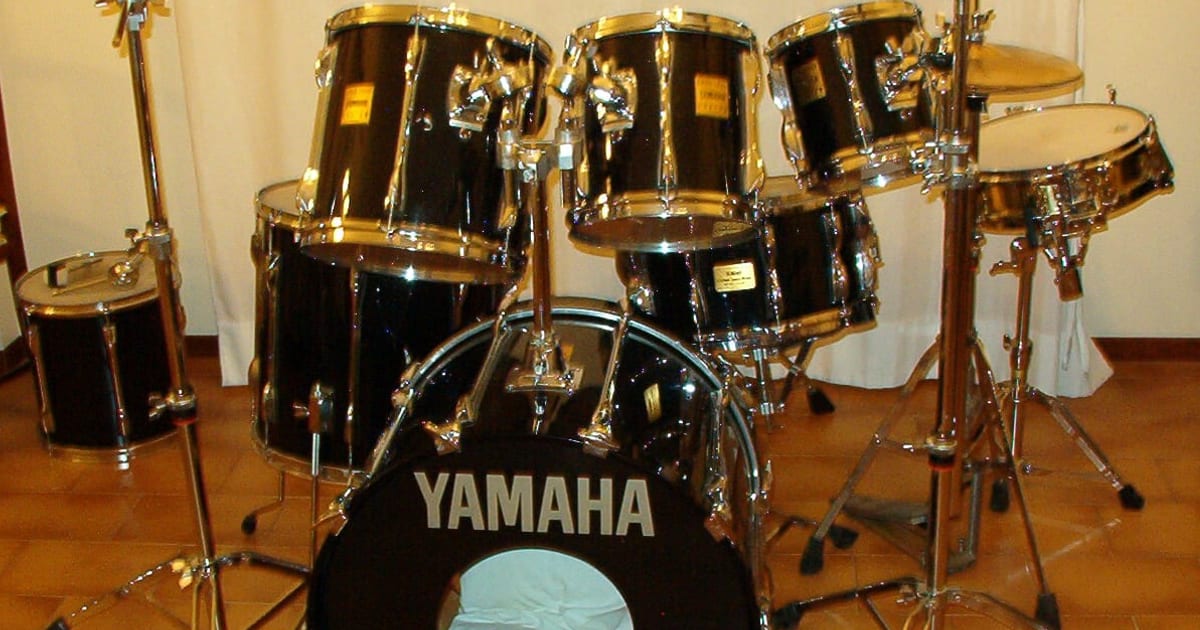
Older Recording Customs, including the Japanese-made kits from before production moved, are prized on the used market. Have a look at used Yamaha Recording Custom kits on Reverb and check the Reverb price guide before you pay.
Final thoughts
The Recording Custom is a legend that has never become a museum piece. Gadd’s 2016 changes made it rounder and deeper without losing the focus that made it famous, and it still sounds fantastic on a record. The only real downside is the price, which puts it firmly in professional territory.
If you can afford one, it is a kit for life. Explore more on our Yamaha drums hub, see how Yamaha compares with other makers in our best drum brands guide, or read our full Steve Gadd feature.
Yamaha Recording Custom FAQs
- Why is it called the Recording Custom?
- The original 1977 kit was the YD9000. Its tight, focused birch sound suited the studio so well that session drummers nicknamed it the recording kit, and Yamaha later adopted Recording Custom as the official name. Yamaha calls it the most recorded drum set in history.
- What wood is the Yamaha Recording Custom made of?
- Birch. The current kit uses six-ply North American birch shells with 30-degree bearing edges and a dark brown painted interior. Yamaha also makes Recording Custom snare drums in birch, aluminium, brass and stainless steel.
- Did Steve Gadd design the Recording Custom?
- He helped redesign it. Gadd worked with Yamaha's research and development team for about three years on the current version, launched in 2016, which brought in the 30-degree edges, weighted lugs and lifted bass drum. He has played Yamaha since 1976 and was one of the original kit's first famous players.
- How much does a Yamaha Recording Custom cost?
- It is a professional kit. At the time of writing a four-piece shell pack with a 22-inch bass drum costs roughly $4,000 to $4,600 in the US, and UK prices are well into four figures too. Used kits, including older Japanese-made ones, come up regularly.
- Is the Recording Custom good for rock?
- Yes. Birch's punchy attack and short decay cut through loud music, and the current kit's weighted lugs and lifted bass drum add low end. It is a favourite of jazz and session players, but Slayer's Paul Bostaph and Kansas's Phil Ehart are on Yamaha's Recording Custom artist list too.
Keep reading
All Our Buying Guides
Best drum brands (2026) | Every budget ranked
The best drum kit brands in 2026, from Yamaha, Pearl and Tama to Ludwig, DW, Gretsch, Sonor, Mapex and PDP, with the right pick for every budget.
DW Collector's Series
DW Collector's Series | Guide (2026)
DW's Collector's Series explained: the pure woods, SSC shell options, curated Jazz and Santa Monica shells, finishes, prices, and who it is really for.
DW Drums
DW drums | Every series explained (2026)
DW drums explained: Design, Performance, Collector's and DWe kits, the 5000 and 9000 pedals, where they are made, and what Roland owning DW means for you.