Yamaha DTX electronic drums | Guide (2026)
Every Yamaha DTX electronic drum kit explained, from the DTX402 starter kits to the DTX6, DTX8 and DTX10, plus the DTX-PRO and DTX-PROX modules and prices.
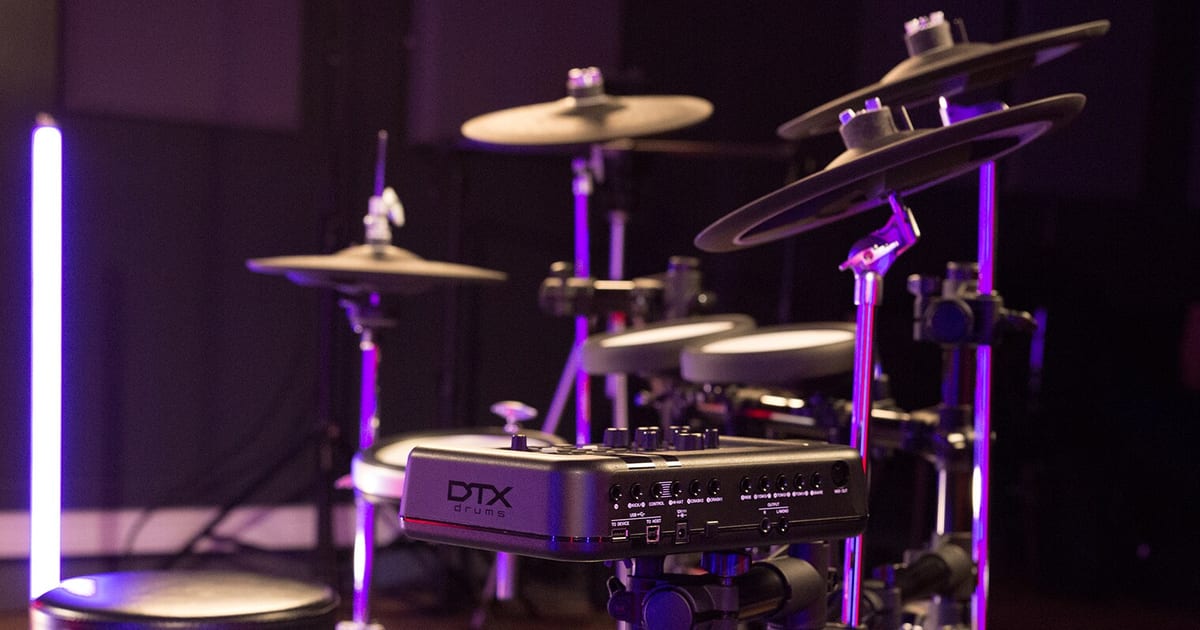
Yamaha has been making electronic drums for decades, and its DTX range has a reputation for one thing above all: it sounds like real drums. The samples are recorded in proper studios, with the room around them, and the cymbal pads are among the best you can buy.
The range is also simpler than it looks. There are really two families: the DTX402 starter kits, and the DTX6, DTX8 and DTX10 kits built around the DTX-PRO and DTX-PROX modules.
So which DTX is right for you, and what do the letters on the end mean? Let’s find out.
What does Yamaha’s DTX range look like in 2026?
Here are the current kits, from cheapest to most expensive. UK prices are rough guides at the time of writing, and they move a lot with offers.
| Kit | Module | Pads | Rough UK price |
|---|---|---|---|
| DTX402 series | DTX402 | Rubber | £300–£450 |
| DTX6 series | DTX-PRO | TCS, rubber or mesh | £700 and up |
| DTX8 series | DTX-PRO | Birch-shell pads, mesh or TCS | around £1,900–£2,100 |
| DTX8K PROX | DTX-PROX | Birch-shell pads, mesh or TCS | between DTX8 and DTX10 |
| DTX10 series | DTX-PROX | Birch-shell pads, mesh or TCS | around £3,550–£3,600 |
What do the -M and -X mean?
This is the bit that confuses most people. On the DTX6, DTX8 and DTX10 kits, the letter after the model tells you the drum heads.
- -M means mesh: two-ply mesh heads made by Remo. They feel bouncy and familiar, and you can tune the tension.
- -X means TCS, Yamaha’s Textured Cellular Silicone. It is a foam silicone full of tiny air bubbles, with a textured surface so sticks don’t slide. It is quieter than mesh and has a firmer, more natural rebound.
Which is better is personal. Mesh feels more like a tight drumhead; TCS is quieter for flats and thin walls. Try both if you can.
DTX402 series: the starter kits
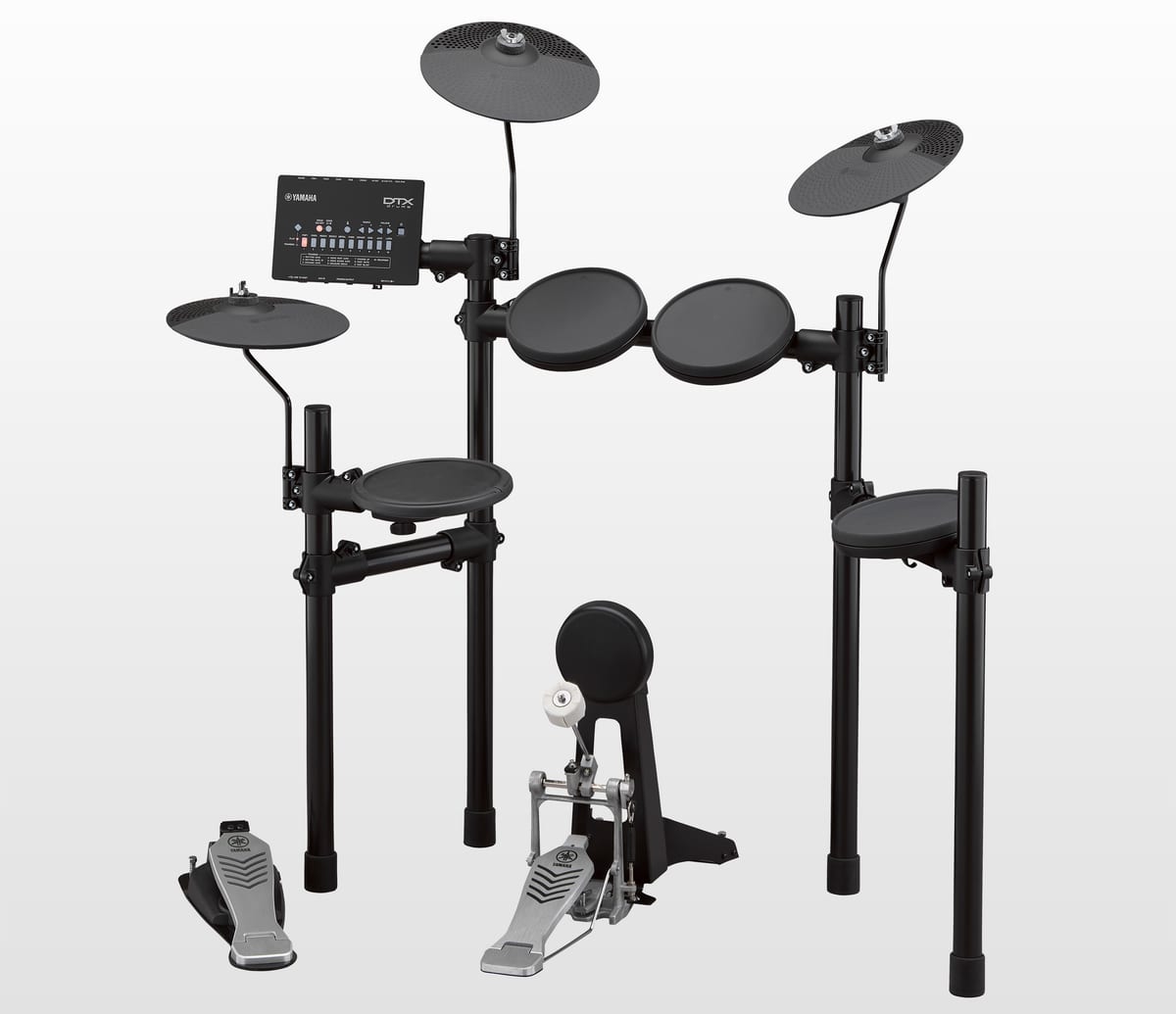
The DTX402 kits are Yamaha’s way in. There are three:
- DTX402K, the cheapest, with a silent kick pad unit (no beater) and a simple hi-hat control pedal.
- DTX432K, which adds a proper kick tower with a real Yamaha bass drum pedal and a free-standing hi-hat controller.
- DTX452K, which adds a three-zone snare pad on top of that, so you can play rimshots.
All three use the same module, with 10 drum kits and 10 built-in training functions. The free DTX402 Touch app adds a Challenge mode that turns practice into a game, and you can use the module over USB to record audio and MIDI into a phone or computer. The cymbals are 10” pads, and the crash can be choked.
They are honest beginner kits. The rubber pads are firm and a little noisy, but the sounds are good and the training tools genuinely help. At the time of writing the DTX402K sells for around £300 to £340 in the UK.
DTX6 series: the DTX-PRO module for less
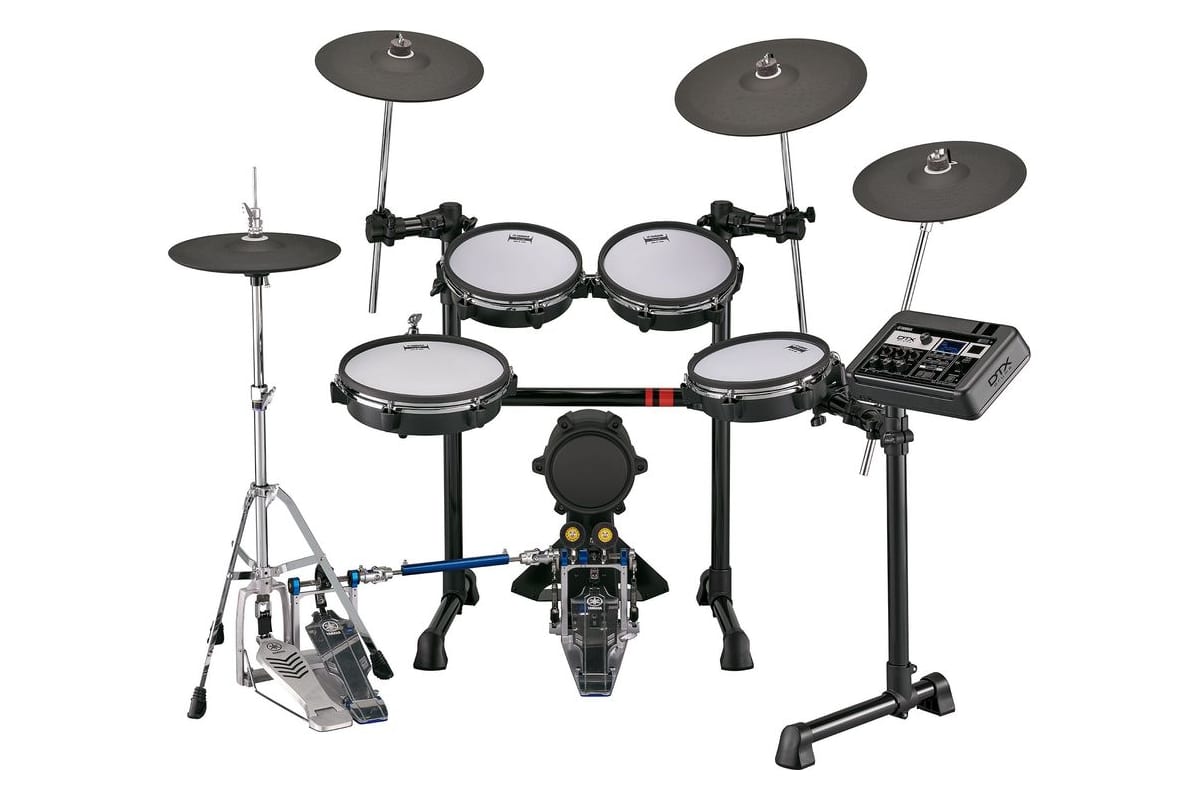
The DTX6 kits are where the DTX range gets serious. They all use the DTX-PRO module, which has the same sound engine as the flagship DTX-PROX, with acoustic kits recorded in top studios along with the natural ambience of the room.
The DTX-PRO has three Kit Modifier knobs, for Ambience, Compression and Effects, which let you change the whole character of a kit in seconds. It has a 10-function training section, a recorder, USB audio and MIDI, and it works with Yamaha’s DTX Touch and Rec’n’Share apps.
The DTX6 line-up is:
- DTX6K-X: an 8” three-zone TCS snare, 7” rubber toms, a small kick pad and a 10” hi-hat pad with a separate controller. The ride is a full 13” three-zone pad with hit-point detection.
- DTX6K2-X: adds a real-moving 13” hi-hat on a proper stand, a 7.5” kick tower, two 13” crashes and a sturdier rack.
- DTX6K3-X: as the K2, but with TCS heads on the toms too.
- DTX6K5-M: the big one, with a 12” mesh snare, 10” mesh toms and floor tom and a larger ride pad.
The DTX6K-X sells for around £700 to £775 in the UK at the time of writing. If you want the DTX-PRO sounds without the price of the DTX8, the DTX6K5-M is the sweet spot.
DTX8 series: real birch shells
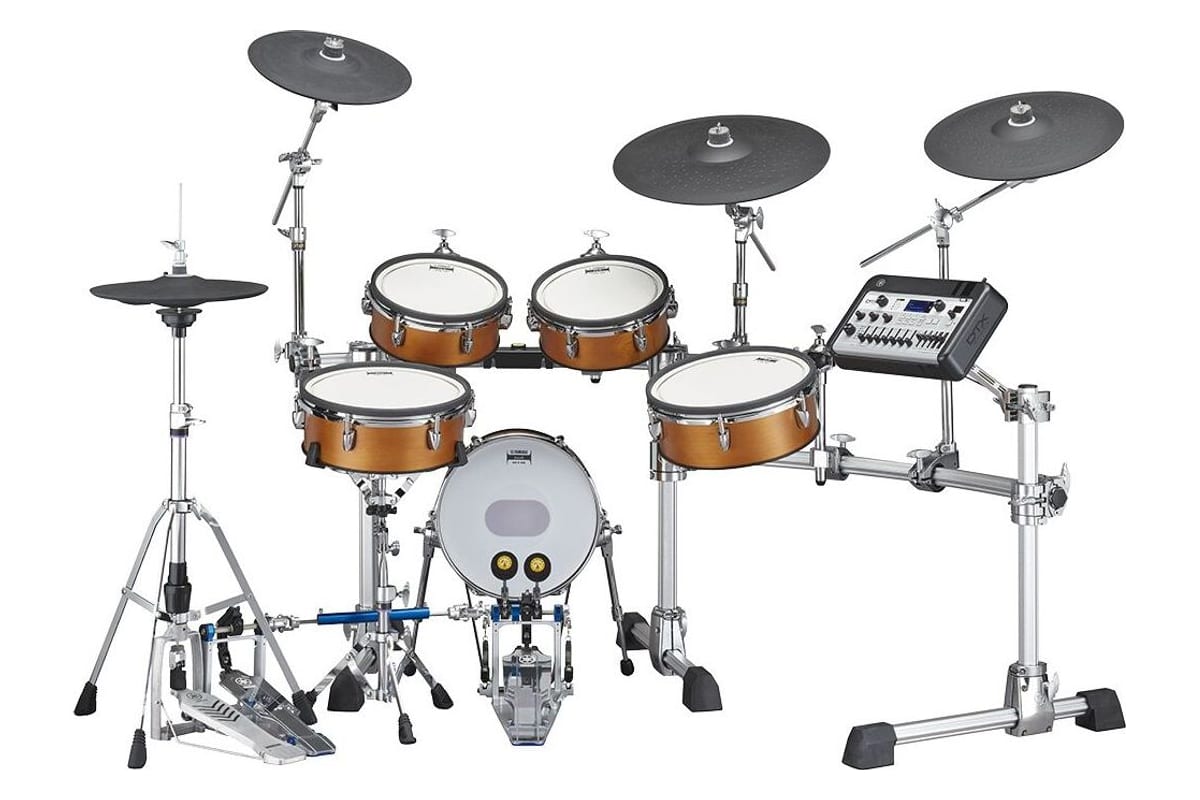
The DTX8 kits keep the DTX-PRO module and upgrade everything you hit. The snare and tom pads have birch shells, painted the same way as Yamaha’s acoustic drums, in Black Forest or Real Wood. The 12” snare pad has three sensors, the ride pad detects where you hit it, and the kick tower takes a double pedal.
There are two versions, the DTX8K-M with Remo mesh heads and the DTX8K-X with TCS. The kit is built on Yamaha’s standard hardware, ball clamps included, so it looks and sets up like an acoustic kit.
At the time of writing the DTX8K-M sells for around £1,900 to £2,100 in the UK.
DTX8K PROX: the new middle ground
In October 2025 Yamaha added the DTX8K PROX series. It is the DTX8 kit with the flagship DTX-PROX module, which used to be exclusive to the DTX10. Yamaha says it was designed to fill the gap between the two.
You get 100 preset kits (with the version 2 firmware), including Yamaha’s Recording Custom and PHX acoustic kits, room for 200 user kits, Bluetooth, the RS8 rack and the KP90 kick tower. As with the DTX8, you choose mesh (DTX8K-M PROX) or TCS (DTX8K-X PROX), in Real Wood or Black Forest.
DTX10 series: the flagship
The DTX10 is the top of the range: birch-shell pads, the DTX-PROX module and the fullest set of pads. Like the DTX8, it comes as the DTX10K-M (mesh) or DTX10K-X (TCS). Snarky Puppy’s Larnell Lewis is one of the players Yamaha uses to demo it.
What sets the DTX-PROX module apart:
- More sounds. The free version 2 update brought it to 100 preset kits, with 30 new kits including PHX and Recording Custom, plus 30 new effect cymbal voices and a “Bleed” function for snare-wire and shell resonance.
- Eight individual outputs and a routing matrix, for live sound and recording.
- Bluetooth audio, so you can play along to your phone, and recording to a USB stick.
- Live Set, which recalls a chain of kits, tempos and backing tracks with one touch.
- Seven LED rotary faders for fast, mixer-style control.
At the time of writing the DTX10K-X sells for around £3,550 to £3,600 in the UK.
Can I buy the modules on their own?
Yes. The DTX-PRO and DTX-PROX are sold separately as trigger modules, at around £920 and £1,070 respectively in the UK at the time of writing. They are a good upgrade for an older DTX kit, or the brain of a hybrid set-up with acoustic drum triggers.
Which Yamaha DTX kit should I buy?
- First kit, small budget: DTX402K. Step up to the DTX432K for a real kick pedal.
- Best value: DTX6K2-X or DTX6K3-X. The DTX-PRO sounds, a proper hi-hat and two crashes.
- Mesh feel on a budget: DTX6K5-M.
- A kit that looks and feels like real drums: DTX8K-M or DTX8K-X.
- Flagship sounds without the flagship price: DTX8K PROX.
- Gigging, recording and everything else: DTX10.
Not sure whether you need an electronic kit at all? Our electronic drum kit buying guide covers the basics, and our best electronic drum brands guide compares Yamaha with Roland and Alesis.
What about the EAD?
If you already own an acoustic kit, Yamaha has another option. The EAD systems put a microphone and trigger unit on your bass drum and let you record the whole kit, or layer electronic sounds on top of it. Start with our Yamaha EAD10 guide and see EAD10 vs EAD20 vs EAD50 for the full range.
Where can I buy one?
The right shop depends on where you are: Guitar Center in the Americas, Gear4music in the UK, or Thomann for Europe and the rest of the world.
Electronic kits come up used all the time, often barely played. Check used Yamaha DTX kits on Reverb before you buy new.
Final thoughts
Yamaha’s DTX range is easy to recommend. The DTX402 kits are honest, helpful beginner kits, the DTX6 brings the pro sound engine to a sensible price, and the DTX8 and DTX10 are some of the most natural-feeling electronic kits you can play. The only catch is the naming, and now you know what the -M and -X mean.
If we had to pick one, it would be a DTX6K3-X for most home drummers. Browse more on our Yamaha electronic drums hub, read our Yamaha drums guide for the acoustic side of the brand, or find the right drum VST to pair with any of them.
Yamaha DTX FAQs
- Are Yamaha electronic drums good?
- Yes. Yamaha is one of the big three electronic drum makers alongside Roland and Alesis. Its DTX kits are known for natural-sounding acoustic samples recorded in top studios, excellent cymbal pads and sturdy hardware built on the same clamps as Yamaha's acoustic kits.
- What is the difference between the DTX6, DTX8 and DTX10?
- The DTX6 and DTX8 both use the DTX-PRO module, while the DTX10 uses the flagship DTX-PROX. The DTX6 has smaller, simpler pads on a basic rack; the DTX8 adds birch-shell tom and snare pads with mesh or silicone heads; the DTX10 combines those shell pads with the DTX-PROX, which adds more kits, Bluetooth audio and eight individual outputs.
- What is the best Yamaha electronic drum kit for a beginner?
- The DTX402 series. The DTX402K is the cheapest, and the DTX432K and DTX452K add a real kick pedal and a free-moving hi-hat controller. All three have 10 built-in training functions and work with Yamaha's free DTX402 Touch app.
- Do Yamaha DTX kits have mesh heads?
- Some do. Kits ending -M, such as the DTX6K5-M and DTX8K-M, use two-ply Remo mesh heads. Kits ending -X use Yamaha's TCS (Textured Cellular Silicone) heads, which are quieter and have a firmer, more natural rebound. The DTX402 series uses rubber pads.
- Can I connect a Yamaha DTX kit to a computer?
- Yes. The DTX402 and DTX-PRO modules send MIDI and audio over USB, and the DTX-PRO and DTX-PROX come with a download code for Cubase AI. Our guide to connecting electronic drums to a computer walks you through it.
Keep reading
Alesis
Alesis electronic drums | Every kit explained
Alesis electronic drums explained, from the Debut and Nitro Max to the BFD-powered Strata Prime: what each kit gets you, rough prices and who should buy.
Alesis
Alesis Strata Prime | The ultimate guide
The Alesis Strata Prime puts BFD drum sounds in a 10.1-inch touchscreen module. What you get, how it compares with Roland, the downsides and who it suits.
All Our Buying Guides
Best electronic drum brands (2026) | Ranked
The best electronic drum brands in 2026: Roland, Yamaha and Alesis, plus EFNOTE, Simmons, Gretsch and Pearl, with the right e-kit for every budget.