Roland V-Drums | Every kit explained (2026)
Roland V-Drums explained, from the TD-02 to the V71 flagship: what each series gets you, the VAD kits with real shells, rough prices and who each suits.
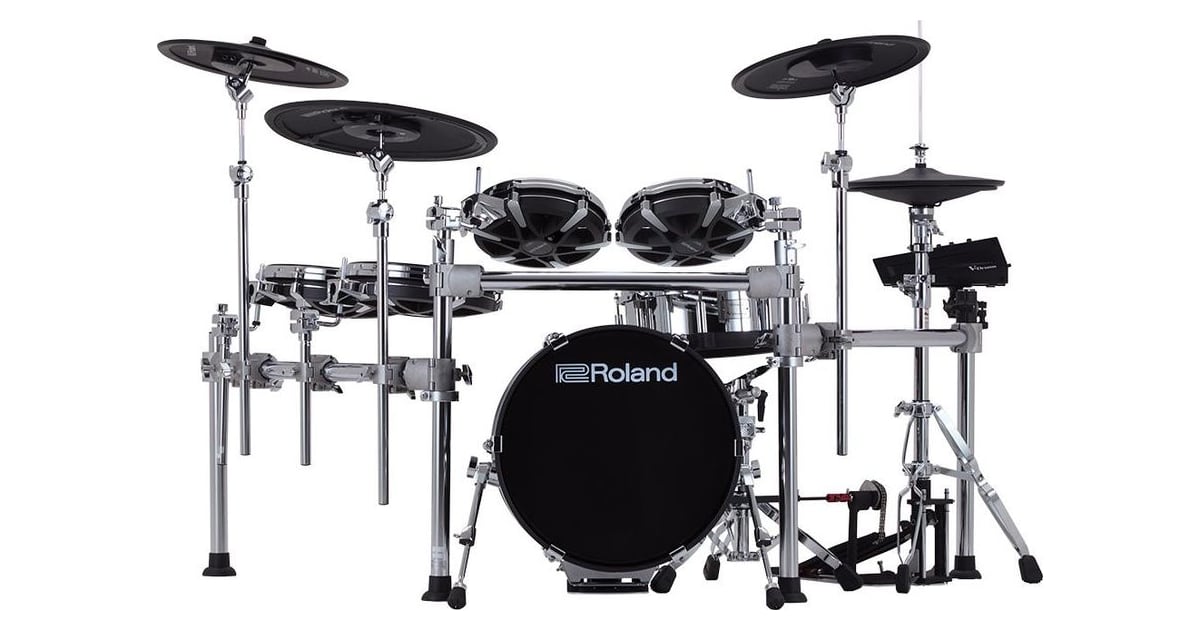
Ask a room of drummers to name an electronic drum kit and most of them will say “V-Drums”. Roland has been making them since 1997, and for a lot of players the name has become the word for the whole category.
The trouble is that the range has never been bigger, or more confusing. There are TD-02s, TD-07s and TD-17s, then a new family of three-digit kits (TD316, TD516, TD716), then the VAD kits with real wooden shells. The old TD-27 and TD-50X kits have quietly left the line-up.
So which V-Drums kit does what, and which one is right for you? Let’s find out.
What are Roland V-Drums?
V-Drums is Roland’s name for its electronic drum kits. Roland launched the first one, the TD-10, in 1997, with mesh pads on the snare and toms. That was the big idea: a head you could tension like a real drum, with real rebound, instead of a hard rubber pad.
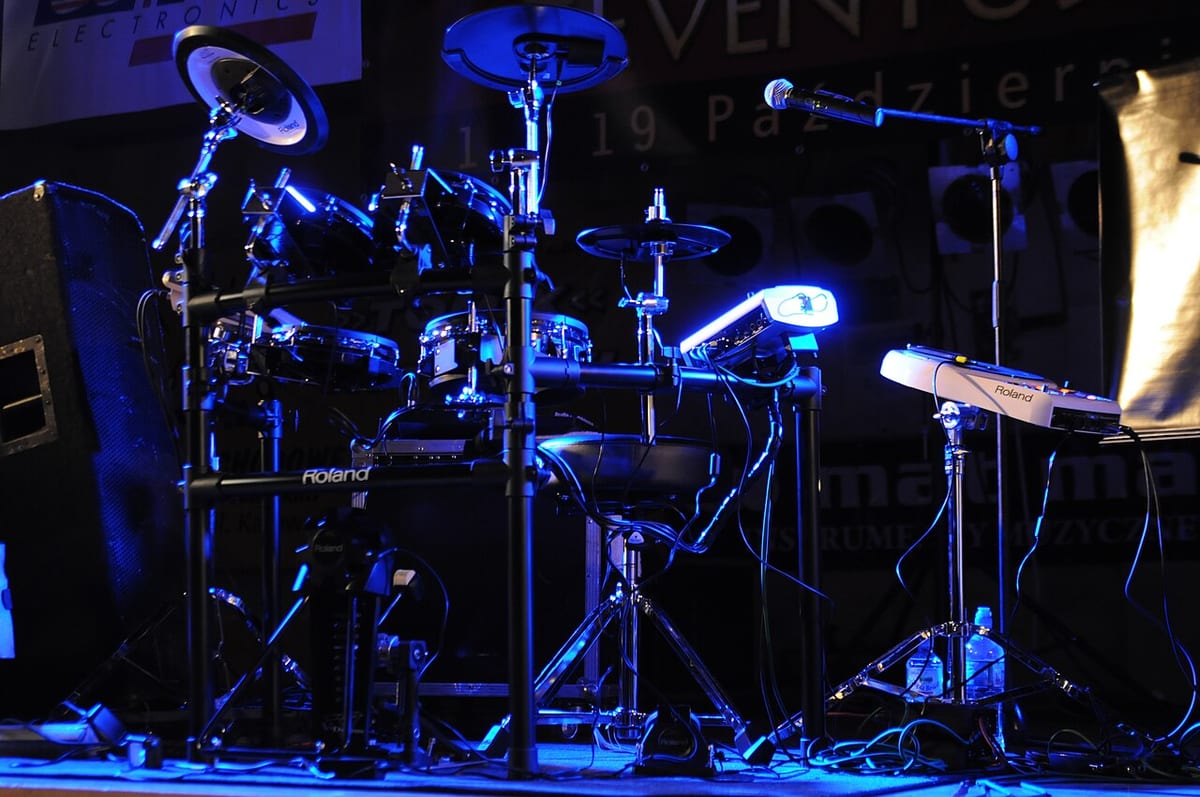
Every V-Drums kit is built the same way. Pads and cymbals go on a rack (or in wooden shells, on the VAD kits), and they are wired to a module, the box that holds the sounds. The module is the brain of the kit, and it is where most of the money goes as you climb the range.
That is worth remembering when you shop. Two kits with similar pads can feel very different if one has a much better module behind it.
How is the V-Drums range laid out in 2026?
At the time of writing, Roland’s own site lists the kits in six groups. From the bottom up:
| Series | Module | Kits | Who it suits |
|---|---|---|---|
| TD-02 | TD-02 | TD-02K, TD-02KV | Absolute beginners, tight budgets |
| TD-07 | TD-07 | TD-07DMK, TD-07KV, TD-07KX, TD-07KVX, TD-07DMK2, TD-07KV2 | First “proper” kit, practice at home |
| TD-17 | TD-17 | TD-17KV2, TD-17KV-L | Improving players who want real dynamics |
| V-Drums 3 Series | V31 | TD313, TD316 | Serious home players and recording |
| V-Drums 5 Series | V51 | TD513, TD516 | Gigging drummers, studio work |
| V-Drums 7 Series | V71 | TD713, TD716 | The flagship |
On top of those sit the VAD kits (V-Drums Acoustic Design), which take the same electronics and put them in wooden shells, and the VQD106, which Roland calls the quietest kit in V-Drums history.
Let’s go through them in order.
Roland TD-02: the cheapest way in
The TD-02 kits are Roland’s entry point. The TD-02K is a compact five-piece with a height-adjustable stand. The TD-02KV adds a mesh snare pad and a wider stand layout. Roland says both have noise-reducing features and optional Bluetooth.
They are fine for a child starting lessons or an adult who is not yet sure. The catch is that most of the pads are not mesh, and the module is basic. If the budget can stretch even a little, the TD-07 is a much better kit to grow into.
Roland TD-07: the first proper V-Drums
The TD-07 is the kit we recommend most often. It is the cheapest Roland with mesh heads on every drum and a module that actually responds to how you play.
There are a lot of versions, and the names do not help:
- TD-07DMK is the compact, most affordable one.
- TD-07KV has bigger pads, a KD-10 mesh kick and a four-post rack.
- TD-07KX and TD-07KVX add upgraded pads and features handed down from the bigger kits.
- TD-07KV2 and TD-07DMK2 are the 2026 refresh, with a 10-inch snare and 8-inch toms. The KV2 also gets a second crash.
We covered the refresh in our TD-07KV2 news story, and the original kit in our Roland TD-07KV guide.
The module is the same across them all: 25 preset kits, Bluetooth for playing along to your phone, and Roland’s Coach functions for timing and stamina practice. It also sends audio and MIDI over one USB cable, which the cheap rivals often do not.
Our electronic drum kit buying guide puts the TD-07DMK at around £600 or $750, which is roughly twice an Alesis Nitro Max. Is it worth it? Our TD-07KV vs Nitro Max head-to-head answers that row by row.
Roland TD-17: the one that feels like drums
The TD-17 range is where V-Drums start to feel like a drum kit rather than a practice tool. Roland’s own tagline is “Become a better drummer faster”, and that is a fair summary.
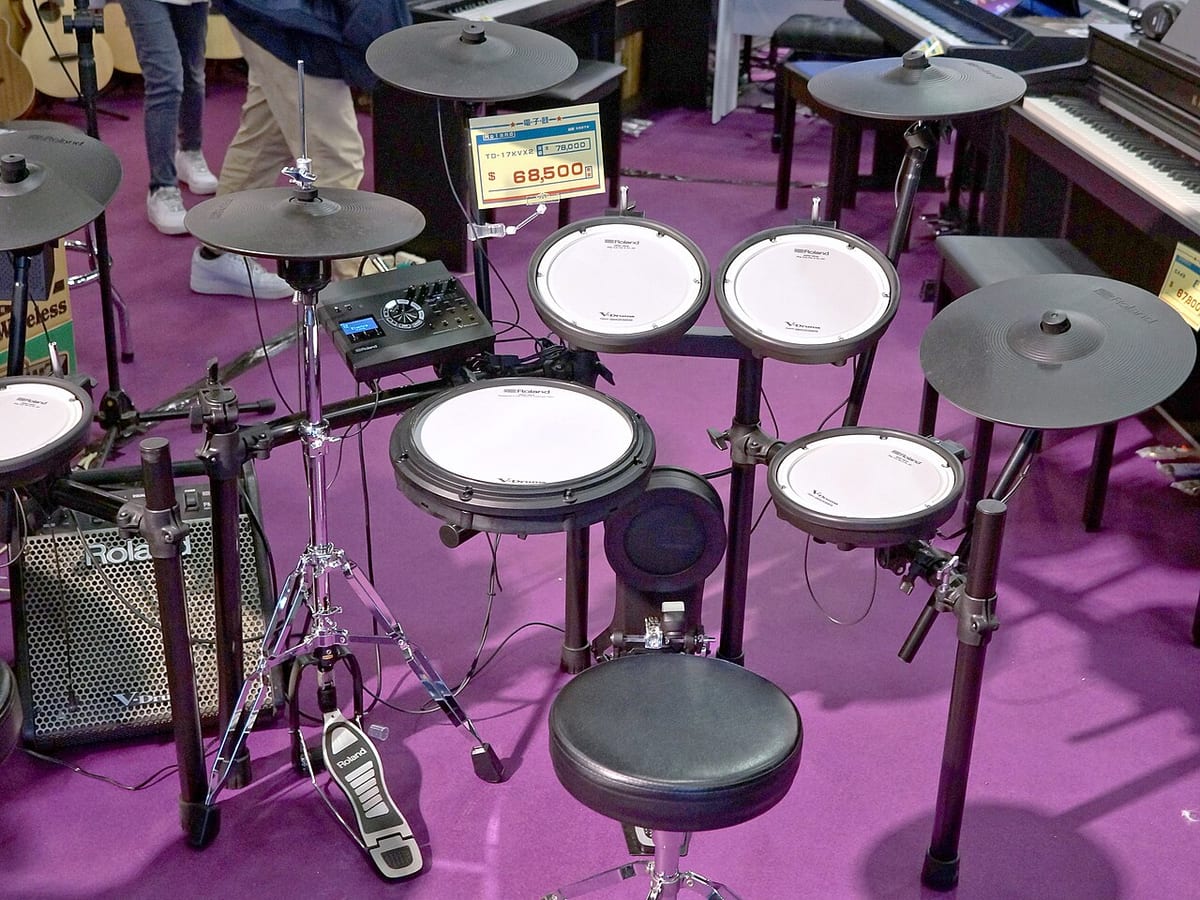
The TD-17KV2 gets a 12-inch mesh snare, 10-inch toms, two slim cymbals including a 14-inch ride, practice tools and Bluetooth audio. The bigger TD-17KVX2, which put the hi-hat on a real hi-hat stand, is no longer listed on Roland’s site, but it is well worth hunting for used. A hi-hat on a stand changes everything for your left foot, and in the current range you get one from the TD316 upwards.
The TD-17 module uses Prismatic Sound Modeling from the old TD-50 flagship, so it handles rimshots, cross-sticks and soft ghost notes far better than the TD-07. Expect to pay somewhere around $1,500 for a TD-17KV2 in the US, and more for the bigger kits.
What are the V-Drums 3, 5 and 7 Series?
This is the new part of the range, and it replaces the old TD-27 and TD-50X kits. The names finally make sense: the first digit tells you the series, and the last digit tells you the size.
All three series share one idea. Roland built a new sound library with Drum Workshop (DW), the American drum maker it bought in 2022, and every module in the family uses it. Roland says the V31 and V51 use “the same internal engine as the V71”. You also get built-in wireless for downloading new sounds through Roland Cloud Connect, Bluetooth audio and MIDI, and multichannel USB audio over a single cable.
So the question is not “which one sounds better?” so much as “how many inputs, outputs and premium pads do I need?”.
V-Drums 7 Series (V71)
The flagship. Roland launched the 7 Series and the V71 module in late 2024, replacing the TD-50X kits at the top of the range.
The V71 has a large colour display, sample import for your own sounds, balanced XLR and jack main outputs, eight balanced direct outputs and 32 channels of audio over USB. It has 14 analogue trigger inputs and three digital ones.
The TD716 is the full kit: a PD-14DSX digital snare, two PD-10X and two PD-12X toms, a VH-14D digital hi-hat, a CY-18DR digital ride, two CY-16R-T crashes and a KD-18 kick with a wooden shell. The TD713 is the streamlined version with the same module and the same digital snare, hi-hat and ride.
At the time of writing, US retailers list the TD716 at around $8,800, and UK shops have had it at around £5,800. That is serious money, and you should hear one before you buy one. Our TD-50X guide explains what the V71 changed, and why a used TD-50X is still worth a look.
V-Drums 5 Series (V51)
The 5 Series arrived in October 2025. The TD516 gets Roland’s digital pads for snare (PD-140DS), ride (CY-18DR) and hi-hat (VH-14D), with a KD-12 kick. The TD513 is the space-saving version, with a 12-inch PD-12P snare and PD-8H and PD-10H toms.
Roland’s launch prices were $3,699.99 for the TD516 and $2,699.99 for the TD513. The V51 module on its own was $1,899.99. This is the series we would point a gigging drummer at: flagship sounds, fewer premium pads, a lot less money.
V-Drums 3 Series (V31)
The 3 Series launched alongside the 5. The TD316 has a PD-12P snare, two PD-8H toms and a PD-10H, two CY-12C-T crashes, a CY-14R-T ride and a VH-10 hi-hat on a real stand. The TD313 is the compact version with a PDX-12 snare and a KD-10 kick.
The V31 module has a dedicated digital trigger input, so you can add a Roland digital snare, ride or hi-hat later. That is a smart upgrade path.
Launch prices were $1,999.99 for the TD316, $1,699.99 for the TD313 and $999.99 for the V31 on its own. That puts the TD316 a step above the TD-17KV2, and the gap buys you a lot: the newer sound library, wireless and a hi-hat on a real stand. The TD-17 is cheaper and very well proven.
What is V-Drums Acoustic Design (VAD)?
VAD kits put V-Drums electronics inside real wooden shells. They look like an acoustic kit on stage or on camera, they feel more like one under the sticks, and they still go through a module, so they are as quiet as any other e-kit.
At the time of writing Roland lists five:
- VAD103: shallow-depth shells on the TD-07 module. The affordable way to get the look.
- VAD316: a five-piece on the V31 module, launched at $3,399.99.
- VAD504: a streamlined kit with full-size wood shells.
- VAD516: full-depth shells and digital pads on the V51, launched at $5,799.99.
- VAD716: the flagship, on the V71.
Are they worth the extra? If the kit will be seen, on a stage, in a church or on YouTube, yes. If it lives in a spare room, the money buys more on a standard rack kit.
What happened to the TD-27 and TD-50X?
They have been replaced, and so has the TD-17KVX2. The TD-27 kits sat between the TD-17 and the flagship, a space the 3 and 5 Series now effectively fill. The TD-50X kits (TD-50KV2, TD-50K2 and VAD706) were superseded by the 7 Series.
None of them appears on Roland’s global kits page any more, but there are a lot of them on the used market. A used TD-27 or TD-50X can be a brilliant buy, because the modules are excellent and Roland kits hold up well. Check every pad triggers before you pay, and read our guide to buying used drums online first.
What about the SPD pads and hybrid kits?
V-Drums are full kits. If you play an acoustic kit and want samples, loops or click under your sticks, you want an SPD sampling pad instead. Our Roland SPD-SX PRO guide covers the flagship pad and its smaller siblings.
Roland also makes triggers that clamp to acoustic drums and send them to a module. That is a hybrid kit, and it is how a lot of touring drummers work.
Which V-Drums kit should you buy?
Here is the short version:
- A child starting lessons, tight budget: TD-02KV, or stretch to a TD-07.
- A first kit you will keep: TD-07KV2.
- An improving player who wants real dynamics: TD-17KV2, or a used TD-17KVX2 for the hi-hat stand.
- Serious home playing and recording: TD316, or a used TD-27 if the budget is firm.
- Gigging: TD516, or a used TD-50X.
- Money no object: TD716, or the VAD716 if it will be seen.
And do not forget the extras. Most V-Drums kits ship without a kick pedal, a throne or headphones. Budget for all three, and read our guide to headphones for electronic drums before you plug in.
How does Roland compare with Yamaha and Alesis?
Roland is the benchmark, and it is usually the most expensive at each level. Yamaha’s DTX kits are the closest rival on feel and build, and Alesis gives you more pads and more sounds for less money, with less refined triggering.
Our best electronic drum brands guide ranks them all. For the other two in detail, read our Yamaha DTX guide and our Alesis electronic drums guide.
Where can I buy Roland V-Drums?
Almost any music shop with a drum department sells V-Drums, and we always recommend playing one in the shop if you can. The feel of the snare and hi-hat is the thing that separates the series, and you only learn that by hitting them.
The right shop depends on where you are: Guitar Center in the Americas, Gear4music in the UK, or Thomann for Europe and the rest of the world.
Roland kits hold their value, so the used market is busy. Check used Roland V-Drums on Reverb and the Reverb price guide before you pay full price.
Final thoughts
Roland still sets the standard for electronic drums. The range is bigger than ever, but the logic is simple once you see it: the TD-07 to learn on, the TD-17 to get good on, and the new 3, 5 and 7 Series when you want the DW-built sound library and the connections to record and gig.
Our honest caveat is price. At every level there is a cheaper kit with more pads, and you are paying for feel, triggering and resale value. For most drummers who stick with it, that is money well spent.
Everything else we have on Roland lives on the Roland electronic drums hub. And if you are stuck between two kits, ask our Gear Guru.
Roland V-Drums FAQs
- Which Roland V-Drums kit should a beginner buy?
- A TD-07 kit. The TD-07DMK is the cheapest all-mesh way into Roland, and the newer TD-07KV2 adds a 10-inch snare, 8-inch toms and a second crash. The TD-02 range is cheaper still, but the TD-07 module and mesh pads are the better long-term buy. Our TD-07KV guide covers the family in detail.
- What is the difference between the TD-17 and the V-Drums 3 Series?
- The module. The TD-17 range runs the TD-17 module, which borrows Prismatic Sound Modeling from the old TD-50 flagship. The V-Drums 3 Series kits (TD313 and TD316) run the V31 module, which Roland says uses the same internal sound engine as its V71 flagship, with a library made with Drum Workshop, plus built-in wireless and multichannel USB audio. The 3 Series costs more.
- Is the Roland TD-50X still the flagship?
- No. Roland replaced the TD-50X kits with the V-Drums 7 Series and the V71 module in late 2024. The TD716 and VAD716 are now the top of the range. A used TD-50X is still a superb kit, and our TD-50X guide explains what changed.
- What does VAD mean on Roland drums?
- V-Drums Acoustic Design. VAD kits put Roland's electronics inside wooden shells, so the kit looks like an acoustic drum kit but plays and sounds like V-Drums. At the time of writing the range runs from the VAD103 on the TD-07 module up to the VAD716 on the V71.
- Are Roland V-Drums worth the money over Alesis?
- If you will play for years, usually yes. Roland's pads and sensing handle ghost notes, rolls and rimshots better, the kits hold their used value, and the modules record over USB. Alesis gives you more kit and more sounds for the money. Our Roland TD-07KV vs Alesis Nitro Max head-to-head goes row by row.
Keep reading
Alesis
Alesis electronic drums | Every kit explained
Alesis electronic drums explained, from the Debut and Nitro Max to the BFD-powered Strata Prime: what each kit gets you, rough prices and who should buy.
Alesis
Alesis Strata Prime | The ultimate guide
The Alesis Strata Prime puts BFD drum sounds in a 10.1-inch touchscreen module. What you get, how it compares with Roland, the downsides and who it suits.
All Our Buying Guides
Best electronic drum brands (2026) | Ranked
The best electronic drum brands in 2026: Roland, Yamaha and Alesis, plus EFNOTE, Simmons, Gretsch and Pearl, with the right e-kit for every budget.