Roland SPD-SX PRO | The ultimate guide (2026)
The Roland SPD-SX PRO is the sampling pad for drummers who play to tracks. What it does, how it beats the SPD-SX, and the cheaper SPD::ONE and Octapad.
Walk behind the kit at almost any big gig and you will find a little grey box next to the hi-hat. Nine pads, a screen, and a lot of cables. It is the reason the drummer can trigger the backing track, the click and that one handclap from the record, all without putting the sticks down.
That box is usually a Roland SPD. And since 2022, the top of the line has been the SPD-SX PRO.
So what does it actually do, is it worth the jump from the SPD-SX, and do you need one at all? Let’s find out.
What is the Roland SPD-SX PRO?
The SPD-SX PRO is a sampling pad. It has nine pads you play with sticks, and each pad plays a sound you choose: a sample, a loop, a full backing track, a click, or a drum sound to layer on top of your acoustic kit.
Roland announced it in September 2022 as the new flagship of the SPD range, with a US price of $1,199.99. Its own site calls it “the flagship sampling sidekick”, which is about right. It is not a drum kit. It is the thing that sits beside your drum kit and does everything the drums cannot.
It is the pad behind a lot of modern hybrid drumming. If you have read our Roland V-Drums guide, think of this as the other half of Roland’s drum business: not a replacement for an acoustic kit, but an addition to it.
What do you get?
Here is what Roland lists:
- Pads: nine, the same layout as the SPD-SX.
- Storage: 32GB built in.
- Screen: a 4.3-inch colour LCD.
- Kits: 200 kit slots, 43 preset and 157 user, and more than 1,550 preloaded samples.
- Trigger inputs: four TRIG IN jacks for up to eight external pads or triggers, plus a footswitch input and a hi-hat control or expression input. Roland says you can play up to 19 surfaces from one unit.
- Outputs: balanced stereo master outputs, four balanced direct outputs and a stereo headphone out.
- Sample import: WAV and AIFF (44.1 or 48kHz, 16, 24 or 32-bit) and MP3, all converted to 48kHz 16-bit.
- Extras: a 16-step pad sequencer, four effects engines and 32 voices of polyphony.
Roland has also released a Version 2.0 system update, which retailers say adds a kit list display, MIDI monitoring on the main screen, better copy functions and an upgraded Set All function. It is free, so update yours.
What is the SPD-SX PRO used for?
Three jobs, mostly.
Backing tracks and click. This is the big one. You load each song’s backing track and click, put them on a pad, and start the song with one hit. The direct outputs mean the click goes to your in-ears and the track goes to the front-of-house desk, separately.
Samples on top of an acoustic kit. An extra snare layered with your real one, an 808 kick, claps, electronic toms, a sound effect from the record. Add a trigger to your real kick or snare, plug it into one of the trigger inputs, and the SPD fires the sample every time you hit the drum.
Extra pads. With up to eight external pads, the SPD-SX PRO can be the brain of a small electronic kit, or a hybrid setup where some drums are acoustic and some are pads.
This is the setup you see in Travis Barker’s rig, which lists an SPD-SX PRO for samples and the hip-hop segues in his live show.
How is it different from the SPD-SX?
The SPD-SX came out in 2011 and became the default pad on professional stages for the next decade. It is still on Roland’s site at the time of writing. So what does the PRO add?
| SPD-SX | SPD-SX PRO | |
|---|---|---|
| Pads | 9 | 9 |
| Storage | 16GB | 32GB |
| Screen | Backlit LCD | 4.3-inch colour LCD |
| External pads | Up to 4 (two dual-trigger inputs) | Up to 8 (four inputs) |
| Outputs | Master and Sub stereo pairs, headphones | Balanced master, 4 balanced direct outs, headphones |
| Sample import | WAV/AIFF, or sample through its inputs | WAV/AIFF/MP3 |
| Kits | 100 | 200 |
The two changes that matter most are the outputs and the screen.
The SPD-SX gives you a main stereo pair and a sub pair. That is enough to split click from track, but not much more. The PRO’s four direct outputs let you send the click, the track, your samples and your triggered drums to different places, which is what a front-of-house engineer wants.
The colour screen sounds like a luxury until you are on a dark stage trying to find song 14. Then it is the best feature on the unit.
Is the old SPD-SX still worth buying? If you mostly need click and tracks, yes, and used ones are plentiful. Tommy Lee’s rig in the Rig Vault still lists one. But if you are buying new for a show with lots of moving parts, the PRO is the one to get.
What about the SPD::ONE and the Octapad?
Not everyone needs nine pads and 32GB. Roland makes two cheaper options.
SPD::ONE
The SPD::ONE is a single pad. There are four of them: the WAV PAD, KICK, PERCUSSION and ELECTRO. The WAV PAD is the one to know about, because you can load your own sounds.
Roland lists the WAV PAD with 4GB of storage, enough for about six hours of stereo audio, and 12 recordable slots. You drag WAV files on over USB. It runs on four AA batteries (Roland says six to seven hours of normal use) or a mains adaptor.
If all you want is one extra sound, a clap on your left or a single backing track to start a song, this does it for a fraction of the price.
Octapad SPD-30
The Octapad is the other long-running Roland pad. It has eight pads, 670 built-in instruments, four dual-trigger inputs and a hi-hat control input. A Version 2 update raised the number of kits and added more phrase and kit content.
The difference is that the Octapad is built around its own sounds rather than yours. Roland’s page talks about its instruments, effects and phrase loops, not sample import. It is a great percussion instrument in its own right, and a favourite with percussionists who want electronic sounds under their sticks. It is not the tool for running backing tracks.
Who should buy the SPD-SX PRO?
- Drummers who play to tracks. If your band uses click and backing tracks, this is the industry standard way to run them from the kit.
- Hybrid players. If you want acoustic drums with electronic sounds layered on top, the trigger inputs make it the brain of the setup.
- Worship and function drummers. Lots of songs, lots of sounds, and a screen you can read.
Who should not? Anyone who only needs one sound (buy an SPD::ONE), and anyone who wants a practice kit (buy a V-Drums kit instead).
What are the downsides?
There is one thing to mention up front: price. At the time of writing, US shops list the PRO at around $1,500, well above its launch price, while UK shops have had it for anywhere from about £700 on sale to £900. That is a lot for something that makes no sound until you load it.
The pads are also rubber, not mesh, and they feel like it. That is fine for triggering, and it is the same on every SPD, but do not expect it to play like a drum.
Finally, setting one up for a full show takes real time on a computer. The SPD is only as good as the samples and kits you build for it, and building them is a job in itself.
Where can I buy one?
Most music shops with a drum department stock the SPD-SX PRO. The right shop depends on where you are: Guitar Center in the Americas, Gear4music in the UK, or Thomann for Europe and the rest of the world.
SPDs are built to tour, and plenty come up used. Check used Roland SPD-SX pads on Reverb before you pay full price, and make sure every pad and input works before you hand over money.
Final thoughts
The SPD-SX PRO is the pad that runs a lot of the shows you watch. More storage, more inputs, proper outputs and a screen you can actually read make it a real step up from the SPD-SX, which was already the standard.
Our honest caveat is that most drummers do not need one. If you need one sound, buy an SPD::ONE. If you need a whole show, nothing else does the job as cleanly.
For the rest of Roland’s drums, from the TD-07 to the V71 flagship, head to the Roland electronic drums hub. For how Roland stacks up against everyone else, read our best electronic drum brands guide.
Roland SPD-SX PRO FAQs
- What is the difference between the SPD-SX and the SPD-SX PRO?
- The PRO has twice the storage (32GB against 16GB), a 4.3-inch colour screen, four trigger inputs for up to eight external pads (the SPD-SX takes four), four balanced direct outputs, MP3 import and a pad sequencer. Both have nine pads. The SPD-SX is still a capable pad if you only need samples and a click.
- How much does the Roland SPD-SX PRO cost?
- Roland launched it at $1,199.99 in 2022. At the time of writing US shops list it at around $1,500, and UK shops have sold it for anywhere between roughly £700 on sale and £900. Prices move a lot, so shop around.
- Can you load your own samples into the SPD-SX PRO?
- Yes. Roland says it imports WAV and AIFF files at 44.1 or 48kHz in 16, 24 or 32-bit, plus MP3s, and converts them to 48kHz 16-bit. It holds 32GB, which is plenty for a full set of backing tracks.
- Do I need an SPD-SX PRO or will an SPD::ONE do?
- If you only need one or two sounds, such as an extra snare, a clap or a single backing track, an SPD::ONE WAV PAD does it for far less, and it runs on batteries. If you are running a whole show of tracks, clicks and different sounds per song, you need the SPD-SX PRO.
- Which drummers use the SPD-SX PRO?
- It is common on big stages. In our Rig Vault, Travis Barker's rig includes an SPD-SX PRO for samples and segues, and Tommy Lee's rig has the original SPD-SX.
Keep reading
Alesis
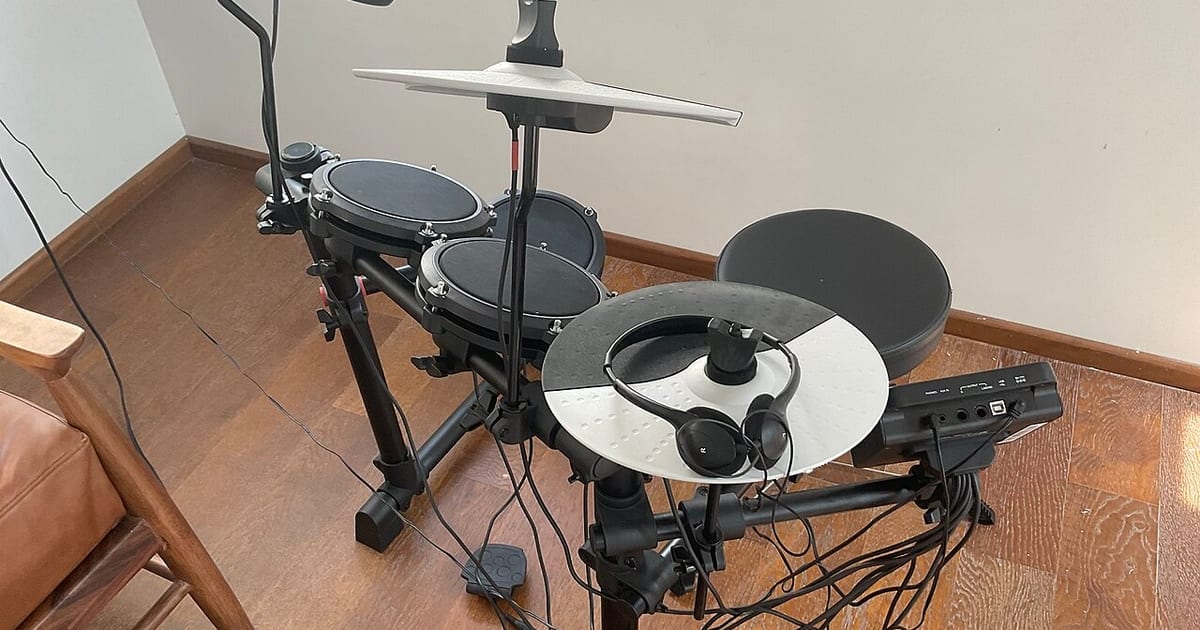
Alesis electronic drums | Every kit explained
Alesis electronic drums explained, from the Debut and Nitro Max to the BFD-powered Strata Prime: what each kit gets you, rough prices and who should buy.
Alesis
Alesis Strata Prime | The ultimate guide
The Alesis Strata Prime puts BFD drum sounds in a 10.1-inch touchscreen module. What you get, how it compares with Roland, the downsides and who it suits.
All Our Buying Guides
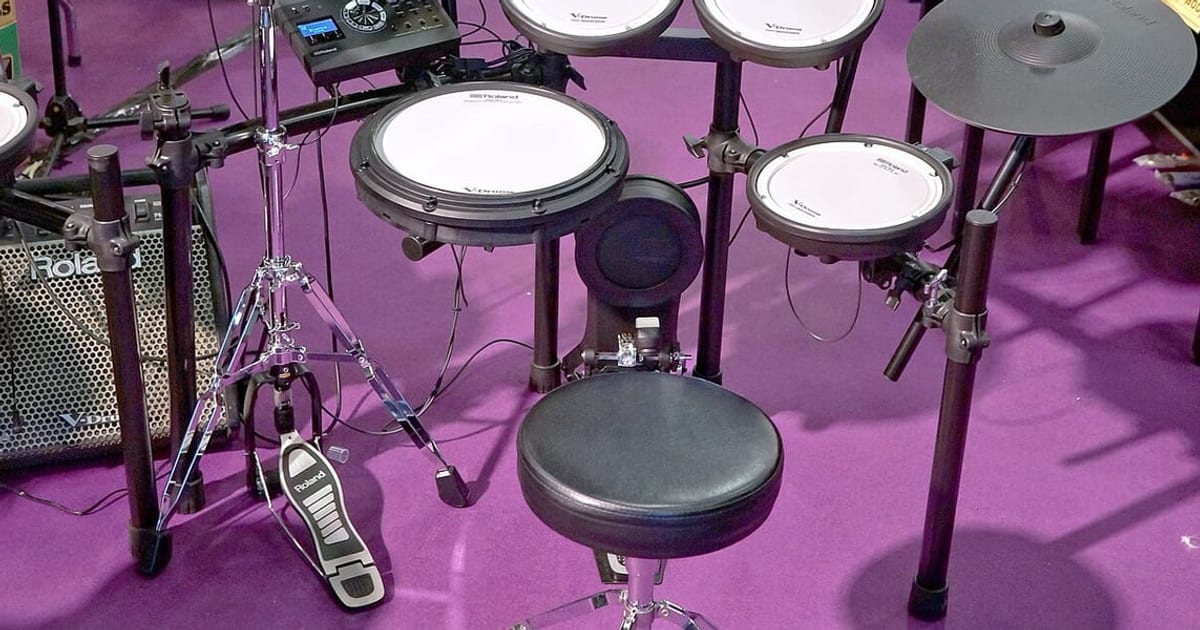
Best electronic drum brands (2026) | Ranked
The best electronic drum brands in 2026: Roland, Yamaha and Alesis, plus EFNOTE, Simmons, Gretsch and Pearl, with the right e-kit for every budget.