Gretsch drums | Every series explained (2026)
Gretsch drums from Energy to USA Custom: every kit series, what the shells are made of, where they are built, what they cost and which one suits you.
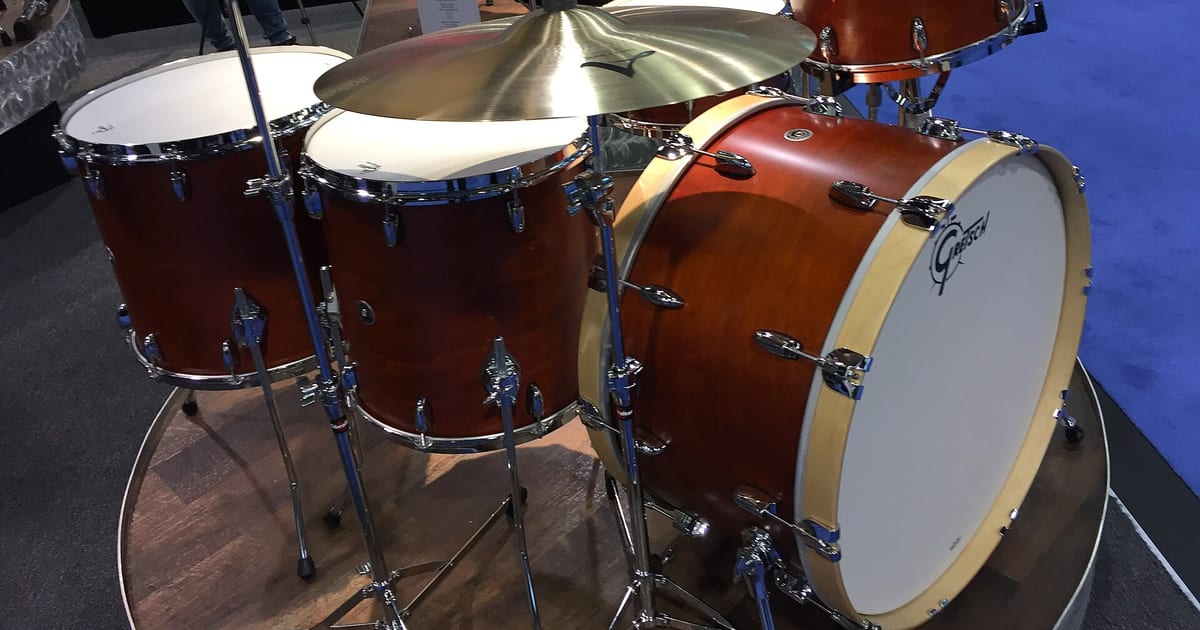
Some drum brands are famous for being loud. Gretsch is famous for sounding like a record.
The round badge, the oyster pearl wraps and the warm, punchy tone of a Gretsch kit are all over jazz history, and the brand has been building drums since 1883. Today the range runs from a beginner kit you can buy with stands in the box to hand-built USA Custom drums with a waiting list.
So which Gretsch is which, what do you actually get for your money, and where should you start? Let’s find out.
A quick history of Gretsch
Friedrich Gretsch opened a shop in Brooklyn, New York in 1883, making banjos, tambourines and drums. Within a few decades Gretsch was one of the big names in American drums, and its Brooklyn factory building still stands in Williamsburg today (it is now flats).
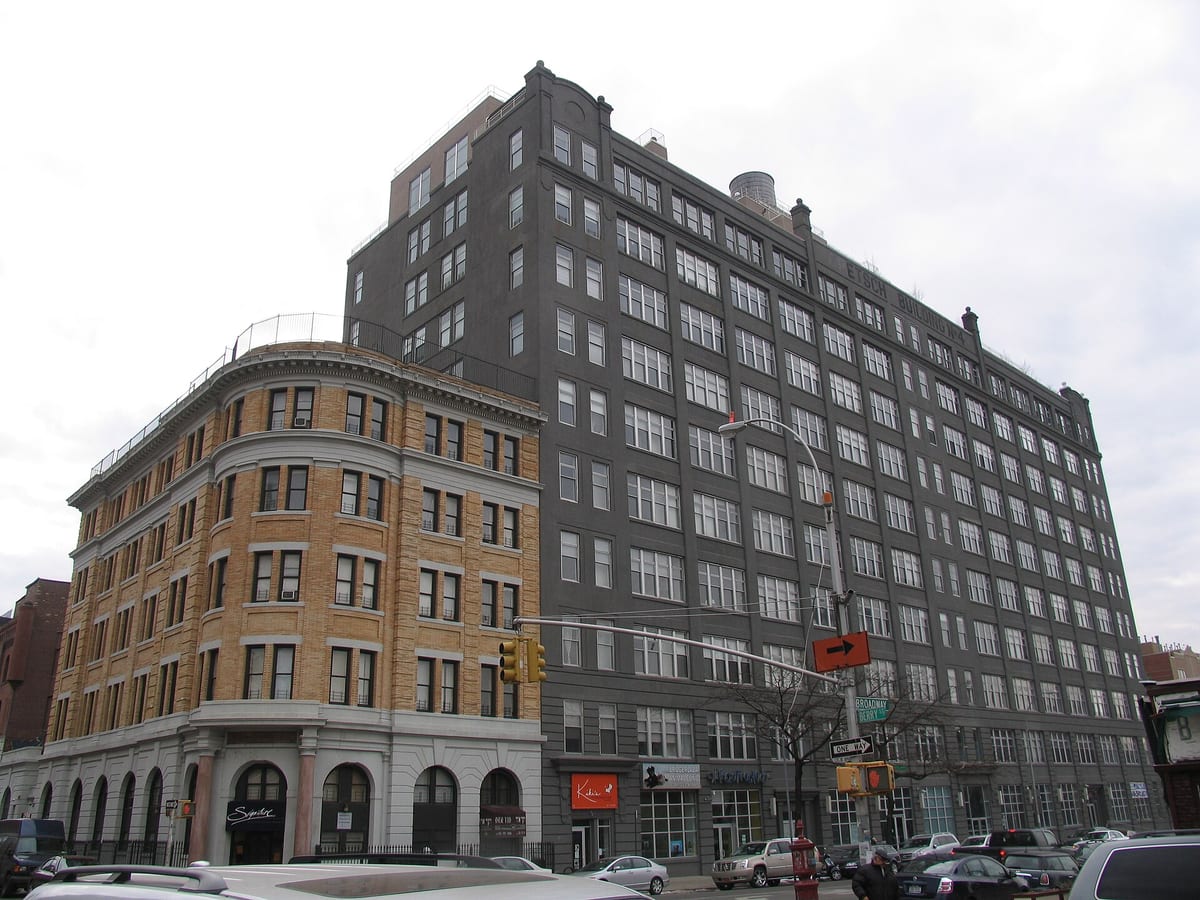
The 1950s and ’60s were the golden age. Gretsch’s own artist pages put Max Roach on the roster from 1950, Art Blakey from 1954 and Tony Williams from 1966, and the 1960 album Gretsch Drum Night at Birdland lined up Blakey, Elvin Jones, Philly Joe Jones and Charlie Persip on Gretsch kits. That is a fair chunk of the jazz drumming canon.
Then came a bumpy few decades:
- 1967. The family sold the company to Baldwin, the piano maker.
- 1969. Baldwin moved production from Brooklyn to De Queen, Arkansas.
- 1985. Fred W. Gretsch, great-grandson of the founder, brought the company back into the family. Drum making moved to Ridgeland, South Carolina, where it still is.
- 2015. Drum Workshop (DW) took over making and distributing Gretsch drums under licence.
- 2024. In January, DW handed the licence to GEWA Music, a German company, which now runs the Ridgeland factory and the worldwide distribution.
That last point catches people out. You will still read that Gretsch is “owned by DW” (and, since DW was bought by Roland in 2022, by Roland). That has not been true since January 2024. The family owns the brand, and GEWA makes and sells the drums.
What is “That Great Gretsch Sound”?
It is Gretsch’s long-running slogan, and it is not just marketing. A few design choices run through most of the range:
- Thin, maple-based shells. The USA Custom uses a six-ply maple and gum shell. The Renown and Catalina Maple use seven plies of maple.
- 30-degree bearing edges. Most makers cut a sharper 45-degree edge. Gretsch’s rounder 30-degree edge puts more of the head in contact with the shell, which gives you a fatter fundamental note and a little less overtone ring.
- Silver Sealer. The silver-grey paint inside many Gretsch shells. Vintage experts date it to around the mid-1950s, and it is still used on the USA drums and the Renown.
- The round badge. The original Gretsch badge, retired in the early 1970s and since brought back on the US-made drums.
Put those together and you get a drum that sounds warm, round and focused, with a decay that gets out of the way. It is why Gretsch became the jazz kit, and why it has quietly become a studio kit for everything else.
How does the Gretsch range fit together?
Gretsch splits into two worlds: drums made in Asia, and drums made in Ridgeland. Here is the line-up at the time of writing, cheapest first.
| Series | Shells | Made in | Rough price (shell pack) | Best for |
|---|---|---|---|---|
| Energy | 7-ply poplar | Asia | Beginner money, often sold with hardware | First kits |
| Catalina Club | 7-ply mahogany | Asia | Around $800 for a three-piece | Small jazz kits, vintage looks |
| Catalina Maple | 7-ply maple | Asia | Around £800–£950 / $1,000–$1,100 | Best-value maple |
| Renown | 7-ply maple, Silver Sealer | Taiwan | Around £1,450–£1,900 / $2,000–$2,500 | Pro sound on a working budget |
| Broadkaster | 3-ply maple/poplar/maple | USA | USA-made money | Vintage tone |
| Brooklyn | 6-ply maple/poplar | USA | USA-made money | Vintage-leaning, lively |
| USA Custom | 6-ply maple/gum | USA | Around $4,400–$4,900 for four pieces | The classic Gretsch sound |
Prices move constantly and vary by finish, so treat those as ballparks rather than quotes.
Gretsch Energy
The Energy is Gretsch’s entry-level kit. The shells are seven-ply poplar with 30-degree edges and 1.6mm triple-flanged hoops, and it is sold as a shell pack or as a complete five-piece with hardware (some US bundles even add Zildjian cymbals).
Is it a “real” Gretsch? It is a well-made beginner kit with a Gretsch badge, and it competes with the likes of the Pearl Export and Tama Imperialstar. Don’t expect the USA Custom sound for beginner money. If you are choosing a first kit, our beginner drum kit buying guide is the place to start.
Gretsch Catalina Club
The Catalina Club is where the classic Gretsch look gets affordable. The shells are seven-ply mahogany, about 7.2mm thick, with Gretsch’s 30-degree edge, and the warm, dark sound of mahogany suits the kit’s vintage styling.
Its most famous configuration is the jazz kit: an 18-inch bass drum, 12-inch rack tom and 14-inch floor tom, often with a matching 14x5.5 snare. Stanton Moore has used the Catalina Club Micro Kit for small rooms, which tells you how seriously the pros take it.
Gretsch Catalina Maple
Swap the mahogany for maple and you have the Catalina Maple, Gretsch’s best-value maple kit. The shells are seven-ply maple with 30-degree edges and natural (not Silver Sealer) interiors, with 2.5mm triple-flanged hoops and Gretsch’s GTS tom suspension.
The current CM2 version added a redesigned snare throw-off and upgraded tom mounts. It comes in four-, five- and seven-piece shell packs, with 20- or 22-inch bass drums.
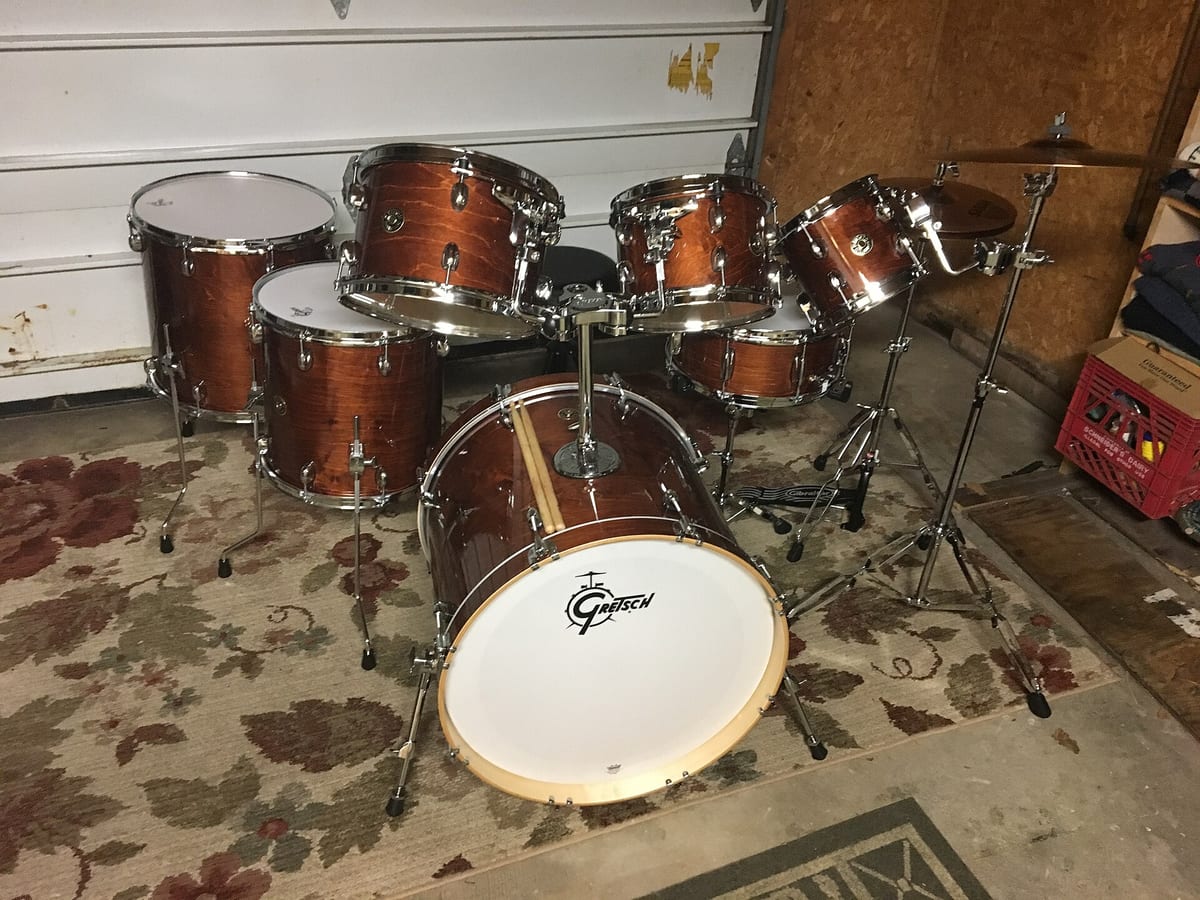
Our full Gretsch Catalina Maple guide goes through the sizes, finishes and what it costs.
Gretsch Renown
The Renown is the kit that brings Gretsch’s pro recipe down to a working drummer’s budget. Seven-ply maple shells, 30-degree edges, Silver Sealer interiors and the 3mm “302” double-flanged hoops that started life on the US-made Brooklyn and Broadkaster drums.
It is made in Taiwan, and it is the line where the “is it a real Gretsch?” question goes away. Modern Drummer’s review of the RN2 praised the tight, clear toms and chunky rimshots that the 302 hoops give it.
It has also just picked up a big-name endorser. When Eric Moore joined Gretsch in January 2026, he debuted a Renown in Champagne Sparkle rather than a custom shop one-off. Our Gretsch Renown guide has the full details.
Gretsch Broadkaster
The Broadkaster is one of Gretsch’s oldest names, and Gretsch revived it as a US-made kit in 2014. The recipe is unusual: a three-ply maple, poplar and maple shell, about 6.7mm thick, with no reinforcement rings and a rounded-over bearing edge on the toms and bass drum.
The result is a vintage-voiced drum with lots of shell in the sound. MusicRadar described the toms as woody but bright. If you want a modern kit that sounds like an old one, this is the Gretsch to hear.
Gretsch Brooklyn
The Brooklyn sits between the Broadkaster and the USA Custom. It uses a six-ply maple and poplar shell (Gretsch says slightly thicker than the USA Custom’s), 30-degree edges, Silver Sealer and the 302 hoops, which Gretsch introduced on this series.
It is livelier and more open than a USA Custom, with the same punchy Gretsch focus. Mark Guiliana uses a Brooklyn snare, and Stanton Moore plays Brooklyn drums.
Gretsch USA Custom
This is the one. Six-ply maple and gum shells, 30-degree edges, Silver Sealer, die-cast hoops and the round badge, built by hand in Ridgeland.
The USA Custom is the kit most people mean when they say “That Great Gretsch Sound”. It spans the whole range of music, from jazz trios to arena pop: Ashton Irwin of 5 Seconds of Summer plays an enormous mirror chrome USA Custom, and Taylor Hawkins’ rig was built around one.
Expect to pay serious money, and expect to wait if you order a custom finish. Our Gretsch USA Custom guide covers the details, and the Gretsch USA hub lists every USA Custom in the Rig Vault.
What about Gretsch snare drums?
Gretsch makes snares at every level, and they are worth a look even if your kit is another brand. The broad groups are:
- Kit-matching snares for the Catalina, Renown and USA lines.
- The Full Range snares, Gretsch’s metal-shell range, which includes steel, brass and hammered models.
- The USA snares, including USA Custom, Brooklyn and Broadkaster models, and the Ridgeland snare with its extra-thick nine-ply shell.
- Signature models. Stanton Moore’s 14x4.5 wood snare is a long-running favourite.
The exact list changes year to year, so check what your local shop has in stock. Our snare drum buying guide explains what to listen for.
Does Gretsch make electronic drums?
It does now. In October 2026 Gretsch launched the Catalina EVO, its first electronic kit, with full-size shells, mesh heads and samples of Gretsch’s own drums. We covered the Catalina EVO launch and have since published our Catalina EVO review.
Which Gretsch kit should I buy?
Here is the short version.
- Your first kit: Energy, or a used Catalina.
- A small jazz kit: Catalina Club, with the 18-inch bass drum.
- The most maple for your money: Catalina Maple.
- The real Gretsch sound without the USA price: Renown. This is the sweet spot of the range.
- A vintage sound in a new kit: Broadkaster or Brooklyn.
- The full experience: USA Custom, and no regrets.
Used Gretsch kits hold their value well, and the Catalina and Renown lines turn up second-hand all the time. Our guide to buying used drums online will help you avoid a dud.
If you are weighing Gretsch against the other big names, our Ludwig drums guide and DW drums guide cover the closest rivals, and we put a Renown head-to-head with the Ludwig Classic Maple.
Where can I buy Gretsch drums?
Gretsch is stocked by most big drum retailers, and the Catalina and Renown lines are easy to find. The USA drums are a different story: dealers carry a limited selection, and custom orders can take months.
The right shop depends on where you are: Guitar Center in the Americas, Gear4music in the UK, or Thomann for Europe and the rest of the world.
For used kits, check Gretsch drums on Reverb and the Reverb price guide before you pay.
Final thoughts
Gretsch is one of those rare brands where the history is not just a marketing story. The sound that made those 1950s and ’60s jazz records is still there in the USA Custom, and a surprising amount of it has trickled down to the Renown and Catalina Maple.
The one thing to know is that the top of the range is expensive and slow to arrive. But if you want the warm, round, focused sound, there is a Gretsch at almost every price.
Not sure which one is for you? See how Gretsch stacks up in our best drum brands guide, browse the Gretsch hub, or ask the Gear Guru.
Header photo: a Gretsch kit at NAMM 2017 by Jim J, public domain, via Wikimedia Commons.
Gretsch drums FAQs
- Are Gretsch drums made in the USA?
- Some are. The USA Custom, Brooklyn and Broadkaster kits, plus the USA snares, are built at the Gretsch factory in Ridgeland, South Carolina. The more affordable lines (Energy, Catalina Club, Catalina Maple and Renown) are made in Asia; the Renown, for example, is made in Taiwan.
- Who owns Gretsch drums?
- The Gretsch family still owns the brand, with Fred W. Gretsch at its head. The drums themselves are made under licence. Drum Workshop (DW) held that licence from 2015, and since January 2024 GEWA Music has held the worldwide licence to make, market and distribute Gretsch drums, including running the Ridgeland factory.
- Is Gretsch a good drum brand?
- Yes. Gretsch is one of the oldest drum makers in the world, its USA Custom is one of the most recorded kits ever made, and its mid-priced Renown and Catalina Maple kits are among the best value maple drums you can buy. See where it sits against the competition in our best drum brands guide.
- What is That Great Gretsch Sound?
- It is the slogan Gretsch has used for decades for the warm, round, focused tone of its drums. The ingredients are thin maple-based shells, 30-degree bearing edges and, on many models, the Silver Sealer paint inside the shell. The result is a drum with a strong fundamental note and a fairly quick, controlled decay.
- What is the cheapest Gretsch drum kit?
- The Energy. It is a poplar kit aimed at beginners, and it is sold both as a shell pack and as a complete kit with hardware. Above it sits the Catalina Club, which is the cheapest way into the classic Gretsch look and is especially popular as a small jazz kit.
Keep reading
All Our Buying Guides
Best drum brands (2026) | Every budget ranked
The best drum kit brands in 2026, from Yamaha, Pearl and Tama to Ludwig, DW, Gretsch, Sonor, Mapex and PDP, with the right pick for every budget.
DW Collector's Series
DW Collector's Series | Guide (2026)
DW's Collector's Series explained: the pure woods, SSC shell options, curated Jazz and Santa Monica shells, finishes, prices, and who it is really for.
DW Drums
DW drums | Every series explained (2026)
DW drums explained: Design, Performance, Collector's and DWe kits, the 5000 and 9000 pedals, where they are made, and what Roland owning DW means for you.