Meinl cymbals | Every series explained (2026)
A guide to every Meinl cymbal series in 2026, from HCS and Classics Custom to Pure Alloy and Byzance: alloys, where they are made, sound and who they suit.
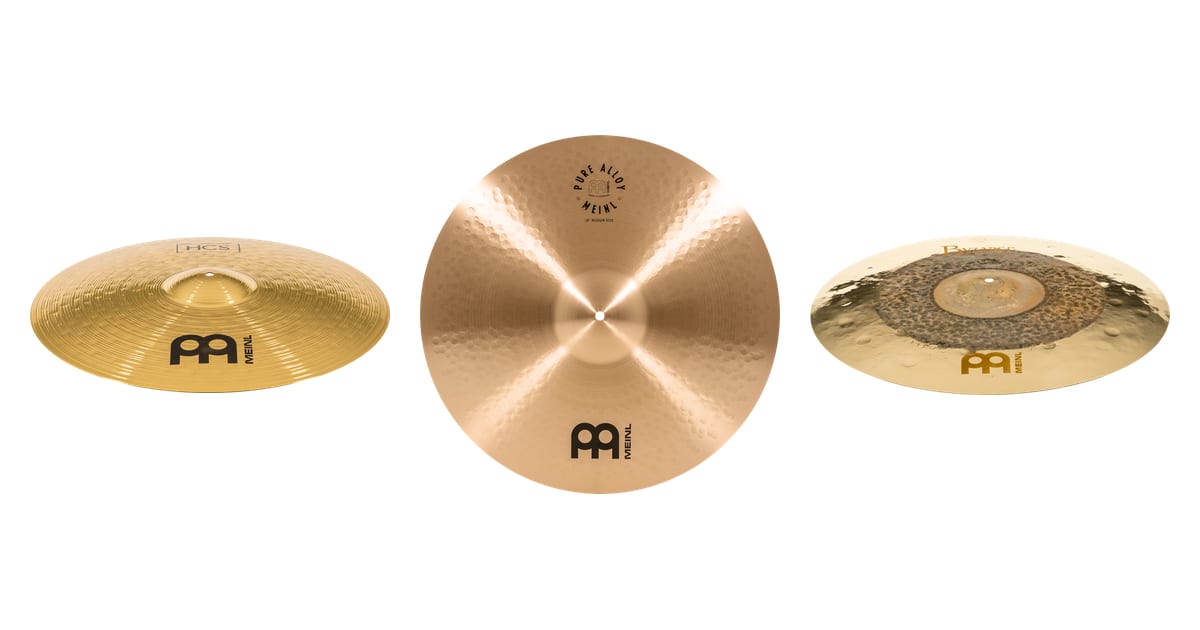
Twenty years ago, plenty of drummers still thought of Meinl as the budget option. Not any more. Walk round any drum show today and you will see Meinl cymbals on the kits of some of the most influential players in the world.
The turnaround came from one series in particular, Byzance. But Meinl makes a lot more than that, from brass starter packs to a German-made bronze that sits between bright and dark.
So what does each Meinl series sound like, and which one should you buy? Let’s find out.
A short history of Meinl
Meinl is a German family company. Roland Meinl started it in 1951 as a one-man operation in Neustadt an der Aisch, in Bavaria. By the company’s own account, he made the early cymbals by hand and took them to the station by bicycle to ship them.
The business grew into a whole family of brands: Meinl Cymbals, Meinl Percussion, Nino, Meinl Sonic Energy, Meinl Stick & Brush and Ortega Guitars. Stick & Brush is the brand behind the Luke Holland signature drumsticks, for example.
Meinl moved its headquarters to Gutenstetten, a few miles from where it started, in 1998. It is still family owned.
The big change on the cymbal side was Byzance. By making a B20 series by hand in Turkey, Meinl got into the same conversation as the old Turkish-style makers. That opened the door to a new generation of players, and it has not looked back.
Where are Meinl cymbals made?
This matters more than with most brands, because Meinl makes cymbals in two places.
- Germany: HCS, Classics Custom, Pure Alloy, Pure Alloy Custom and Generation X are made in Meinl’s own facility in Germany.
- Turkey: every Byzance cymbal is made from B20 bronze and hand-hammered in Turkey.
The two halves sound different, too. As Meinl puts it, Byzance covers “the darker side of the tonal spectrum”, and the German-made lines give you the cleaner, brighter side.
What alloys does Meinl use?
Meinl is unusually open about its metals, which makes the range easier to understand.
- HCS: MS63 brass.
- Classics Custom: B12 bronze (12% tin).
- Pure Alloy: Meinl’s own “Pure Alloy” bronze, made in Germany.
- Byzance: B20 bronze (20% tin), the traditional cymbal alloy.
- Generation X: a mix of alloys, depending on the cymbal.
As a rule, more tin means a richer, more complex sound and a higher price.
HCS: the starter range
HCS is Meinl’s brass range for students. It is made in Germany from MS63 brass, and Meinl says it has the largest selection of standard and effects cymbals of any brass range.
That is the selling point. As well as hats, crashes and rides, you can get HCS chinas, trash crashes, a big bell ride, a bell, micro stack hats and several Smack Stacks. If you want to copy your favourite drummer’s effects setup on a budget, HCS lets you.
There is also HCS Dark, with a specially treated dark finish for a more controlled tone. We covered the HCS Dark launch when it came out, with the 14/16/20 set at around $400 or €399.
It is still brass, so you will grow out of it. But it is a good first set.
Classics Custom: bright, loud bronze
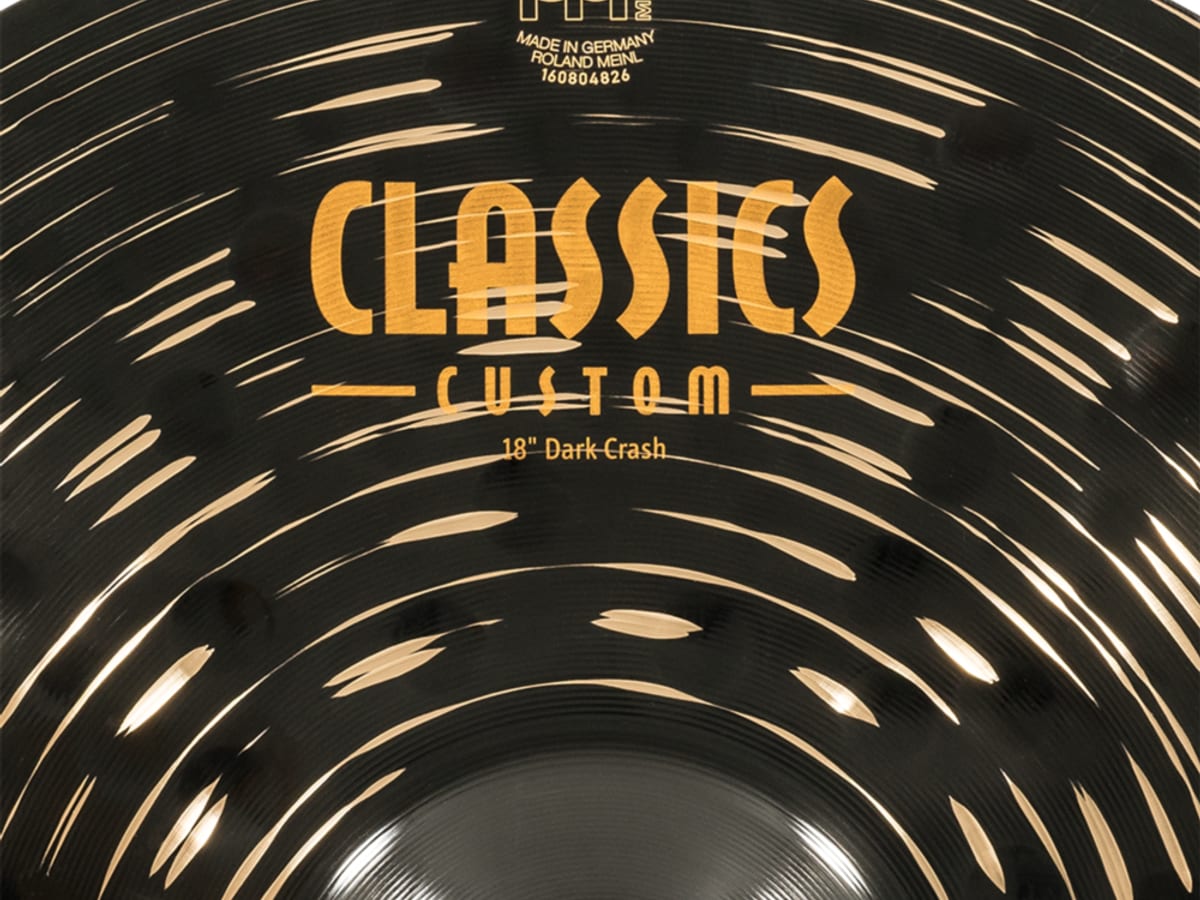
Classics Custom is the mid-price bronze range, made in Germany from B12 bronze. It comes in four flavours.
- Classics Custom Brilliant: the original. Bright and focused, with a shimmering response and a mirror finish.
- Classics Custom Dark: “aggressive and loud, but with a dark and warm tone”. Extra hammering and a dark finish give it a shadowy wash.
- Classics Custom Dual: a dark centre and polished edges, for warmth with a flash of brightness. It won a product excellence award in 2021.
- Classics Custom Extreme Metal: a tougher, louder version of the Brilliant line, built to survive heavy music night after night.
Classics Custom is a big range, with lots of trash crashes, stacks and splashes. Dark alone covers everything from 8” splashes to a 24” ride.
We reviewed one of the stand-outs, the Classics Custom Dark 18” Big Bell Ride, if you want a closer look.
Pure Alloy: between bright and dark
Pure Alloy is Meinl’s answer to the drummer who finds Byzance too dark and Classics Custom too bright. It is made in Germany, hammered into shape, and Meinl says it sonically “bridges the gap” between the two.
The sound is shimmering and smooth, with medium sustain. The range includes hats, thin and medium crashes, rides from 20” to 24”, Extra Hammered models and Soundwave hats.
Pure Alloy Custom takes the same alloy and adds a smoked bronze finish on top and a brilliant finish underneath. It gives a slightly softer attack, a warmer body and a faster decay.
Our full Meinl Pure Alloy guide goes through every model.
Byzance: the professional series
Byzance is the series that made Meinl’s name. Every Byzance cymbal is made in Turkey from B20 bronze and hand-hammered, so no two are quite the same.
It is not one sound. Byzance is a family of eight sub-series:
- Traditional: the broadest, most all-round Byzance voice.
- Brilliant: Traditional with a polished mirror finish and a smoother sound.
- Dark: hand-hammered and unlathed, with a prominent dark tone.
- Extra Dry: dry, fast, trashy and low.
- Vintage: aged-sounding cymbals, born from Benny Greb’s Sand Ride.
- Jazz: expressive, buttery cymbals with a huge choice of rides.
- Dual: a raw centre and brilliant edge, trashy then explosive.
- Foundry Reserve: a limited collection of the finest hand-made Byzance cymbals.
That is a lot to take in, so we have given it its own article. Our Meinl Byzance guide explains each sub-series, the stand-out models and who each one suits.
It is also where you will find many of Meinl’s most famous cymbals. We have reviewed the Byzance Trash Crash and Chris Coleman’s C Squared ride, both part of Byzance Vintage.
Generation X and the Artist Concept Models
Generation X is a collection of small and unconventional cymbals for effects and accents. It is made in Germany from a mix of alloys, and the idea is that you add these to any other Meinl series, or use them to build a stack.
Artist Concept Models are the effects stacks and auxiliary hats Meinl has developed with its artists. Each one combines different cymbals, sometimes from different series or alloys, to get the sound that artist was after. Matt Halpern’s Double Down Stack is one of them.
There are also Artist Design models, signature cymbals for individual players. The most recent we covered was Anika Nilles’ Lunar Ride and Lunar Hats, which made their live debut on the Rush Sphere residency.
Cymbal sets
Meinl sells most of its ranges as boxed sets, and they are usually the best value. Look out for:
- HCS sets: the cheapest way into a full setup.
- Classics Custom sets: a good first bronze set.
- Pure Alloy and Pure Alloy Custom sets: including expanded sets with an extra crash.
- Byzance sets: such as the Extra Dry, Dual and Brilliant Complete Cymbal Sets and crash packs.
- Artist’s Choice Cymbal Sets: setups picked by artists including Benny Greb, Matt Garstka, Matt Halpern, Chris Coleman, Mike Johnston and Thomas Lang.
The Artist’s Choice sets are a neat idea. If you love a particular player’s sound, you can buy their cymbals in one box.
Who plays Meinl?
Meinl’s artist roster leans towards modern players, gospel chops drummers and YouTube favourites. A few you will know:
- Benny Greb, who developed the Byzance Vintage Sand Ride.
- Anika Nilles, with her Lunar Artist Design models.
- Matt Garstka, whose Byzance Extra Dry and Vintage cymbals are documented in Matt Garstka’s rig in the Rig Vault.
- Chris Coleman, Thomas Lang, Mike Johnston and Matt Halpern, all with Artist’s Choice sets.
ZackGrooves is another Meinl player. We covered his Everything Yes tour earlier this year.
Does Meinl make practice cymbals?
Yes. Meinl makes Practice HCS cymbals, low-volume versions of the HCS range for practising at home. They are brass with a hole pattern, and Meinl says they cut the volume by around 15 dB, so you can play a full kit without upsetting the neighbours.
They won’t sound quite like a full-volume cymbal, and they are not meant to. But if volume is your problem, they are a cheap fix. Our low volume cymbals guide compares them with the other options.
How does Meinl compare with the other big brands?
Meinl’s range lines up with its rivals more neatly than you might think.
- Against Zildjian: Byzance competes with the K family, and Classics Custom and Pure Alloy compete with the A family. Our Zildjian cymbals guide covers the other side.
- Against Sabian: Byzance sits alongside HHX and Artisan, and Classics Custom against XSR and AAX on price and attitude. See our Sabian cymbals guide.
- Against Paiste: both are European makers, and Pure Alloy and Classics Custom chase a similar clean, bright sound to much of Paiste’s range. Our Paiste cymbals guide explains Paiste’s very different alloys.
- Against the Turkish makers: Byzance is Meinl’s take on the hand-hammered Turkish sound. If that is what you are after, also look at our Istanbul Agop cymbals guide.
Where Meinl stands out is breadth. Few brands have as many effects cymbals, stacks and trash crashes at every price point.
Which Meinl series should you buy?
Here is the short version.
- Your first set: HCS, or HCS Dark if you like the look.
- A first bronze set on a budget: Classics Custom. Brilliant for bright, Dark for dark.
- Heavy music: Classics Custom Extreme Metal or Classics Custom Dark.
- Clean, versatile and German-made: Pure Alloy.
- The best Meinl makes: Byzance, in whichever flavour suits your music.
- Effects and stacks: Generation X, the Artist Concept Models, or the HCS and Classics Custom stacks.
If you are building a set from scratch, our cymbal buying guide explains which cymbal to buy first.
Where can I buy Meinl cymbals?
The right shop depends on where you are: Guitar Center in the Americas, Gear4music in the UK, or Thomann for Europe and the rest of the world.
Meinl has been popular for long enough that there are plenty second-hand, including older ranges you won’t find in the current catalogue. Have a look at used Meinl cymbals on Reverb and the Reverb price guide.
Final thoughts
Meinl has one of the most logical cymbal line-ups around. Brass for beginners, B12 for bright and loud, Pure Alloy for the middle ground, and hand-hammered B20 Byzance at the top. Once you know that, the rest falls into place.
The only downside is the sheer number of models, especially in Byzance. If you are stuck, ask our Gear Guru, browse the Meinl cymbals hub, or read our best cymbal brands guide to see how Meinl stacks up against the rest.
Meinl cymbal FAQs
- Where are Meinl cymbals made?
- Meinl is based in Gutenstetten, Germany. HCS, Classics Custom, Pure Alloy and Generation X are made in Germany, while the Byzance series is cast from B20 bronze and hand-hammered in Turkey.
- Are Meinl cymbals good?
- Yes. Meinl is one of the big four cymbal makers alongside Zildjian, Sabian and Paiste, and Byzance is a genuine top-tier professional series. Our best cymbal brands guide compares the four.
- What is the difference between Meinl Byzance and Classics Custom?
- Byzance is B20 bronze, hand-hammered in Turkey, and mostly dark and complex. Classics Custom is B12 bronze, made in Germany, and mostly bright and loud, at a much lower price. Pure Alloy sits between them.
- What are the best Meinl cymbals for beginners?
- HCS is Meinl's brass starter range and the cheapest way in, including the dark-finish HCS Dark. If you can spend more, Classics Custom gets you bronze cymbals that you won't outgrow so quickly.
- Is Meinl a German company?
- Yes. Meinl is a family-owned German company. Roland Meinl started it in 1951 in Neustadt an der Aisch, and it is now based in nearby Gutenstetten.
Keep reading
All Our Buying Guides
Best cymbal brands (2026) | Big four and more
The best cymbal brands in 2026: Zildjian, Sabian, Meinl and Paiste, plus Istanbul Agop, Bosphorus and Dream, with the right series for every budget.
Head to Head
Istanbul Agop vs Zildjian K | Turkish showdown
Istanbul Agop vs Zildjian K: two dark cymbal families from the same Istanbul roots, compared on sound, hammering, consistency, price and who each suits.

Head to Head
Zildjian A Custom vs Sabian AAX | Which one?
Zildjian A Custom vs Sabian AAX, the two bright B20 ranges side by side: the sound, the cut, the sub-lines, the price and which one suits your music.