Sabian cymbals | Every series explained (2026)
A guide to every Sabian cymbal series in 2026, from SBR and B8X to AAX, HHX, Artisan and Paragon: what each sounds like, who it suits and rough prices.
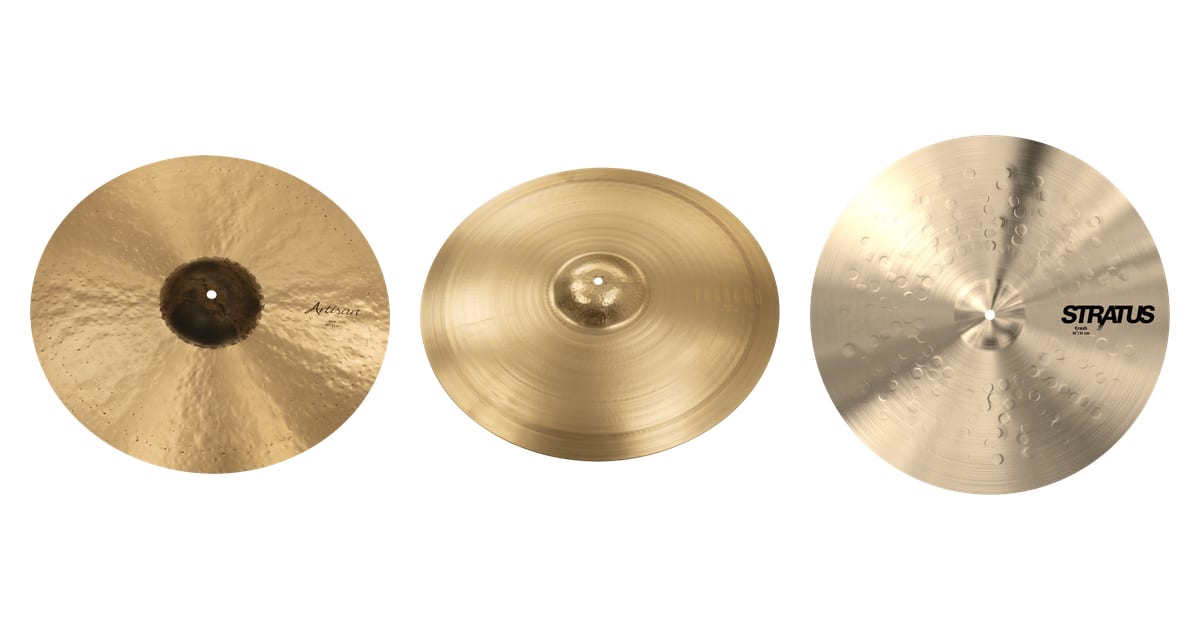
Sabian is one of the big four cymbal makers, alongside Zildjian, Meinl and Paiste. It is also the one with the most interesting family story, and one of the widest catalogues in drumming.
That catalogue can be a lot to take in. There are a dozen series on the drum set side alone, each with sub-lines, special editions and the odd one-off “Vault Drop”. If you are not sure what the difference between an AA and an AAX is, you are not alone.
So which Sabian cymbals are right for you? Let’s walk through every series, from the first brass pack to the hand-hammered Artisan.
A short history of Sabian
Sabian is a Zildjian story. Robert Zildjian, a son of Avedis Zildjian III, ran the Zildjian factory in Meductic, New Brunswick, in Canada. After a family split with his brother Armand, he kept that plant and set up his own company there. Most accounts date the founding to 1981, and Sabian’s own timeline has the first cymbals coming off the line in 1982.
The name is a family one too. It comes from the first two letters of his three children’s names: Sally, Billy and Andy. Andy Zildjian still leads the company at the time of writing.
Sabian came out of the gate fast. According to the company, it made 45,000 cymbals in its first year, and the two series it launched with, AA and HH, are both still in the catalogue more than 40 years later.
Since then it has had a habit of trying things. The O-Zone (a cymbal with holes punched in it) came in 2002, after the R&D team decided to drill a cymbal “just to see what would happen”. The frequency-reduced FRX line arrived in 2018, the same year as the Custom Shop. Sabian also once buried 100 cymbals on R&D man Mark Love’s farm to see if it would age them faster. All of them sold before they were dug up.
Every Sabian cymbal is still made in Meductic. If you are comparing it with its old family rival, our Zildjian cymbals guide tells the other side of the story.
How are the Sabian series organised?
Sabian sorts its drum set series by sound, and it is a useful way to think about them. On its own site the main series line up like this:
- Modern Bright: AAX
- Modern Dark: HHX
- Vintage Bright: AA
- Vintage Dark: HH
- Ultimate Craftsmanship: Artisan
- Explosive Power: Paragon
- Frequency Reduced: FRX
- Contemporary Bronze: XSR and Stratus
- Projection for beginners: B8X
- Beginners’ best brass: SBR
The other thing to know is the metal. SBR is brass. B8X is B8 bronze (92% copper, 8% tin). Everything from XSR upwards is B20 bronze (80% copper, 20% tin), which is the traditional cymbal alloy and the one that gives the richest, most complex sound.
SBR: the starter brass
SBR is where Sabian starts. It is made from brass, hammered and lathed, and Sabian pitches it as “the absolute best brass for beginners”. The sound is bright, crisp and focused.
It is not trying to be anything more than a first set, and that is fine. You can get SBR as single cymbals (splash, 14” and 15” hats, crashes, a 20” ride, a crash-ride, a china and an O-Zone) or as packs like the SBR First Pack, 2-Pack and Performance Set.
At the time of writing, expect to pay roughly £150–£250 or $200–$300 for a pack. The only downside is the one every brass cymbal shares: you will grow out of it once your ears improve.
B8X: the first bronze
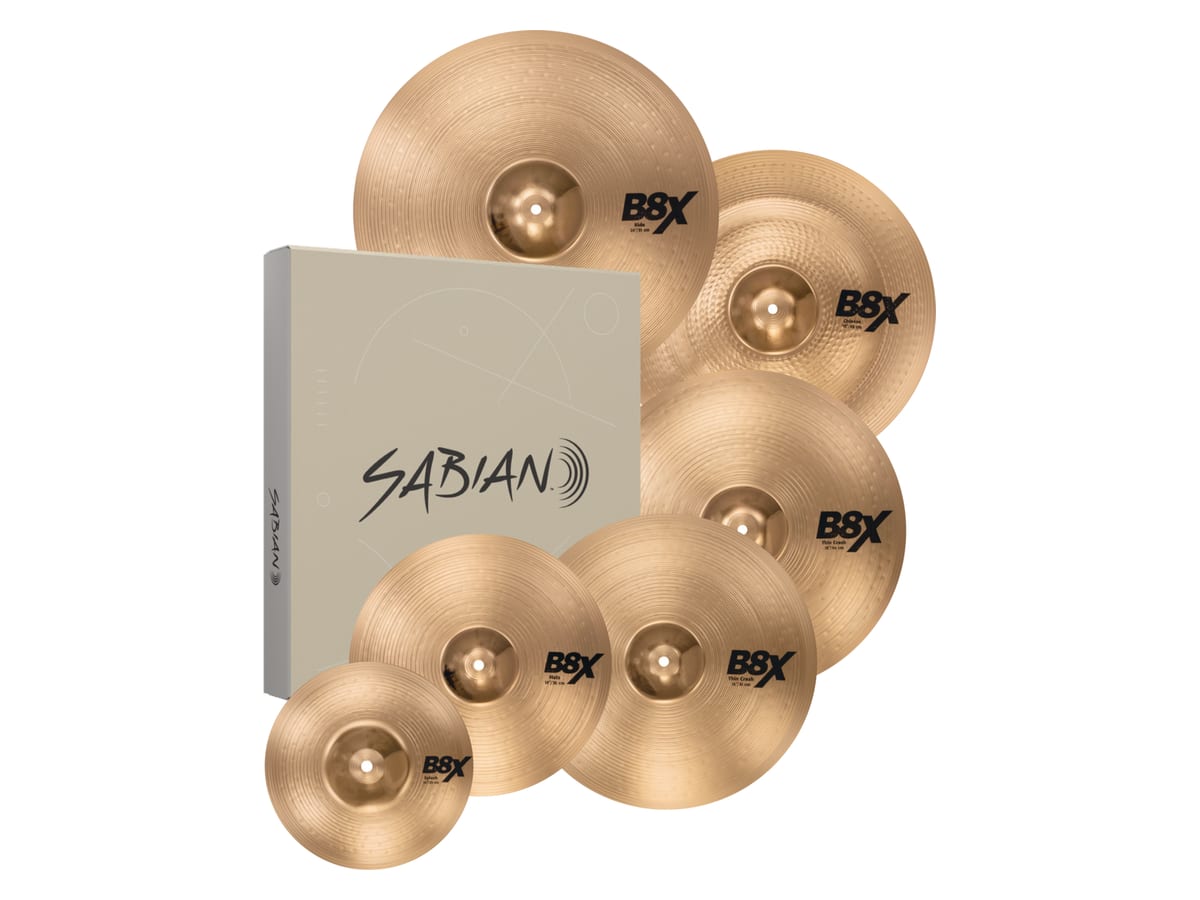
B8X is the evolution of the old B8 and B8 Pro lines. It is named after its alloy, B8 bronze, and it is precision formed, hammered and lathed for a tight, bright sound.
Sabian aims it at “the serious and discerning beginner”, and that is about right. It projects well, it is clean and cutting, and it is a real step up from brass.
The range is bigger than you might expect for a budget line. There are 13” and 14” hats, medium crashes, O-Zones, the trashy Ballistic Crash, a crash-ride, chinas, a china splash and a 20” Rock Ride. The First Pack and Complete Set are the usual way to buy, at roughly £250–£450 or $300–$550 depending on the pack.
XSR and Stratus: B20 for less
This is where things get interesting. XSR is the evolution of the old Xs20 line, and it is made from pure B20 bronze with reshaped bells. Sabian describes the sound as dark-leaning, versatile and “stage-ready for any style”.
The line-up includes Fast Crashes from 14” to 20”, 14” hats, Monarch rides, crashes and hats (part of Sabian’s “Big & Ugly” family), the Fast Stax and a set of mini hats. A complete XSR set is typically around £500–£700 or $600–$800.
Stratus is the newest series in this bracket. It is also B20 bronze, with what Sabian calls “high impact hammering”, and it is pitched between mainstream and professional. The sound is articulate with a warm wash. There is a regular Stratus range (crashes, hats, a 20” ride, the Zero and a Chinese) and a Stratus Dry range with hats up to 16” and rides up to 24”.
If you want B20 bronze without paying pro prices, these two are the place to look.
AA: the vintage bright original
AA is one of the two series Sabian launched with in 1982. The name comes from the automatic anvils that hammer it. Sabian describes it as “tight, controlled brightness with loads of volume when you need it”.
That makes AA the classic rock cymbal. It is also loved in punk and hip-hop, and it is where some of Sabian’s most famous effects cymbals live. The AA Holy China is the obvious one, and Ray Luzier’s AA MantaRay Chinese is a more recent addition.
You can hear AA all over the Rig Vault. Chad Smith, Mike Portnoy and Ray Luzier all have AA models in their setups.
AAX: modern bright
AAX is the modern take on AA, and one of Sabian’s best sellers. It uses larger-peen hammering for “incredibly bright attack, shimmering sustain and even performance at all volume levels”. Sabian traces its roots to the Larrie Londin signature ride in 1993.
AAX covers pop, rock and metal. There are many sub-lines, including X-Plosion, Thin, Aero and Raw Bell, and the brilliant finish is the one you will see on most stages.
We have a full guide to the Sabian AAX series that goes through every model, so we won’t repeat it here. If you are weighing it against Zildjian’s equivalent, read Zildjian A Custom vs Sabian AAX.
HH: vintage dark
HH is the other original 1982 series. It stands for “hand hammered”, and Sabian calls it its most tonally complete range. The sound is warm, dark and full of character, and it suits jazz, blues and any rock that leans vintage.
HH has some of Sabian’s most characterful cymbals, including the 22” Power Bell Ride, the 21” Raw Bell Dry Ride and the Hammertone models. If you want the sound of an old record, start here.
HHX: modern dark
HHX arrived in 2001 as a progression of HH. It takes the hand-hammered darkness and adds more projection, so it can survive a loud stage. Sabian’s own description is “welcome to the dark side”.
It is a huge family: Complex, Evolution, Legacy, Anthology, Fierce, Omni and more. Our Sabian HHX guide breaks every one of them down, with the sizes and the cymbal packs.
Can’t decide between bright and dark? Our Sabian AAX vs HHX head-to-head puts the two side by side.
Artisan: the top of the tree
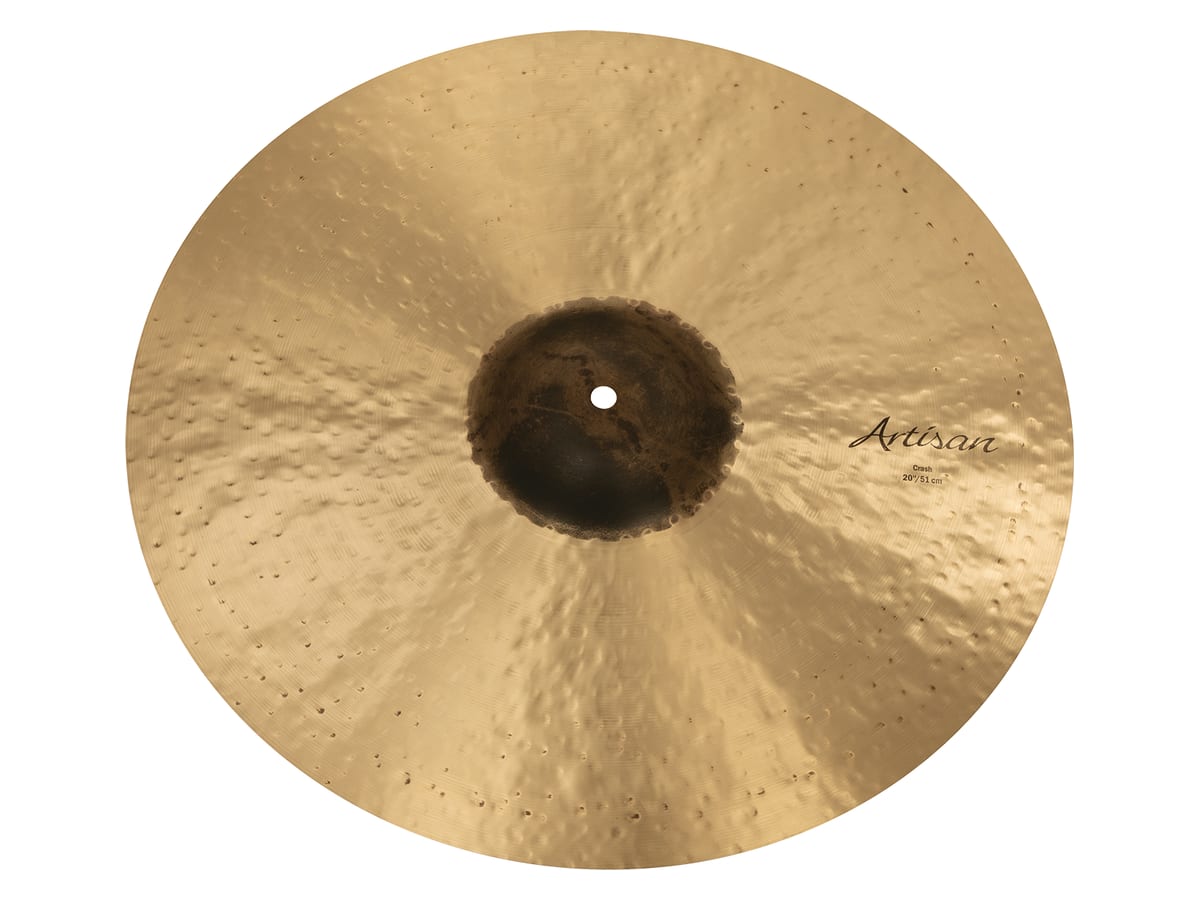
Artisan is Sabian’s flagship. The series is built around high-density hand hammering, and Sabian describes it as “the pinnacle of cymbal manufacturing”.
The sound is dark, rich and old-world, but Sabian is clear that it is not only for jazz. It pitches Artisan at rock, hip-hop and R&B too.
The current range includes crashes from 16” to 20”, 14” hats, and Vault Artisan rides in 20” and 22” (light and medium). Each one is individual. What a beautiful cymbal the 20” crash is.
These are expensive. A single Artisan ride can cost more than a whole B8X set, so play before you buy.
Paragon: Neil Peart’s series
Paragon was built with Neil Peart in 2004. The story goes that Peart rode his motorbike through the rain from Quebec to Meductic to work with the R&D team. The result is a B20 series that mixes features from AA, AAX and HH to get bright power with dark complexity.
It is Sabian’s “explosive power” series, and it was made to stand up to a Rush stage. We have a full Sabian Paragon guide covering every model and the full Peart setup, and you can see exactly what he played in Neil Peart’s rig in the Rig Vault.
FRX: frequency reduced
FRX is Sabian’s answer to a very real problem: drummers who are too loud for the room. It is B20 bronze with certain frequencies removed, so the cymbal is perceived as quieter and sits in the mix.
Sabian is careful to say this is “NOT a low volume cymbal”. It is a real cymbal that is easier on the ears. It is aimed at churches, weddings, function bands and theatres.
The range covers 14” hats, crashes from 16” to 19”, and 21” and 22” rides. We covered it in more depth in our piece on Sabian FRX for small gigs.
Quiet Tone: for practice
If you need properly quiet cymbals, Sabian makes the Quiet Tone practice range. These are perforated cymbals that cut the volume dramatically, for practising at home or in a flat.
They are not stage cymbals, but they are a great tool. Our Zildjian L80 vs Sabian Quiet Tone head-to-head compares the main options, and our low volume cymbals guide covers the whole category.
What else does Sabian make?
A few other corners are worth knowing about:
- Vault Drops: limited-run cymbals released in small numbers. When they are gone, they are gone.
- The Custom Shop: launched in 2018, it lets you spec your own cymbal.
- Effects and stacks: from the Stratus Alto Stax to the HH Max Stax and the Effeks Clap.
- Band and orchestral cymbals: including the SEAVINE marching series, launched in late 2024.
There is also the Sabian Sound Calculator on its website, which suggests cymbals based on the sound you like. It is worth a go if you are stuck.
Which Sabian series should you buy?
Here is the short version.
- Your first set: SBR if the budget is tight, B8X if you can stretch.
- Your first “proper” set: XSR or Stratus for B20 bronze at a mid price.
- Rock, pop and metal: AAX for modern brightness, AA for a classic sound.
- Jazz, soul, worship and the studio: HHX for modern dark, HH for vintage.
- The best Sabian makes: Artisan.
- Big, bright and complex: Paragon.
- Too loud for the room: FRX on stage, Quiet Tone for practice.
If you are building a set from scratch, our cymbal buying guide explains which cymbal to buy first.
Where can I buy Sabian cymbals?
The right shop depends on where you are: Guitar Center in the Americas, Gear4music in the UK, or Thomann for Europe and the rest of the world.
Sabian has been making cymbals for more than 40 years, so the used market is full of them, including older lines like B8 and Xs20 that have since been replaced. Have a look at used Sabian cymbals on Reverb and check the Reverb price guide before you pay full price.
Final thoughts
Sabian makes a cymbal for almost every drummer and every budget, all of it in one Canadian village. The naming can be confusing, but once you know the bright-or-dark, vintage-or-modern split, the range makes a lot of sense.
The only real downside is choice. There is so much of it that you can spend more time reading than playing. If that’s you, ask our Gear Guru for a recommendation, or browse every Sabian article and rig on the Sabian cymbals hub. And if you are still deciding on a brand, start with our best cymbal brands guide.
Sabian cymbal FAQs
- Where are Sabian cymbals made?
- Sabian cymbals are made in Meductic, New Brunswick, Canada. It is the same village where Zildjian used to run a factory before Robert Zildjian took it over and founded Sabian in the early 1980s.
- Is Sabian as good as Zildjian?
- Yes. Sabian and Zildjian share a family history and a pro range at the same level. AAX and HHX sit alongside Zildjian's A Custom and K Custom, and which you prefer comes down to taste. Our best cymbal brands guide compares the big names.
- What is the difference between Sabian AA and AAX?
- Both are B20 bronze and both are bright. AA is the original 1982 series with a vintage, classic rock sound. AAX is the modern take, with larger-peen hammering for a brighter attack and a wider dynamic range. Our AAX guide goes model by model.
- Which Sabian cymbals are best for beginners?
- SBR is Sabian's brass starter range and the cheapest way in. B8X is the step up, made from B8 bronze, and lasts longer in a growing player's setup. If you can stretch further, XSR gets you B20 bronze at a mid-range price.
- What does Sabian stand for?
- The name comes from the first two letters of the names of founder Robert Zildjian's three children: Sally, Billy and Andy.
Keep reading
All Our Buying Guides
Best cymbal brands (2026) | Big four and more
The best cymbal brands in 2026: Zildjian, Sabian, Meinl and Paiste, plus Istanbul Agop, Bosphorus and Dream, with the right series for every budget.
Head to Head
Istanbul Agop vs Zildjian K | Turkish showdown
Istanbul Agop vs Zildjian K: two dark cymbal families from the same Istanbul roots, compared on sound, hammering, consistency, price and who each suits.

Head to Head
Zildjian A Custom vs Sabian AAX | Which one?
Zildjian A Custom vs Sabian AAX, the two bright B20 ranges side by side: the sound, the cut, the sub-lines, the price and which one suits your music.