Paiste cymbals | Every series explained (2026)
Paiste cymbals explained: every series from 101 Brass and PST to 2002, Signature, Formula 602 and Masters, with alloys, prices and who each one suits.
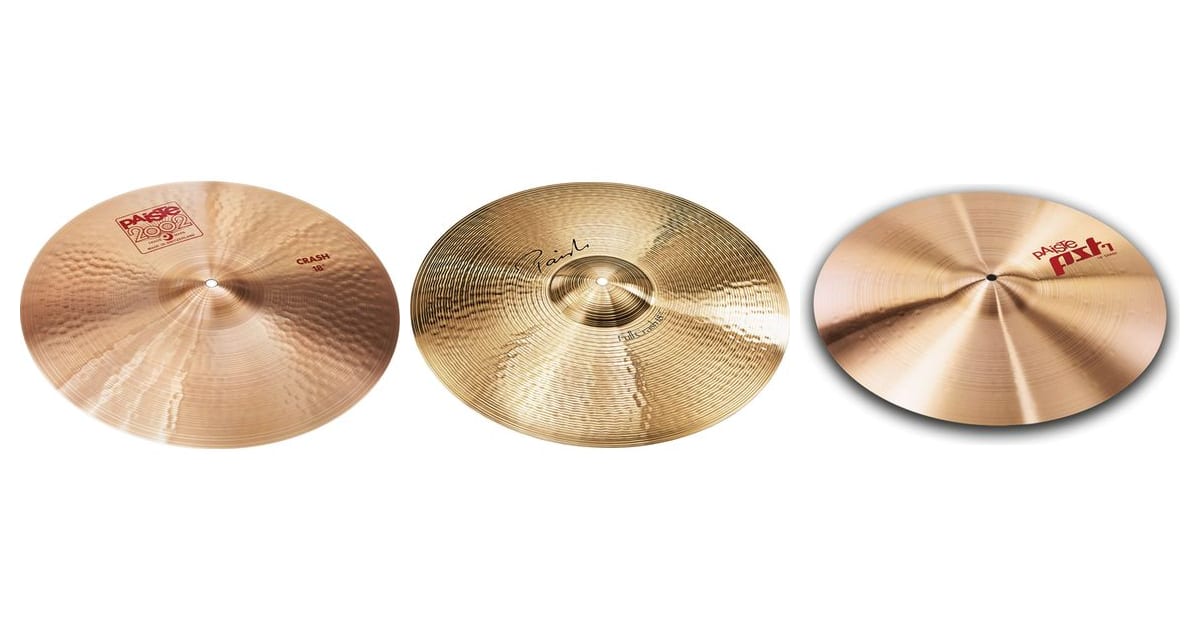
Some cymbal companies are about dark, dirty Turkish-style sounds. Paiste has always gone its own way.
Bright, clean, glassy and loud. If you have heard a classic rock record from the seventies, you have probably heard a Paiste. John Bonham, Alex Van Halen and Bill Ward all played them, and Danny Carey still does.
But Paiste is about far more than the 2002. The current catalogue runs from brass starter packs to hand-hammered B20 rides that cost as much as a decent drum kit. So which Paiste series is right for you? Let’s find out.
Who are Paiste?
Paiste is a family business, now in its fourth generation, and its story crosses half of Europe.
According to Paiste’s own history, it starts in St Petersburg in 1901, when Michail Toomas Paiste opened a music shop and publishing business that also made the odd cymbal and gong. The Russian Revolution closed it, and the family moved to Tallinn in Estonia, then to Poland during the Second World War, and then to northern Germany as refugees.
In 1957 the family sent Robert and Toomas Paiste to Switzerland to set up a permanent home. That is where Robert developed the Formula 602 in the late 1950s and the 2002 in the late 1960s, the two lines that made Paiste’s name.
Today Paiste AG is based in Nottwil, Switzerland, with Paiste GmbH in Schacht-Audorf in Germany and Paiste America in Brea, California. The company is also one of the world’s great gong makers. That is a story for another day.
What makes Paiste cymbals different?
Two things: the alloys and the sound.
Most cymbal makers built their reputations on B20 bronze (80% copper, 20% tin) and on dark, complex, Turkish-style sounds. Paiste took a different route. Its most famous cymbals use CuSn8, a bronze with 8% tin that Paiste calls “2002 Bronze”. That alloy is behind the 2002, RUDE, Giant Beat, 900, Color Sound 900, PST 5, PST 7 and PST 8.
CuSn8 gives you brightness, clarity and enormous projection. It is why a Paiste crash cuts through a stack of Marshalls without trying.
Paiste does make B20 cymbals too. Formula 602 and Masters use CuSn20, which Paiste calls “Traditional Bronze” or “602 Bronze”. And the Signature family uses a proprietary Signature Bronze that Paiste developed and keeps to itself.
The other thing to know is how consistent they are. Paiste keeps master cymbals from its Sound Development team in each production department and tests every finished cymbal against them. Anything that does not match is destroyed. So a 2002 18” crash you buy today should sound very much like the one in the shop down the road.
Is that a good thing? It depends on you. If you want every cymbal to be a unique one-off, Paiste is not really the brand for that. If you want to buy a replacement for a cracked crash without hearing it first, it is brilliant.
Paiste cymbal series at a glance
Here is the current line-up as listed on Paiste’s site at the time of writing, from cheapest to most expensive (roughly).
| Series | Alloy | Since | Best for |
|---|---|---|---|
| 101 Brass | MS63 brass | 2005 | First kit, tight budgets |
| PST 3 | MS63 brass | 2005 | Beginners, practice kits |
| PST 5 | CuSn8 bronze | 2014 (redesign) | First bronze set |
| PST 7 | CuSn8 bronze | 2014 | Step-up, traditional sound |
| PST 8 Reflector | CuSn8 bronze | 2012 | Bright, shiny rock on a budget |
| PST X | CuSn8, brass, aluminium | 2015 | Affordable effects |
| 900 / Color Sound 900 | CuSn8 bronze | 2017 | Mid-price all-rounders |
| 2002 / 2002 Big Beat | CuSn8 bronze | 1971 / 2016 | Rock, metal, anything loud |
| Giant Beat | CuSn8 bronze | 1967 | Vintage rock, crash-rides |
| RUDE | CuSn8 bronze | 1980 | Punk and metal |
| Signature family | Signature Bronze | 1989 | Pro all-rounders, studio |
| Formula 602 | CuSn20 bronze | 1959 | Jazz, recording, soft music |
| Masters | CuSn20 bronze | 2011 | Jazz and dark, complex rides |
Paiste 101 Brass and PST 3
These are the starter cymbals. Both are made from MS63 brass and both are sold individually or in box sets.
Brass cymbals are cheaper to make, and they are fine for learning on. The only downside is the sound: brighter and thinner than bronze, with a shorter, simpler decay. Expect to upgrade within a year or two if you get serious.
Paiste describes the PST range as “the fusion of Swiss cymbal sound know-how with German hi-tech expertise”. In other words, these are machine-formed cymbals designed by the Swiss team, which is how they keep the price down.
Paiste PST 5, PST 7 and PST 8
This is where Paiste gets interesting for most of us. All three are made from the same CuSn8 bronze as the 2002, so you get a real taste of the Paiste sound for far less money.
- PST 5 is Paiste’s entry to bronze. It was redesigned in 2014 to be lighter, warmer and more musical, and it is a popular first upgrade. It sits next to the Sabian B8X in our cymbal buying guide.
- PST 7 adds a traditional lathed look and comes in light, medium and heavy weights. Paiste says the cymbals are lathed by its Swiss craftsmen. We have a full PST 7 guide.
- PST 8 is hand hammered and has Paiste’s handmade Reflector finish, so it is bright, shiny and very at home in rock.
A PST 7 Universal box set (14” hats, 16” crash, 20” ride) costs around £360–£390 in the UK and around $620 in the US at the time of writing.
Paiste PST X
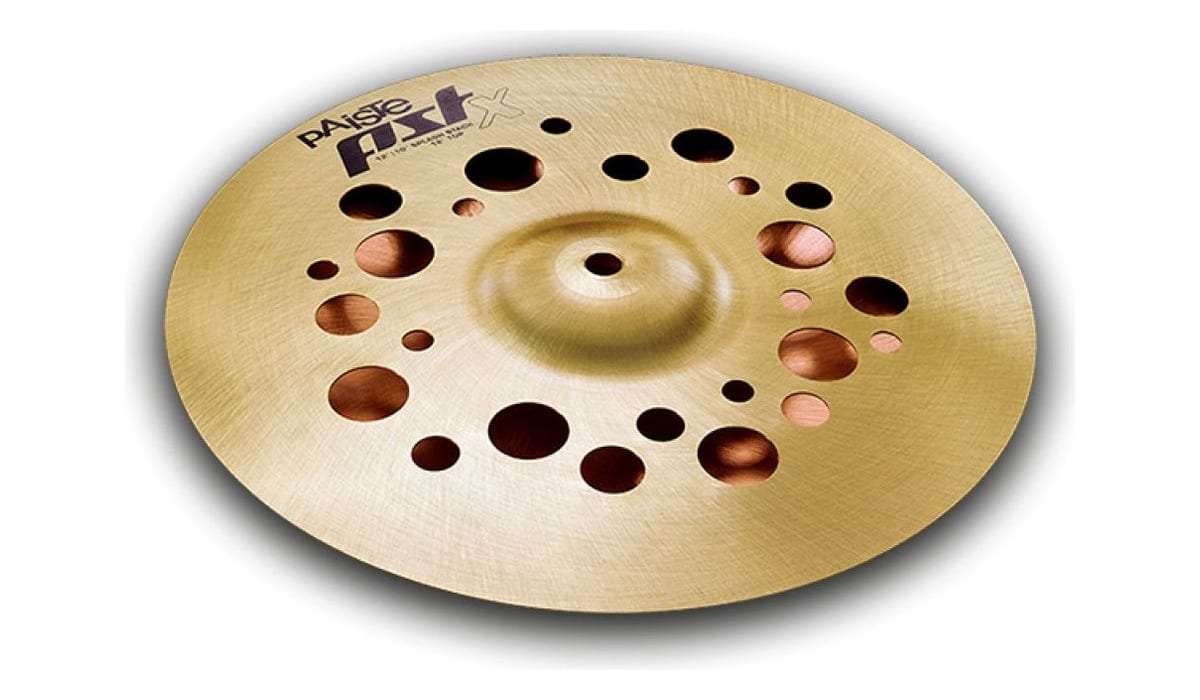
PST X is Paiste’s effects range: Swiss crashes, hats and splashes with holes cut through them for a noisy, trashy sound, plus stacks, Flanger models, the DJ’s 45 cymbals and aluminium Pure Bells.
They are cheap, they are fun, and they are surprisingly common on pro rigs. Eric Moore’s rig carries a PST X 10”/8” Splash Stack, and Chad Smith’s has a PST X Pure Bell.
Paiste 900 and Color Sound 900
The 900 Series arrived in 2017. It uses 2002 Bronze, but with a hybrid build: machine stages first, then hand hammering and lathing in Switzerland. A special finish darkens the cymbals slightly and brings out the hammer marks.
The sound is warmer and a bit less bright than the 2002, and the price is lower too. Think of it as Paiste’s answer to the mid-price pro lines from the other big makers.
Color Sound 900 takes the same models and adds a translucent colour coating in black, red, blue or purple. Paiste says the coating makes them slightly drier, with a bit less sustain and a more focused attack.
Paiste 2002 and 2002 Big Beat
The legend. The 2002 launched in 1971 and became the sound of classic rock: bright, warm, clean and very, very loud.
The current range takes in everything from the classic 2002 Crash and Ride to the Power Crash, Extreme Crash, Sound Edge hi-hats, Novo China and artist rides such as Alex Van Halen’s 24” “Reverend Al’s” Big Ride.
2002 Big Beat followed in 2016. It is a modern take with a new hammering pattern and a darker, semi-matt finish, voiced warmer and deeper for broad, washy sounds.
For the full story, the history and who plays what, read our Paiste 2002 guide.
Paiste Giant Beat
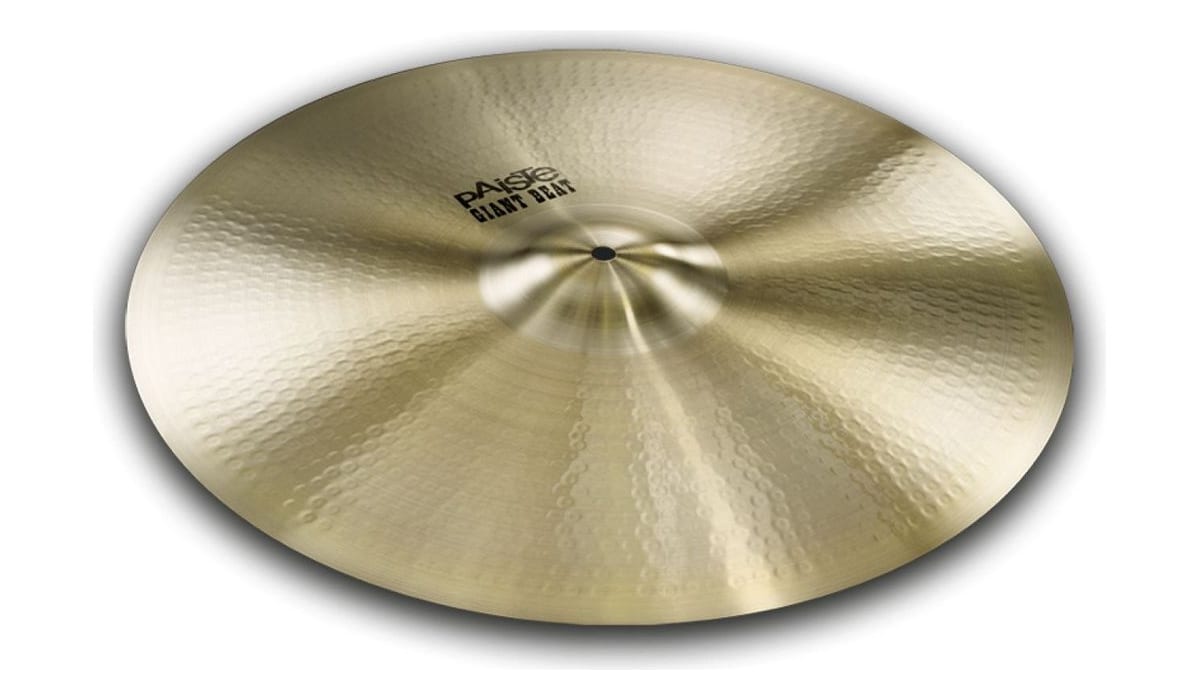
Before the 2002 there was the Giant Beat. These are the cymbals John Bonham played on the first Led Zeppelin records, and Paiste faithfully recreated them in 2005.
They are thinner and looser than the 2002s, with a big, warm, slightly trashy sound. The multi-functional models crash and ride equally well, which is very sixties. Bonham’s early setup is in John Bonham’s Rig Vault entry.
Paiste RUDE
RUDE arrived in 1980, inspired by punk and the new wave of heavy metal. It is still 2002 Bronze, but raw, unlathed and brutally loud, with a lot of mid-range.
Paiste lists signature models developed with Dave Lombardo (the Power Ride “Reign”) and John Dolmayan (the Mega Power Ride “Eclipse”). If you play quiet music, keep walking.
Paiste Signature
The Signature series launched in 1989 and is made from Paiste’s own proprietary bronze, handcrafted from start to finish in Switzerland. It is Paiste’s flagship all-rounder: richer and more colourful than the 2002, but still clear and projecting.
The family now includes the core Signature models, Signature Reflector (a shiny finish with a slightly lower, darker sound), Signature Traditionals (dark and smoky, for jazz and softer music) and Signature Dark Energy (dark, dry and complex).
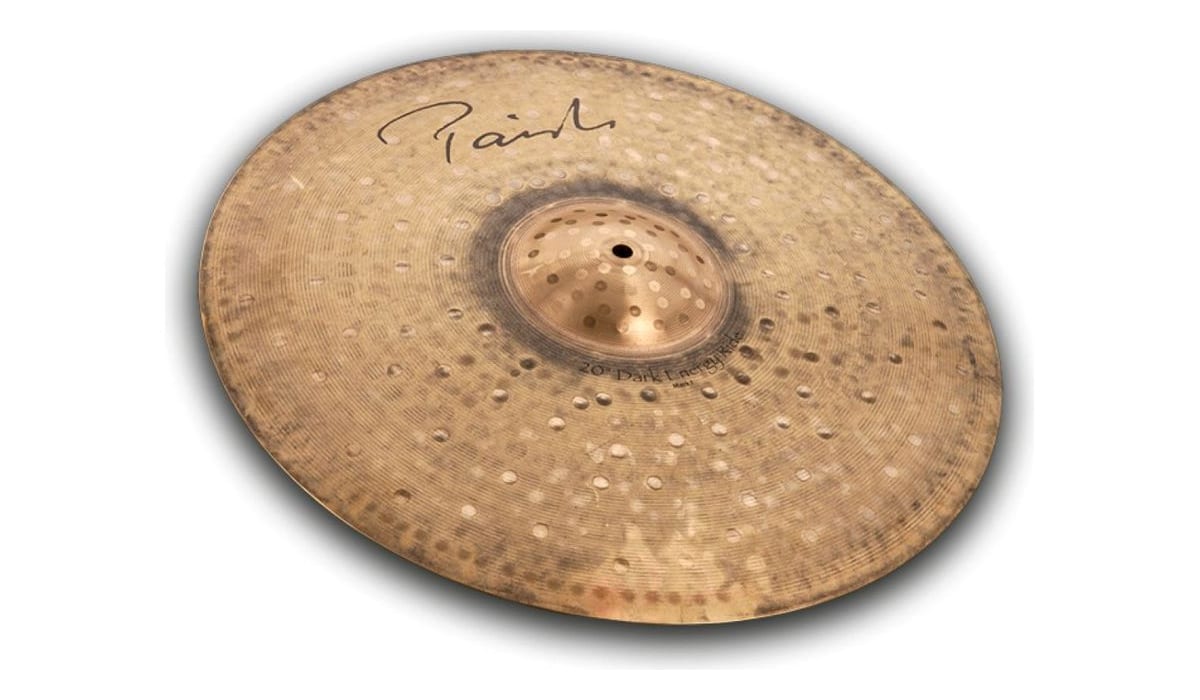
Danny Carey’s 22” “Monad” Dry Heavy Ride and Stewart Copeland’s “Rhythmatist” models live here. Read our Paiste Signature guide for every sub-line.
Paiste Formula 602 and Masters
These are Paiste’s B20 cymbals, made from CuSn20 and handcrafted in Switzerland.
Formula 602 dates back to 1959. The Formula 602 Classic Sounds range, reintroduced in 2011, recreates the originals: fine, pure, silvery and delicate. It is a jazz and recording cymbal, and it rewards a light touch. Formula 602 Modern Essentials (2013) was developed with Vinnie Colaiuta and adds warmth and a bit more pizzazz.
Masters started in 2011 as a set of twelve hand-made rides, with crashes and hats joining in 2014. Each model has its own character, from dark and dry to bright and washy. If you love Turkish-style rides but want Paiste consistency, start here.
What happened to Paiste Twenty and Signature Precision?
You will still see both on the used market, but neither is listed on Paiste’s website at the time of writing.
The Twenty was a B20 series with a darker, more traditional sound. Signature Precision was a cheaper, machine-assisted take on the Signature sound. Several UK and US shops now mark both as discontinued, so if you love one, grab it second-hand while you can.
Who plays Paiste cymbals?
Paiste’s artist roster is huge. Here are some of the drummers whose Paiste setups we have documented in the Rig Vault:
- John Bonham: Giant Beats on the early Led Zeppelin records, then 2002s. See John Bonham’s rig.
- Danny Carey: Signature and 2002, with his own Monad ride. Read our Danny Carey feature.
- Alex Van Halen: 2002s, and his own “Reverend Al’s” Big Ride. Read our Alex Van Halen feature.
- Chad Smith: switched from Sabian to Paiste in 2022. Read our Chad Smith feature.
- Bill Ward, Scott Travis, Chris Slade, Phil Collins (in the seventies) and Aquiles Priester, whose 18” “Psychoctopus” Giga Bell Ride is in the 2002 range.
Which Paiste series should I buy?
Here is the short version.
- Starting out: a PST 5 or PST 7 box set. Skip the brass if you can stretch.
- Rock on a budget: PST 8 Reflector or the 900 Series.
- Classic rock, metal, anything loud: the 2002. There is a reason it has lasted over fifty years.
- Punk and metal: RUDE.
- Pro all-rounder: Signature.
- Jazz and recording: Formula 602, Signature Traditionals or Masters.
Still not sure? Our best cymbal brands guide compares Paiste with Zildjian, Sabian and Meinl, and the Gear Guru can match a cymbal to your music.
Where can I buy Paiste cymbals?
Paiste is stocked by most big music shops, and a good drum shop will let you hear cymbals before you buy. We always recommend that, even with a brand as consistent as Paiste.
The right shop depends on where you are: Guitar Center in the Americas, Gear4music in the UK, or Thomann for Europe and the rest of the world.
Paiste cymbals hold their value well, so the used market is worth a look too. Try used Paiste cymbals on Reverb and check the Reverb price guide before you buy.
Final thoughts
Paiste does not sound like anyone else, and that is the point. If you want bright, clear, cutting cymbals that sit perfectly in a rock mix, nobody does it better. The 2002 is still the benchmark more than fifty years on.
There is one thing to mention: if your taste runs to dark, dry, trashy Turkish sounds, most of the Paiste catalogue will feel a little clean. Try the Masters, Dark Energy or Formula 602 before you write the brand off.
For more on the brand, head to our Paiste cymbals hub, where every Paiste cymbal in the Rig Vault is listed with the drummers who play it.
Paiste cymbal FAQs
- Are Paiste cymbals good?
- Yes. Paiste is one of the big four cymbal makers alongside Zildjian, Sabian and Meinl, and its 2002 and Signature series are on some of the most famous drum kits in rock. Even the budget PST 7 and PST 8 lines are finished by hand in Switzerland. See our best cymbal brands guide for how they compare.
- Where are Paiste cymbals made?
- Paiste's headquarters and professional cymbal production are in Nottwil, Switzerland, and the company also has a German operation in Schacht-Audorf. The entry-level PST lines are described by Paiste as a blend of Swiss sound know-how and German manufacturing, while the professional series are handcrafted in Switzerland.
- Why are Paiste cymbals not made of B20 bronze?
- Some are. Formula 602 and Masters use CuSn20 (B20). But the series Paiste is best known for, the 2002, RUDE, Giant Beat and 900, use CuSn8, a bronze with 8% tin that Paiste calls 2002 Bronze. It is brighter and more cutting than B20, which is exactly why rock drummers love it. Signature cymbals use Paiste's own proprietary alloy.
- Which Paiste cymbals are best for beginners?
- The PST 5 is Paiste's entry to bronze, and the PST 7 is the step up most players stay with for years. Both come in money-saving box sets. The 101 Brass and PST 3 are cheaper, but they are brass, so you will want to upgrade sooner.
- What is the difference between Paiste 2002 and Signature?
- The alloy and the sound. The 2002 is made from CuSn8 bronze and is bright, glassy and loud: the classic rock cymbal. The Signature series uses Paiste's proprietary Signature Bronze and is more refined and colourful, with a wider spread of models for studio and lighter styles.
Keep reading
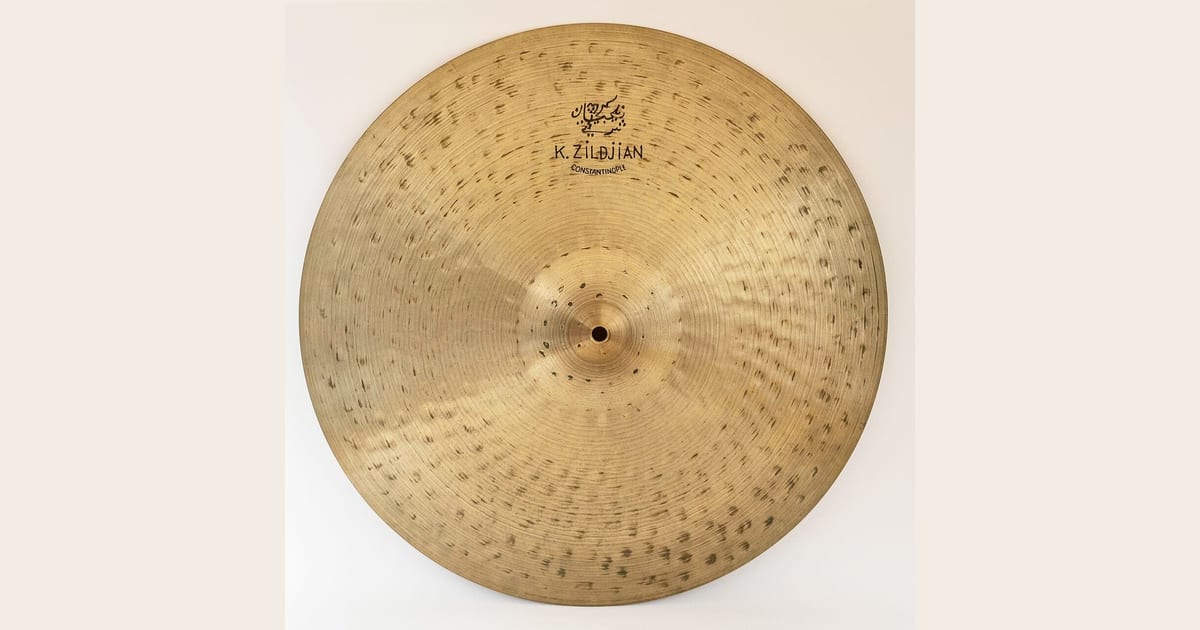
All Our Buying Guides
Best cymbal brands (2026) | Big four and more
The best cymbal brands in 2026: Zildjian, Sabian, Meinl and Paiste, plus Istanbul Agop, Bosphorus and Dream, with the right series for every budget.
Head to Head
Istanbul Agop vs Zildjian K | Turkish showdown
Istanbul Agop vs Zildjian K: two dark cymbal families from the same Istanbul roots, compared on sound, hammering, consistency, price and who each suits.
Head to Head
Zildjian A Custom vs Sabian AAX | Which one?
Zildjian A Custom vs Sabian AAX, the two bright B20 ranges side by side: the sound, the cut, the sub-lines, the price and which one suits your music.