Evans drum heads | Every series (2026)
Evans drum heads explained: G1, G2, EC2, UV1, Genera, Hydraulic, Onyx, Calftone and the EMAD and EQ kick heads, and which to buy for each drum.
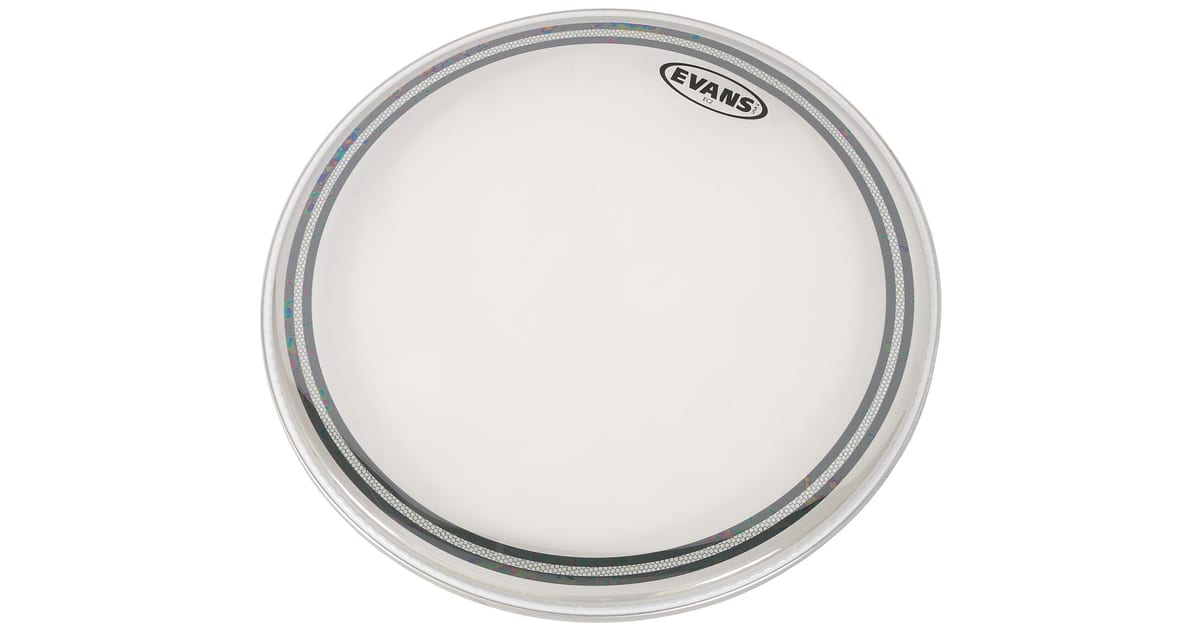
Evans is the other name you will find on most drum kits. Remo might be the default, but walk round any music shop, festival backline or session studio and you will see the black Evans oval on a huge number of drums.
Evans has a reputation for ideas. The first coated heads, the oil-filled Hydraulic, the externally damped EMAD kick head and the UV-cured UV1 all came from Evans, and they all still sell.
The trouble is the catalogue. G1, G2, G12, G14, EC1, EC2, UV1, UV2, Genera, HD Dry, Hydraulic, Onyx, Calftone, EMAD, EQ3, EQ4. What do they all do, and which belong on your kit? Let’s find out.
Who are Evans?
Evans’ story starts in 1956, when a drummer called Marion “Chick” Evans made a synthetic, weatherproof drum head from polyester film. There is a long-running argument between Evans and Remo fans about who was “first”, and sources disagree. What everyone agrees on is that Chick Evans was right at the start of the plastic head revolution.
Evans made heads by hand at first and sold them to drum shops on the US West Coast. Bob Beals came in to help run production and later owned the company, and Evans heads were made in Dodge City, Kansas.
In 1995 Evans was bought by D’Addario, the New York string maker. D’Addario moved production to its factory in Farmingdale, New York, where Evans heads are still made. D’Addario also owns ProMark, which is why you see the two brands together, as on the Anika Nilles Evans x ProMark collection.
What is Level 360?
Before the series, one technology that applies to almost all of them. In 2013 Evans introduced Level 360, a redesigned collar (the bend where the film meets the hoop).
The collar is steeper, and the idea is that the head sits flat on the bearing edge all the way round the drum. Evans says that means easier seating, easier tuning and a wider tuning range. MusicRadar’s review at the time found tuning “a breeze, far easier than on any other set of heads we have used”, which is quite a claim from people who change heads for a living.
You do not need to choose it. It is simply how Evans heads are made now, from the G1 to the EMAD. If you have older, pre-2013 Evans heads on a kit, you may notice the newer ones seat and come up to pitch a little more evenly, but the sound of each series has not fundamentally changed.
G1, G12 and G14: the single plies
G1 is Evans’ single ply of 10-mil film, the direct equivalent of a Remo Ambassador. It comes in clear and coated, and it is open, sensitive and resonant. The G1 Coated is a classic snare batter; the G1 Clear is a very common tom resonant head.
G12 and G14 are thicker single plies, at 12-mil and 14-mil. The extra film makes them more durable, with a bit more midrange and less of the G1’s top end, while keeping a single-ply feel. They are a good step for snare drummers who wear out G1s but do not want the softer feel of two plies.
G2 and EC2: the two-ply tom heads
G2 is two plies of 7-mil film, the equivalent of a Remo Emperor. It is fatter, warmer, more focused and much tougher than a G1, and it is the head on a huge number of rock toms. Our Evans G2 guide covers it in detail.
EC2 is where Evans gets clever. It is also two 7-mil plies, but with a Sound Shaping Technology (SST) ring underneath that controls the edge overtones. Evans varies the ring for each size, so smaller toms keep more of their ring and floor toms get more control. The idea is a kit that sounds balanced from top to bottom.
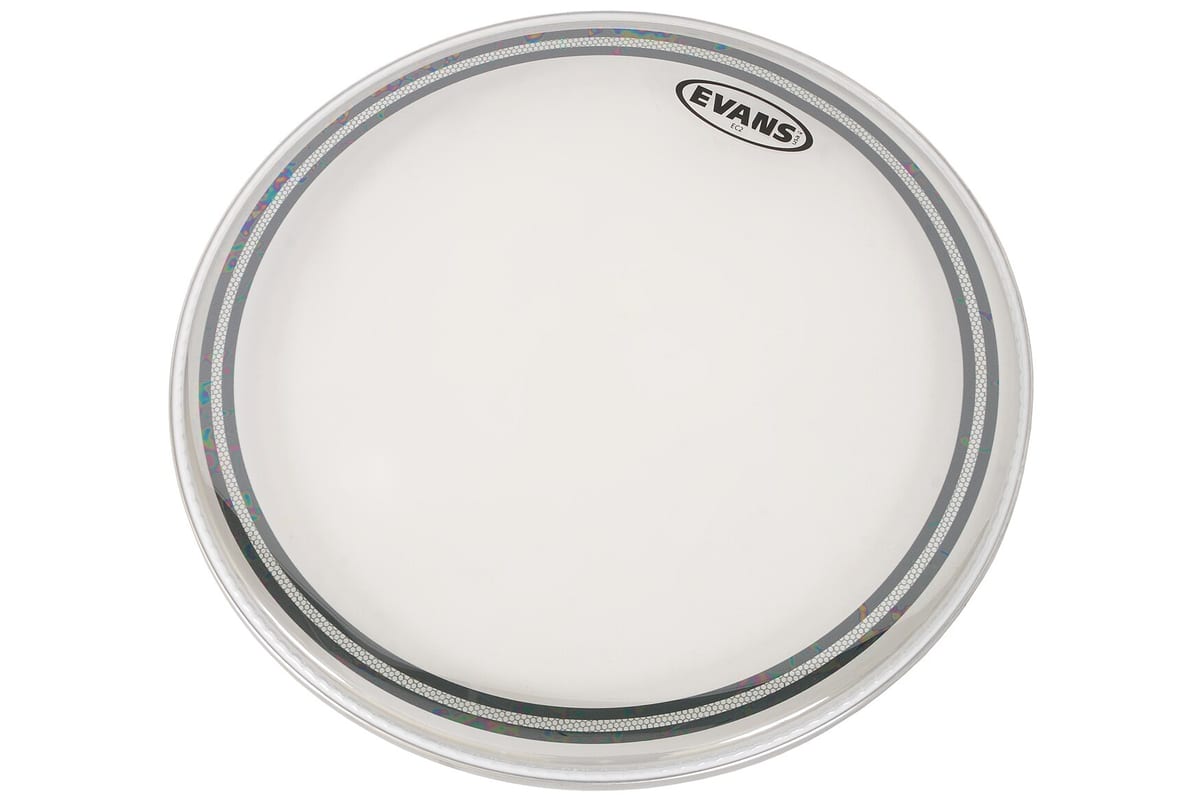
EC2s give a punchy, focused, modern tom sound, and they are very forgiving to tune. If you want fat toms without gaffer tape, they are hard to beat. There is also an EC1, the single-ply version, and EC snare heads with their own construction.
UV1 and UV2: the tough coatings
The UV1 arrived in early 2017. It is a single ply of 10-mil film with a coating that is applied and then cured with ultraviolet light, rather than sprayed on and air-dried. Evans says it gives the most consistent coating ever put on a drum head, and it is designed to last much longer before wearing through.
MusicRadar’s verdict was that the UV1 gives “all the characteristics of a single-ply head with the added durability of a double-ply”. Bass drum versions followed in 2018, and later the UV2, a two-ply version with the same coating. Our Evans UV1 guide goes into it.
Genera: the snare heads
Genera is Evans’ family of snare batters, built around the different ways to control a snare. The best known is the Genera HD Dry: a two-ply coated head with a thin overtone control ring and a row of small vent holes around the edge.
Those holes are the “Dry” part. They let air escape and cut the ring, giving a tight, dry crack that is popular in funk, gospel and pop. There is also a single-ply Genera Dry, and other Genera models with different weights and control rings.
The honest caveat: dry heads are a one-way door for a snare. Brilliant for that tight, short sound, frustrating if you later want the drum to open up.
Hydraulic: oil between the plies
The Hydraulic has been around since the 1970s, and it is still unlike anything else. It is two plies of film with a thin layer of oil sealed between them.
The oil soaks up overtones, so the sound is deep, fat, wet and very short, with almost no ring. It is the sound of a lot of seventies records. It also feels quite dead under the stick, which some players love and others hate.
Rhythm magazine described it as giving “the ultimate damped, wet, slappy tone”. If you want that sound, nothing else does it. If you do not, avoid.
Onyx: black and dark
The Onyx is a two-ply head with a matte black coating. When MusicRadar reviewed it, the plies were 7.5-mil each, a fraction heavier than a G2.
It looks fantastic on a black kit, and it sounds dark, short and attacking. In MusicRadar’s test against a coated Emperor on the same tom, the Onyx was darker and more abrupt. It is a sound choice as well as a look, so try it before you commit a whole kit to it.
Calftone: the vintage sound
Calftone heads arrived in 2016 for Evans’ 60th anniversary, as the ‘56 series. They put a creamy, fibrous calfskin-style top layer on a clear film base, to mimic the heads Chick Evans’ plastic replaced.
On toms and snares the base is 7-mil film, which makes them light and resonant. They are lovely for jazz and brushes and give a warm, vintage tone. There are Calftone bass heads too, including Calftone versions of the EMAD and EQ4.
EMAD and EQ: the bass drum heads
This is where Evans has a real claim to fame.
The EMAD (Externally Mounted Adjustable Damping) is a single 10-mil bass drum head with a plastic channel stuck round the outside edge. Into that channel you slip one of two foam rings: a thin one for punch or a thick one for more control. You can change the amount of damping in seconds, from outside the drum.
It is one of the most popular kick heads ever made, and there is a whole family: EMAD Clear and Coated, the two-ply EMAD2, the tougher EMAD Heavyweight (two 10-mil plies), plus Onyx, Calftone and UV versions. Our Evans EMAD guide explains which is which.
The EQ heads take a more traditional approach. The EQ4 is a single 10-mil batter with an internal damping ring, very close in concept to a Remo Powerstroke P3. The EQ3 Resonant is a front head with an internal damping ring, usually ported for a mic.
Which Evans heads should you buy for each drum?
Here is the short version.
| Drum | Light to medium player | Heavy hitter | Want it drier? |
|---|---|---|---|
| Snare batter | G1 Coated or UV1 | G2 Coated, G14 or UV2 | Genera HD Dry |
| Snare resonant | Evans snare side (Hazy 300 is the standard) | Same | Same |
| Tom batters | G1 Clear or Coated | G2 Clear or Coated | EC2 or Hydraulic |
| Tom resonants | G1 Clear | G1 Clear | G1 Clear or EC resonant |
| Kick batter | EQ4 or EMAD | EMAD Heavyweight or EMAD2 | EMAD with the thick ring |
| Kick resonant | EQ3 Resonant | EQ3 Resonant | EQ3 Resonant |
The honest notes:
- The snare matters most. A G1 Coated or a UV1 is right for most people.
- EC2 vs G2 on toms is taste. G2s are more open; EC2s are more controlled and easier to make sound good.
- The EMAD is the easy win. If your kick boom annoys you, start there.
Who plays Evans?
Our Rig Vault lists Evans heads on rigs from Ray Luzier of Korn, who our data marks as a long-standing Evans artist, to Larnell Lewis, Nate Smith, Matt Halpern and Harry Miree. That is metal, jazz, fusion and Nashville. Evans heads cover a lot of ground.
How much are Evans heads?
At the time of writing, a 14” G1 or G2 costs roughly £15–£22 in the UK and $15–$25 in the US, with UV1 and EC2 a little more. A 22” EMAD is around £35–£45 or $40–$50. Tom packs are usually the best value.
Where can I buy Evans heads?
The right shop depends on where you are: Guitar Center in the Americas, Gear4music in the UK, or Thomann for Europe and the rest of the world.
Evans vs Remo vs Aquarian
The three big head makers all make good heads, and they mirror each other: G1 and Ambassador, G2 and Emperor, EQ4 and Powerstroke P3. Where Evans pulls ahead is in the clever stuff: the EC2’s size-matched rings, the EMAD’s swappable foam and the UV coating.
Our best drum head brands guide compares all three, and the Remo drum heads guide does for Remo what this page does for Evans. For the general basics, the drum head buying guide is the place to start.
Final thoughts
Evans’ range looks bigger and more confusing than it is. G1 for open, G2 for fat, EC2 for controlled toms, UV1 for a coating that lasts, and an EMAD on the kick. That covers most drummers, most of the time.
The speciality heads, Hydraulic, Onyx and Calftone, are worth trying when you want a sound the basics will not give you. Just remember to tune them properly: our free drum tuner helps. Then head to the Evans heads hub to see who plays what.
Evans drum head FAQs
- What is the difference between Evans G1 and G2?
- The G1 is a single ply of 10-mil film: open, sensitive and resonant. The G2 is two plies of 7-mil film: fatter, more focused and more durable, with less ring. G1s suit lighter playing and snares; G2s suit harder hitters and rock toms. See our Evans G2 guide.
- What is Evans Level 360?
- Level 360 is Evans' collar design, introduced in 2013 across its heads. A steeper collar is designed to sit the head flat on the bearing edge all the way round, which makes the head easier to seat and tune and widens its tuning range.
- What does EMAD stand for?
- Externally Mounted Adjustable Damping. The EMAD is a bass drum head with a plastic channel on the outside that holds one of two foam rings, so you can change how much the drum is damped without stuffing it. See our Evans EMAD guide.
- Who owns Evans drum heads?
- D'Addario, the New York accessories company that also owns ProMark. D'Addario bought Evans in 1995 and moved production from Dodge City, Kansas, to Farmingdale, New York.
- Are Evans heads better than Remo?
- Neither is better overall. Each brand makes a close equivalent of the other's classics. Evans' strengths are its Level 360 collar, the EC2 for toms and the EMAD for kicks; Remo's are its sheer history and ubiquity. Our Remo Emperor vs Evans G2 head-to-head compares the two best-known tom heads.
Keep reading
All Our Buying Guides
Best drum head brands (2026) | Remo vs Evans
Remo, Evans or Aquarian? The best drum head brands in 2026 compared, with the heads to buy for your snare, toms and bass drum, plus Code and Attack.
Evans Heads
Evans EMAD | Bass drum control, your way
The Evans EMAD bass drum head explained: how the swappable foam rings work, EMAD vs EMAD2 vs Heavyweight, the Powerstroke P3 rival, and who it suits.
Evans Heads
Evans G2 | The two-ply tom workhorse
The Evans G2 explained: two 7-mil plies, clear or coated, how it sounds on toms and snare, how it compares with the Remo Emperor and EC2, and who it suits.