Sonor Benny Greb snare | Everything to know
Sonor's Benny Greb signature snare is a 13x5.75 beech or brass drum with built-in dampers. The specs, the sound, the price and who it suits.
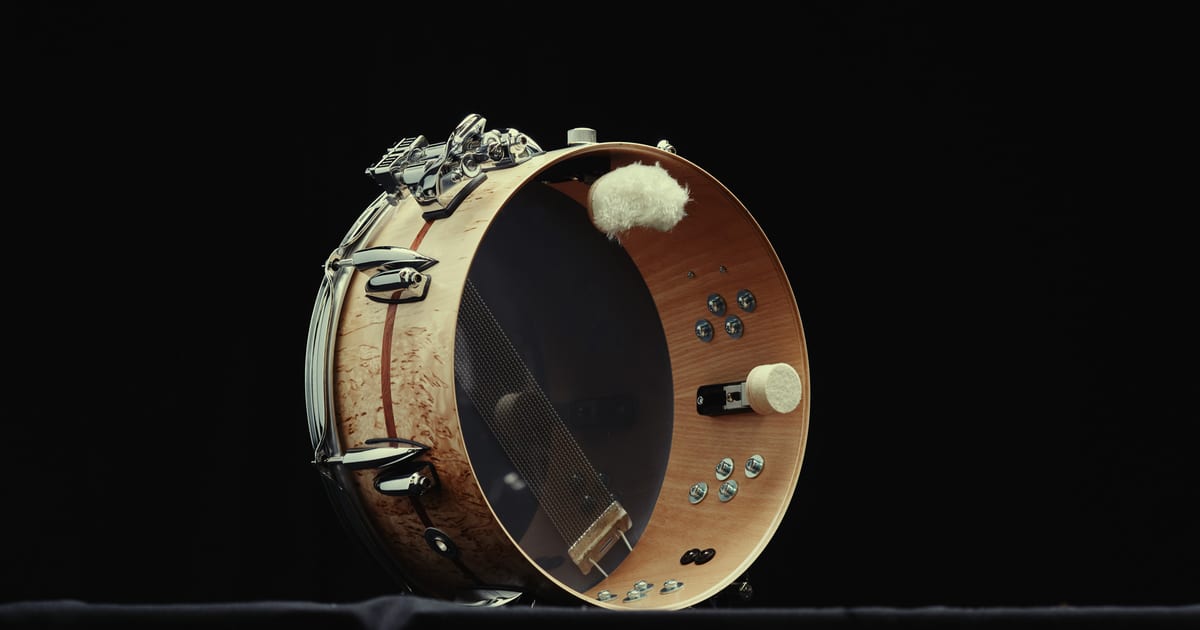
Signature snares are usually about the name on the badge. The Sonor Benny Greb snare is different. It is a drum that a lot of drummers who don’t play like Benny, or even know who he is, have bought simply because it sounds great.
It is small, it is warm, and it has a clever trick hidden inside it: two built-in dampers that let you go from wide open to dead and fat without reaching for the gaffer tape.
So what makes it special, and which version should you buy? Let’s find out.
Who is Benny Greb?
Benny Greb is a German drummer, educator and one of the most musical players in the world. He tours with his trio Moving Parts, teaches through his own practice platform and does clinics for Sonor and Meinl all over the world.
If you want the full story, read our Benny Greb feature.
He has been a Sonor player for years, and this snare is his drum. Sonor calls him a “jack-of-all-trades and close #SONORfamily member”.
What is the Benny Greb signature snare?
The original Benny Greb snare was a 13”x5.75” beech drum that Sonor and Benny developed around 2010. It became one of the most praised signature snares ever made, and for a while it was hard to find.
About ten years later, in 2020, Sonor brought it back as the 2.0. As Benny put it: “It’s not an update, it’s an upgrade.” There are now two versions:
- Beech, an evolution of the original wooden drum.
- Brass, an all-new metal version.
That is the drum you can buy today, and it is the one we’re talking about here. Our earlier news story on the Benny Greb Signature Snare 2.0 has more on the launch and a video of the brass version.
What are the specs?
Both drums share the same size, hardware and dampers. The differences are the shell and the look.
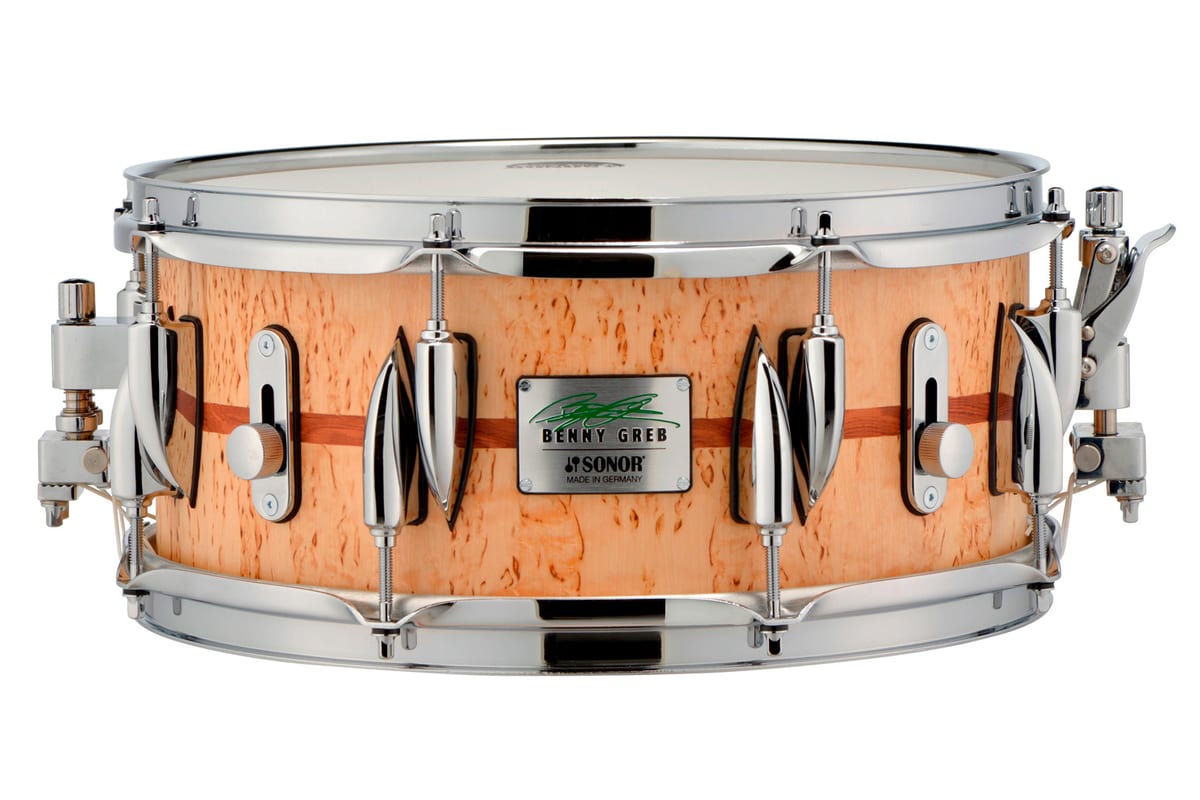
The beech snare
- Size: 13”x5.75”
- Shell: 9-ply, 5mm German beech, made with Sonor’s CLTF (cross-laminated, tension-free) process
- Outer veneer: Scandinavian birch, semi-gloss, with a bubinga wood inlay that runs all the way round the drum
- Bearing edges: 45°
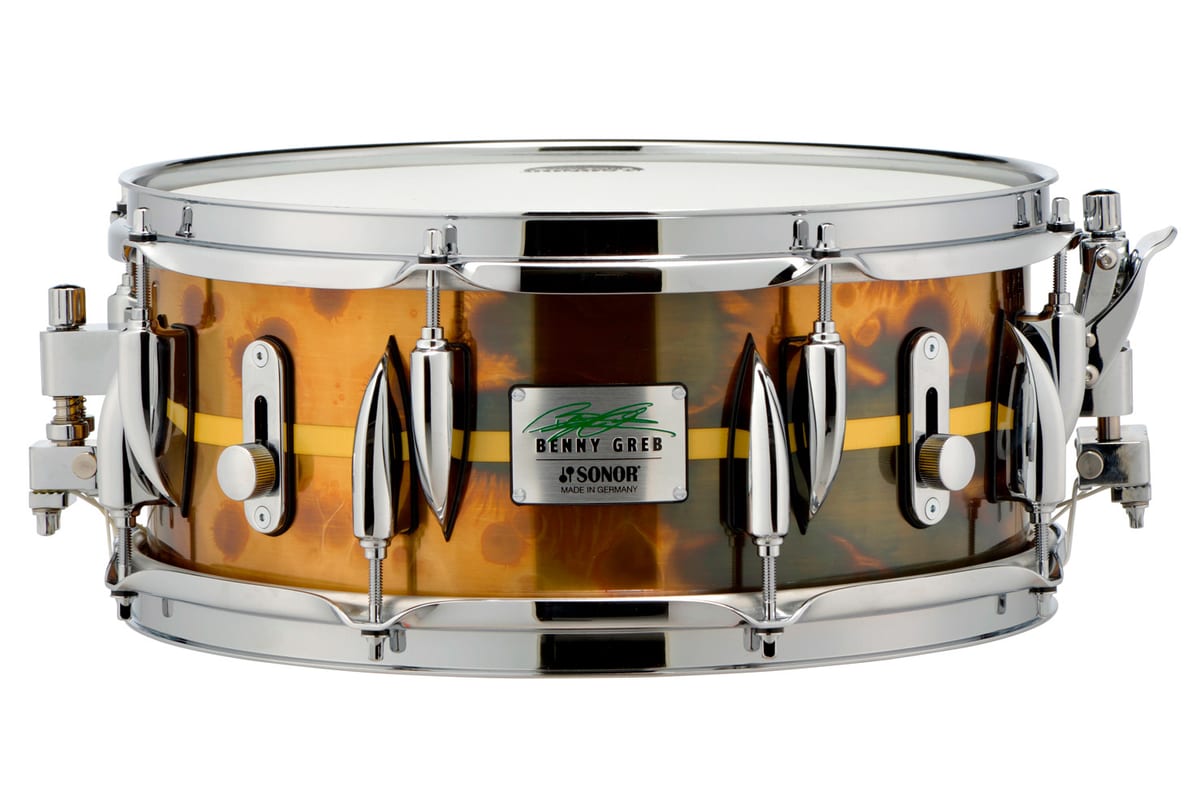
The brass snare
- Size: 13”x5.75”
- Shell: 1.2mm brass in an aged brass finish
- Detail: a laser-etched stripe to echo the inlay on the wooden drum
- Bearing edges: 45°
On both
- Classic 1950s-style Sonor teardrop lugs with TuneSafe, so the tension rods don’t back off
- Dual Glide snare strainer, Sonor’s best throw-off
- 2.3mm Power Hoops
- Two MonoRail dampers with interchangeable pads
- Chrome hardware and a Benny Greb signature badge marked “Made in Germany”
What is the MonoRail?
This is the clever bit, and it was designed by Benny himself.
Inside the shell are two small rails, each with a damper that slides up and down to touch the underside of the batter head. You set them with a finger-tightening knob, so you can dial in exactly how much dampening you want, and come back to the same setting every time.
The two pads have names:
- “The Felt”: a round felt pad for subtle control of the overtones.
- “The Sheep”: a fluffy sheepskin pad that kills much more ring for a big, fat sound.
Use one, use both, or use neither. Because the dampers sit inside the drum, they never get in the way of your sticks, and you don’t need tape, gel or a ring on the head. Sonor says the pads are interchangeable “to give you even more sound options”.
Combine the dampers with a few different tunings and you have a frankly silly number of snare sounds in one drum.
What changed from the original?
If you own, or are looking at, an original Benny Greb snare, the 2.0 changes are:
- A bubinga inlay around the beech drum, on top of the Scandinavian birch outer veneer.
- 1950s-style teardrop lugs in place of the original’s lugs.
- The Dual Glide strainer, Sonor’s top-of-the-range throw-off.
- The MonoRail dampers, two of them, with interchangeable pads.
- A brass version, which didn’t exist before.
The size, the 13”x5.75” that made the original so popular, didn’t change.
How should you set up the dampers?
Start with both MonoRails off the head and tune the drum the way you like it. Then bring in the felt a little at a time to tame the overtones, and save the sheepskin for when you want a fat, dead backbeat.
Because the dampers lock in place, it is worth noting the settings you like for different songs or gigs. It’s a lot quicker than reaching for the tape.
How does it sound?
The 13” diameter makes it crisp, sensitive and quick to speak, while the 5.75” depth gives it more body and bottom end than you’d expect from a small snare.
The beech version is warm, dry and woody, with that classic Sonor beech character. It is the more versatile of the two, and the one we’d pick if you only buy one.
The brass version, says Sonor, “has the warmth and roundness typical for this material”, with “pleasant overtones” on rim shots. It is also, according to Sonor, Benny’s favourite metal snare ever made.
Who is it for?
Almost anyone who wants one great snare to do lots of jobs. It suits:
- Funk, soul, pop and hip hop players who want a fat, dampened backbeat one minute and a crisp ghost-note machine the next.
- Session and function drummers who need a different sound for every song without carrying five snares.
- Jazz players, who’ll love the 13” size tuned up.
The one caveat is that a 13” snare is a different feel from the usual 14”. If you are a hard-hitting rock or metal player who wants a cannon, a deeper 14” drum is probably a better bet. Our snare drum buying guide talks through the options.
How much does it cost?
At the time of writing, the beech model sells for around £735 in the UK and around $1,279 in the US. The brass version is in a similar bracket. That puts it firmly in premium snare territory, alongside the likes of a Ludwig Black Beauty.
It is a lot of money for a snare, but it’s a German-made drum with built-in features you would otherwise pay for separately.
Where can I buy one?
The right shop depends on where you are: Guitar Center in the Americas, Gear4music in the UK, or Thomann for Europe and the rest of the world.
The original and the 2.0 both turn up second-hand. Check used Sonor Benny Greb snares on Reverb and the Reverb price guide before you buy.
Final thoughts
The Sonor Benny Greb snare deserves its reputation. The size is a sweet spot, the build is superb, and the MonoRail dampers are one of the smartest ideas we’ve seen on a snare drum.
The only downside is the price. But if you want one snare that can cover almost any gig, this is one of the best answers out there.
For the rest of Sonor’s range, read our Sonor drums guide or browse the Sonor drums hub. And to see where Sonor sits against the competition, have a look at our best drum brands guide.
Benny Greb snare FAQs
- What size is the Sonor Benny Greb snare?
- 13 inches by 5.75 inches. Both the beech and brass versions use the same size, which is Benny Greb's favourite: small enough to be crisp and sensitive, deep enough to have real bottom end.
- What is the difference between the beech and brass Benny Greb snares?
- The shell. The beech model has a 9-ply, 5mm German beech shell with a Scandinavian birch outer veneer and a bubinga inlay, while the brass model has a 1.2mm brass shell in an aged finish. Sonor says the brass has the warmth and roundness typical of the metal, with pleasant overtones on rim shots.
- What is the MonoRail on the Benny Greb snare?
- An internal dampening system designed by Benny Greb. Each drum has two MonoRail dampers inside the shell, one with a felt pad and one with a sheepskin pad, that slide up and down a rail to touch the batter head as much or as little as you want. The pads are interchangeable.
- Is the Sonor Benny Greb snare made in Germany?
- Yes. The badge on both versions reads Made in Germany, and the beech shell is made with Sonor's cross-laminated CLTF process at its Bad Berleburg factory.
- How much is the Benny Greb signature snare?
- At the time of writing, the beech model sells for around £735 in the UK and around $1,279 in the US, with the brass version in a similar bracket. Prices vary by shop and region.
Keep reading
All Our Buying Guides
Best drum brands (2026) | Every budget ranked
The best drum kit brands in 2026, from Yamaha, Pearl and Tama to Ludwig, DW, Gretsch, Sonor, Mapex and PDP, with the right pick for every budget.
DW Collector's Series
DW Collector's Series | Guide (2026)
DW's Collector's Series explained: the pure woods, SSC shell options, curated Jazz and Santa Monica shells, finishes, prices, and who it is really for.
DW Drums
DW drums | Every series explained (2026)
DW drums explained: Design, Performance, Collector's and DWe kits, the 5000 and 9000 pedals, where they are made, and what Roland owning DW means for you.