Ludwig Supraphonic | The ultimate guide (2026)
The Ludwig Supraphonic is the most recorded snare drum ever. LM400 vs LM402, hammered and tube-lug versions, its history, prices and who should buy one.
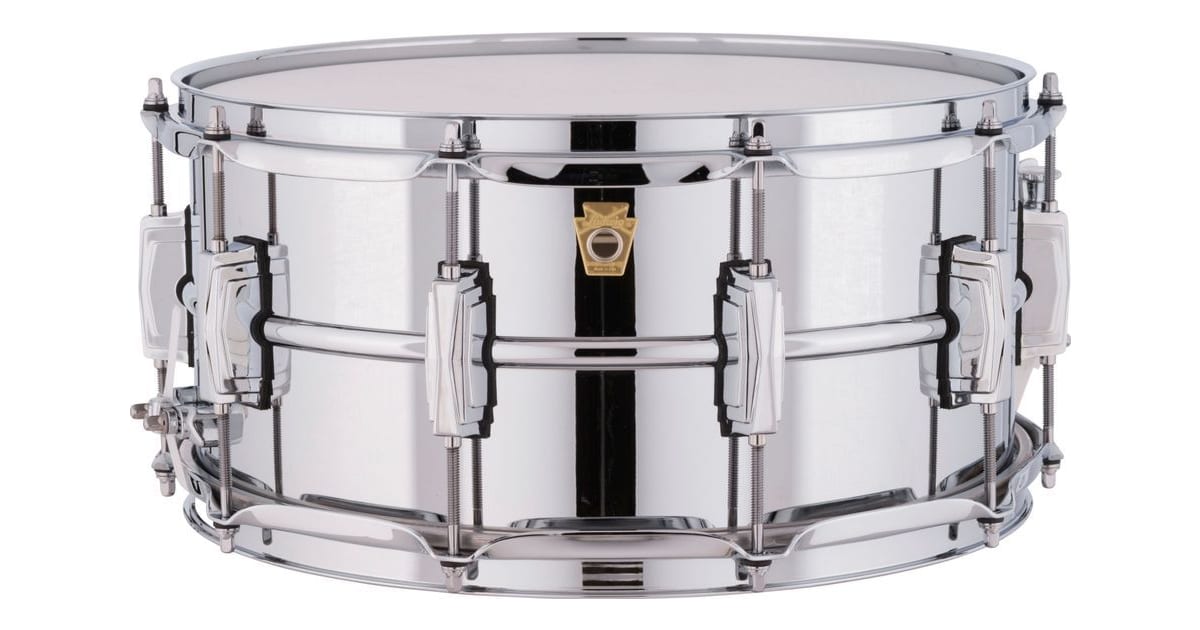
Hear it
Ludwig Black Beauty LB417 vs Supraphonic LM400, back to back — same tuning, same heads, same player; the Supraphonic is the drier, brighter one
If you have listened to rock, pop, soul or funk records from the last sixty years, you have heard a Ludwig Supraphonic. Probably hundreds of times. Probably without knowing it.
Ludwig describes it as “the sound that fuelled the most hit recordings in history”, and for once the marketing line is the one everyone else uses too. It is the snare drum studios keep in the cupboard because whoever walks in will know what to do with it.
So what actually is a Supraphonic, what is the difference between the LM400 and the LM402, and is it still worth buying in 2026? Let’s find out.
What is the Ludwig Supraphonic?
The Supraphonic is a metal snare drum made by Ludwig in Monroe, North Carolina. The recipe is simple:
- A seamless, beaded aluminium shell, chrome plated. Ludwig quotes it at 1.7mm.
- Ten lugs, either Ludwig’s classic Imperial lugs or tube lugs.
- 2.3mm steel triple-flanged hoops.
- The P88AC throw-off and P35P butt plate.
- Ludwig Weather Master heads: a medium coated batter and a clear snare-side head.
The chrome makes it look like steel, and it gets called “the chrome Ludwig” a lot, but it is aluminium underneath. That matters, because aluminium is what gives it the sound.
How does it sound?
In a word: crisp. The aluminium shell gives a bright, dry crack with a short ring after it, and the snare wires are tight and sensitive. Ludwig’s own description is “bright, crisp attack with the perfect balance of full resonant tone and snare crack”, which is fair.
The thing that makes it so useful is that it sits in a mix with almost no help. A wood snare often needs EQ to cut through guitars. The Supraphonic just does. It also tunes across a huge range: crank it up for a funk crack, or drop it low and slap some tape on it for that fat 1970s thud.
The one caveat is that it can ring. Left wide open with a fresh head, there is a metallic overtone that some players love and some reach for the Moongel to kill. That is a head and tuning question more than a drum one, and our drum tuner will get you to a good starting point fast.
LM400 vs LM402: which size?
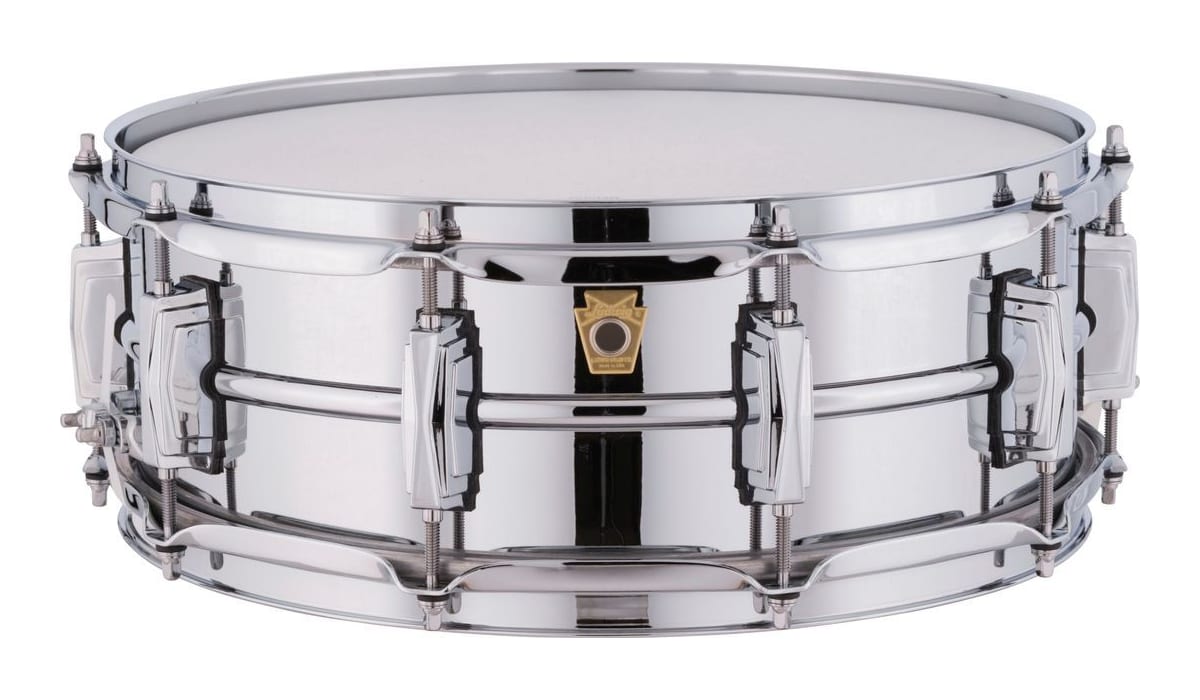
There are two depths, and this is the decision most people agonise over.
LM400 (14”x5”). The classic. It is tighter, more articulate and more focused, and it is the better all-rounder if you play a lot of ghost notes, lighter music or anything where the snare needs to speak quickly. If you only ever own one snare, make it this one.
LM402 (14”x6.5”). The deeper drum has more body, more low end and more volume. It is the rock version: bigger backbeats, a fatter rimshot and a sound that fills a room. John Bonham’s snare was an LM402, which you can see on John Bonham’s rig in the Rig Vault, and Alex Van Halen played a customised 6.5” Supraphonic too.
Honestly, you can’t go wrong. If you play mostly loud music, get the 402. If you play a bit of everything, get the 400.
What versions are available?
Each depth comes in four versions. The model number tells you which:
| Model | Size | Shell | Lugs |
|---|---|---|---|
| LM400 | 14”x5” | Smooth | Imperial |
| LM400T | 14”x5” | Smooth | Tube |
| LM400K | 14”x5” | Hammered | Imperial |
| LM400KT | 14”x5” | Hammered | Tube |
| LM402 | 14”x6.5” | Smooth | Imperial |
| LM402T | 14”x6.5” | Smooth | Tube |
| LM402K | 14”x6.5” | Hammered | Imperial |
| LM402KT | 14”x6.5” | Hammered | Tube |
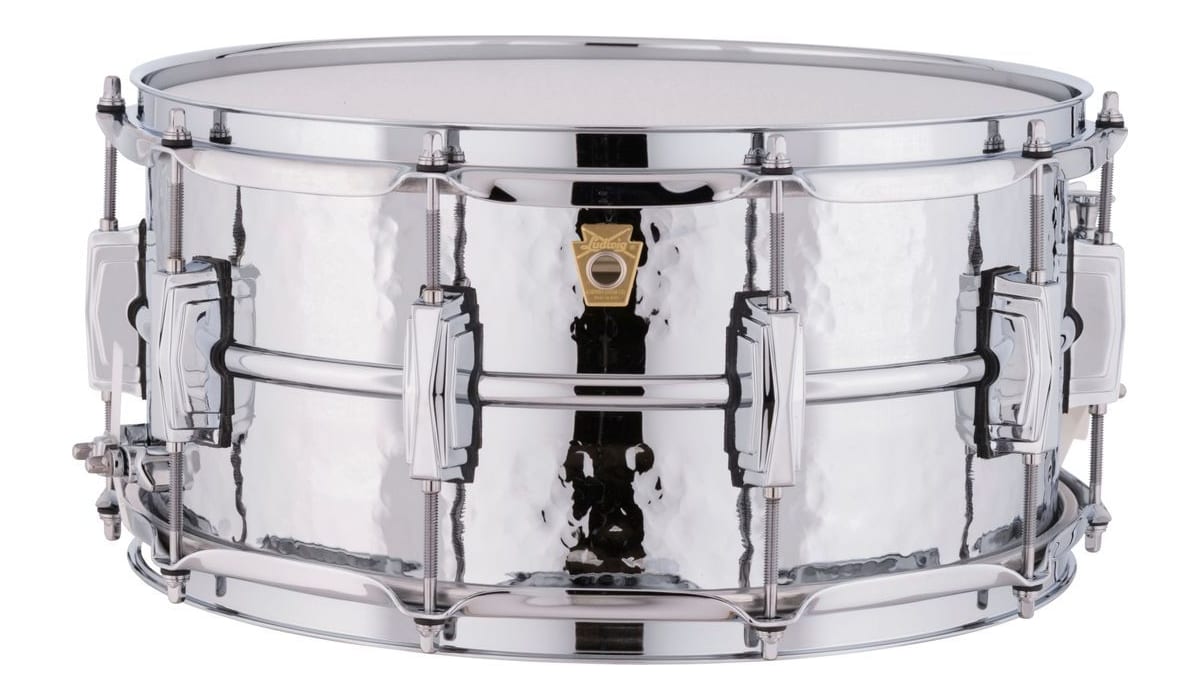
Hammered (K) shells are dimpled by hand, which breaks up the overtones and gives a slightly darker, drier and trashier sound. They also look fantastic.
Tube lugs (T) are a vintage-style look. Some drummers swear they change the sound because there is less hardware touching the shell; we would say the difference is small and the choice is mostly about looks.
A short history of the Supraphonic
The Supraphonic’s story starts with a brass drum. In 1960 Ludwig introduced the Super Ludwig, a chrome-plated brass snare, which Ludwig today reissues as the Chrome Over Brass. Within a few years Ludwig had switched the shell to an aluminium alloy, and the Supra-Phonic 400 was born. Collectors usually date it to 1963; Ludwig’s own timeline gives 1964.
The timing could not have been better. Ludwig became the hottest drum company on the planet after Ringo Starr’s appearance on The Ed Sullivan Show in February 1964, studios were booming, and the Supraphonic was the company’s flagship snare. It went on to define the sound of a lot of the music that followed.
The other member of the family is the Acrolite, which also arrived in 1963 as a cheaper student drum with a brushed aluminium shell. Plenty of professionals ended up preferring it, and Ludwig still makes it.
One thing worth knowing if you are shopping vintage: the chrome on some 1970s shells can bubble and flake with age. It rarely affects the sound, but it does affect the price.
Who plays a Supraphonic?
The honest answer is “almost everyone, at some point”. A few drummers in our own Rig Vault and features:
- John Bonham: an LM402 on both the early Zeppelin kit and the amber Vistalite.
- Nate Smith: an LM400 alongside his own Ludwig signature snare.
- Alex Van Halen: a customised 14”x6.5” Supraphonic.
Browse the Ludwig hub for every Ludwig in the Rig Vault and who plays it.
Supraphonic vs Black Beauty
The Supraphonic’s big brother is the Ludwig Black Beauty. Same lugs, same hoops, same throw-off; the difference is a brass shell instead of aluminium.
The short version: the Supraphonic is brighter, drier and half the price, and the Black Beauty is warmer, darker and more sensitive. We have put them side by side in our Supraphonic vs Black Beauty head-to-head, so we won’t repeat it all here.
If you want the Supraphonic sound for less money, our snare drum buying guide covers the cheaper aluminium options too.
How much does a Ludwig Supraphonic cost?
At the time of writing, a new LM400 is around £550–£650 in the UK and $700–$800 in the US. The LM402 costs a little more, and the hammered and tube-lug versions sit above both.
That is not cheap for a snare, but it is a drum you will never need to replace, and Supraphonics hold their value very well. Buy one, look after it, and you will get most of your money back if you ever sell it.
Where can I buy one?
Almost every drum shop sells the Supraphonic, and it is always worth playing a couple: no two metal snares are quite identical.
The right shop depends on where you are: Guitar Center in the Americas, Gear4music in the UK, or Thomann for Europe and the rest of the world.
A used Supraphonic is one of the safest buys in drumming. Ludwig has made them for over sixty years, so used Supraphonics on Reverb are everywhere. Check the Reverb price guide and our guide to buying used drums online before you buy.
Final thoughts
There are fancier snares than the Supraphonic, and there are more expensive ones. There are very few that are more useful. It does loud and quiet, high and low, studio and stage, and it has been doing it since the 1960s.
The only downside is how common it is. If you want a snare that sounds like nobody else’s, look elsewhere. If you want the snare that sounds like the records, this is it.
For the rest of the Ludwig range, from the kits to the other Phonic snares, read our Ludwig drums guide, and see how Ludwig stacks up against the competition in our best drum brands guide.
Ludwig Supraphonic FAQs
- What is the difference between the Ludwig LM400 and LM402?
- Depth. The LM400 is a 14"x5" Supraphonic and the LM402 is a 14"x6.5". Everything else is the same: a seamless chrome-plated aluminium shell, ten Imperial lugs, 2.3mm triple-flanged hoops and the P88AC throw-off. The LM400 is tighter and more articulate, the LM402 is fatter and louder.
- Why is the Ludwig Supraphonic so popular?
- Because it sounds right on a record with almost no help. The aluminium shell gives a crisp, dry crack with a short ring, it tunes from high and tight to low and fat, and it has been in production since the 1960s, so it ended up on an enormous number of recordings. It is also built to last and keeps its value.
- Is the Ludwig Supraphonic made of aluminium or steel?
- Aluminium. The shell is a seamless, beaded aluminium alloy, chrome plated, which is why people often mistake it for steel. Ludwig quotes the shell at 1.7mm. The steel snare in Ludwig's range is the much cheaper Supralite.
- How much is a Ludwig Supraphonic?
- New, an LM400 is around £550–£650 in the UK and $700–$800 in the US at the time of writing, with the LM402 a little more and the hammered and tube-lug versions above that. Used Supraphonics are plentiful and usually cheaper.
- Should I buy a Supraphonic or a Black Beauty?
- For most drummers, the Supraphonic: it is brighter, cuts through loud music and costs about half as much. The brass Black Beauty is warmer, darker and more sensitive. Our Supraphonic vs Black Beauty head-to-head goes through it row by row.
Keep reading
All Our Buying Guides
Best drum brands (2026) | Every budget ranked
The best drum kit brands in 2026, from Yamaha, Pearl and Tama to Ludwig, DW, Gretsch, Sonor, Mapex and PDP, with the right pick for every budget.
DW Collector's Series
DW Collector's Series | Guide (2026)
DW's Collector's Series explained: the pure woods, SSC shell options, curated Jazz and Santa Monica shells, finishes, prices, and who it is really for.
DW Drums
DW drums | Every series explained (2026)
DW drums explained: Design, Performance, Collector's and DWe kits, the 5000 and 9000 pedals, where they are made, and what Roland owning DW means for you.