Ebenor builds Aaron Sterling a brass snare
A 14x5 brass snare with bronze hoops and an antique patina finish, handmade in Quebec and serialised. Here is what is in Aaron Sterling's signature Ebenor.
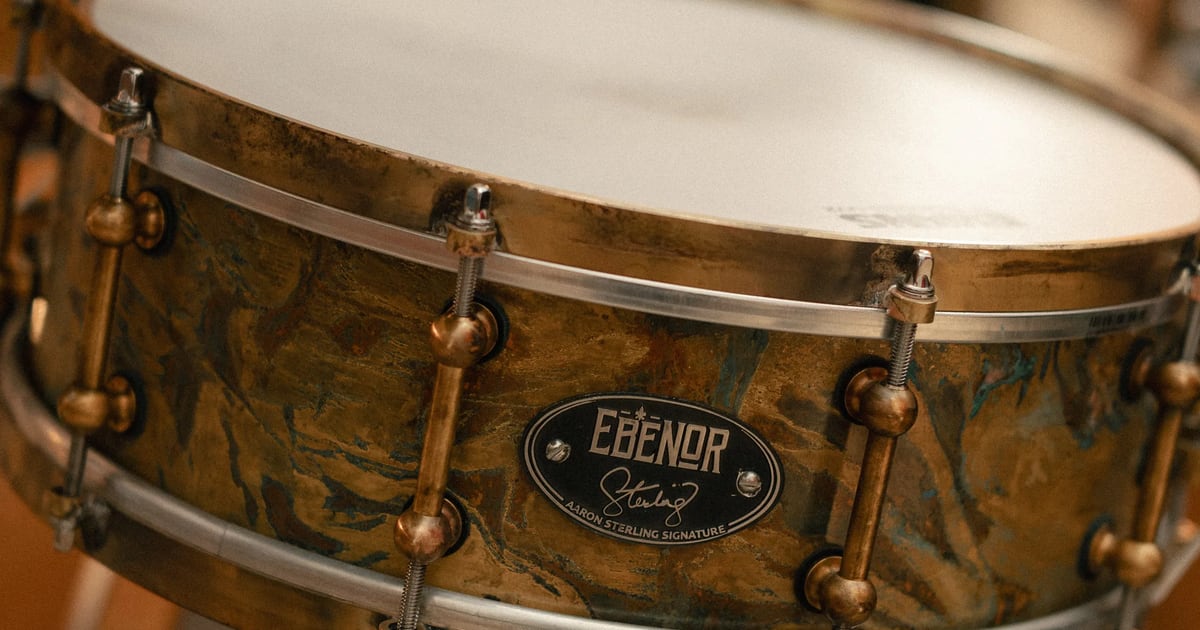
Ebenor Quality Percussion has added an Aaron Sterling signature model to its artist series, and it is a lovely-looking thing.
Brass shell, bronze hoops, and a finish that looks like it has been sitting in a studio since 1974.
Here are the details.
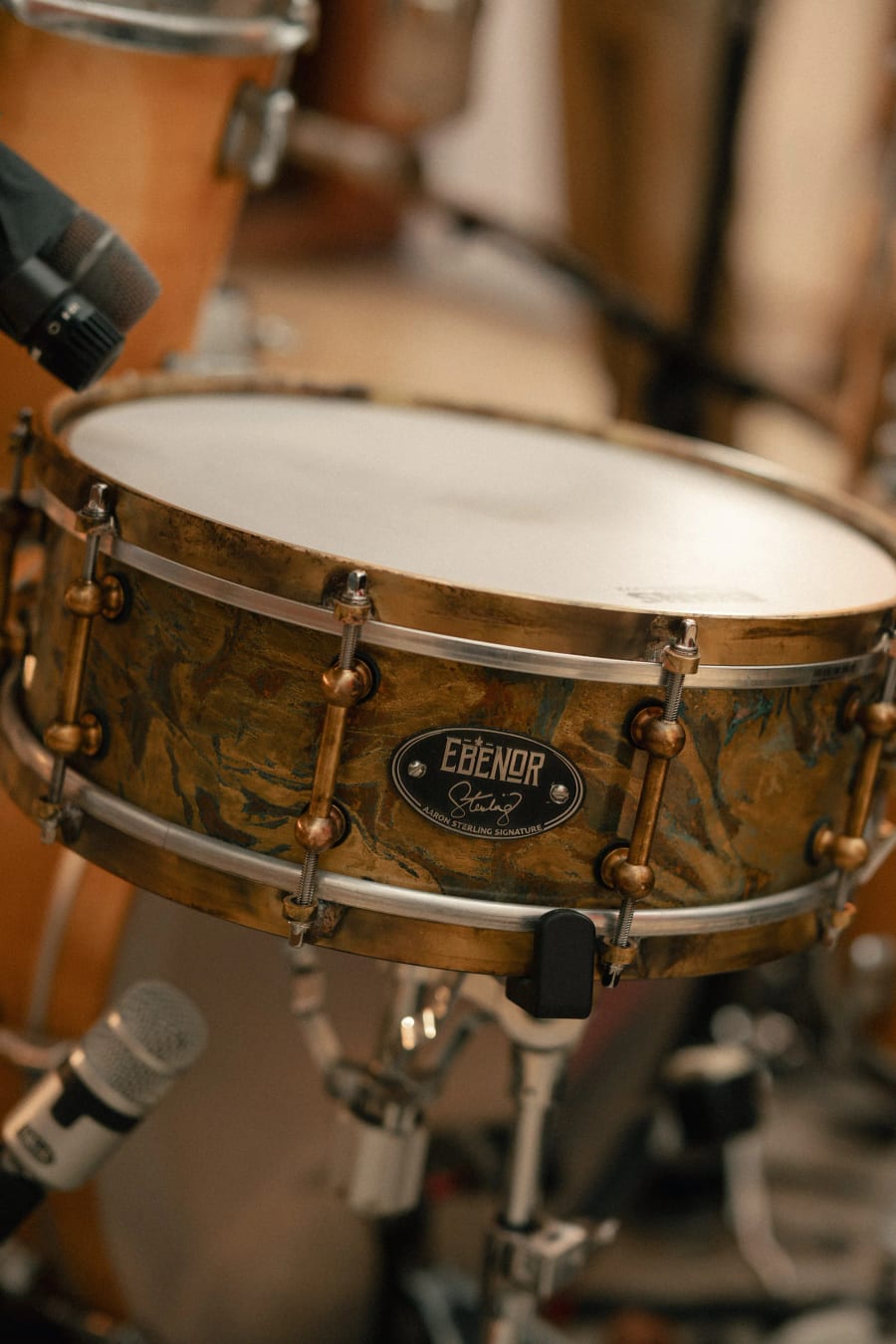
Look at the shell. That mottled green and gold is the Antique Patina finish, and no two come out the same.
What is in it?
A 14x5 brass shell, 1.6mm thick, in Ebenor’s Antique Patina #24 finish.
Around it:
- 10 lugs — Ebenor’s own brass ones.
- Straight thick bronze hoops, again Ebenor’s own, rather than the usual triple-flanged steel.
- An Ebenor machined brass throw-off.
- A serialised Certificate of Authenticity, and a soft case.
Shell and hardware are made by hand in St-Romain, Québec. It lists at $1,683.
What does brass sound like?
Loud, bright and long, in the best way.
Brass is dense and heavy, so the shell resists being driven by the head instead of moving with it. What you get back is a lot of fundamental note, a lot of ring and a crack that carries a long way. It is the reason brass snares turn up on so many records where the snare has to be the event in the bar.
At 1.6mm, this is a middleweight brass shell rather than a heavy one — enough mass for the brass character, not so much that it stops responding at low volume.
The bronze hoops are the more unusual choice. A thick cast-style hoop clamps the head down harder around the edge, which tightens the tuning, shortens the overtones a touch and makes rimshots enormous. Paired with a brass shell, that is a drum designed to be hit properly.
Who is Aaron Sterling?
One of the most-recorded drummers of the last fifteen years, and one whose name most drummers still would not recognise. That is session work for you.
He has played on John Mayer’s Born and Raised, Paradise Valley and Sob Rock, toured in Mayer’s band, and turns up on records by Taylor Swift, Harry Styles, Lana Del Rey, Keith Urban and a great many others.
That background tells you something about the drum. Session drummers do not choose gear that only works in one setting — they choose things that behave predictably, tune quickly and sound like themselves down a microphone. A well-made brass 14x5 with heavy hoops is about as safe a bet as that world has.
Hear it in action
Specs on a page will only take you so far with a snare drum. Here it is being played:
Listen for the crack rather than the ring. That is the bronze hoops doing their work.
Where can I buy one?
The right shop depends on where you are: Guitar Center in the Americas, Gear4music in the UK, or Thomann for Europe and the rest of the world.
Ebenor is a small Canadian outfit, so the signature model itself is easiest to find through specialist drum shops rather than the big retailers — the links above will find you brass 14x5s generally.
Final thoughts
This is a boutique drum at a boutique price, and it is not pretending otherwise. Handmade hardware, a hand-finished shell, a serial number and a Québec workshop are what the money goes on.
Whether that is your kind of purchase is a personal question. What is not in doubt is that it is a properly specified drum rather than a standard shell with a name on it — the hoops alone tell you somebody thought about how it should sound.
For signature snares nearer most people’s budgets, our Matt Halpern Pearl signature is worth a look, and the Tama S.L.P. range is where a lot of drummers find their first serious metal shell. If you want a second snare rather than a better one, our floor snare drums guide covers a much cheaper way to change your sound.
And if reading about artist series drums has you wondering how drummers end up with one at all, our guide to getting a drum endorsement explains how that actually works.