Phil Collins | The most famous drum fill ever recorded
Phil Collins invented the 1980s drum sound and played the fill everyone knows. His story, the gated reverb, his gear, and the latest Phil Collins news.
Every drummer knows the fill. You could hum it right now. It arrives three minutes and forty seconds into “In the Air Tonight” and it has been the most recognisable eight seconds of drumming on earth for forty-five years.
What most people do not realise is that the man who played it is a serious jazz-fusion drummer who happened to become one of the biggest pop stars alive — and that the sound of that fill was a studio accident nobody was trying to make.
Here you will find his story, how the gated reverb sound actually happened, his gear, and the latest Phil Collins news. It has been a hard decade for him, so let’s start with the good part.
Who is Phil Collins?
Philip David Charles Collins was born on 30 January 1951 in Chiswick, west London.
He got a toy drum kit at five and never wanted to do anything else. By his teens he was gigging, and he had a spell as a child actor — he is in the crowd in A Hard Day’s Night, which is a good pub-quiz fact.
In 1970 he answered a classified advert in Melody Maker placed by a band looking for “a drummer sensitive to acoustic music”. The band was Genesis. He got the job.
Genesis: drummer first, singer by accident
For five years Phil was the drummer in one of the most demanding progressive rock bands going. The parts are genuinely difficult — shifting meters, long-form arrangements, and a lot of space to fill intelligently.
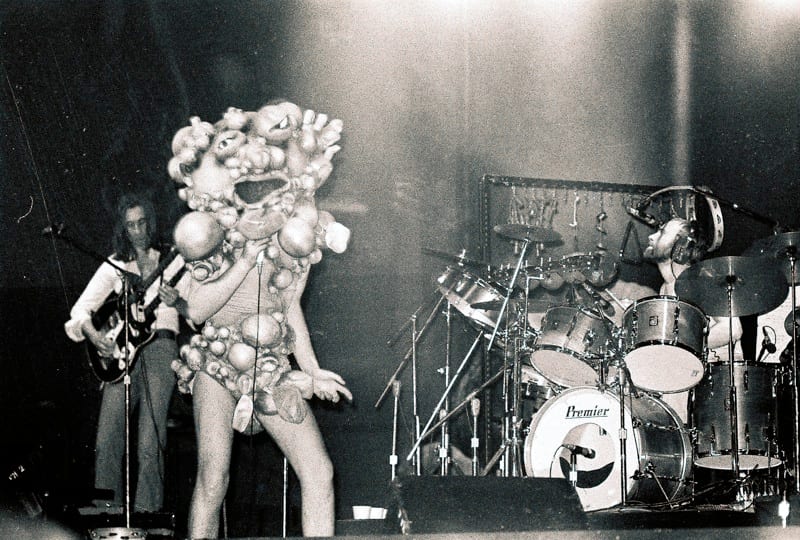
When Peter Gabriel left in 1975, Genesis auditioned singers for months and found nobody. Phil, who had been singing backing vocals from behind the kit, took the job by default.
That is how a first-rate drummer became a first-rate frontman, and why so many people have no idea he drums at all.
Brand X
The part that gets overlooked entirely. Alongside Genesis, Phil played in Brand X, a jazz-fusion band, and the playing on those records is on a different technical planet from the pop hits.
If you only know “Sussudio”, go and listen to Brand X’s Moroccan Roll. It reframes everything.
The gated reverb story
This is the bit worth getting right, because it is usually told wrong.
In 1980, Phil was drumming on Peter Gabriel’s third solo album. Engineer Hugh Padgham had a talkback microphone hanging over the kit — a mic meant for chatting to the control room, heavily compressed so quiet speech came through clearly.
Somebody left it open while Phil was playing. What came back was an enormous, compressed, room-heavy drum sound with an unnatural tail. Padgham put a noise gate across it to chop the decay off dead.
That combination — massive compressed room, cut off abruptly — is gated reverb. It first appeared on Gabriel’s “Intruder”.
A year later, Phil took it to his own record. “In the Air Tonight” made it the defining drum sound of the decade, and for the next ten years every producer on earth tried to get it.
The other half: no bottom heads
The sound is not just the effect. Phil was playing concert toms — single-headed drums with no resonant head at all.
That gives a short, focused, pitched thump with no wobble in the decay, which is exactly what you want going into a gate. Two-headed toms have a sustain that fights the effect.
If you want to hear how much difference that makes, take the bottom heads off your rack toms for an afternoon. It is free, it is reversible, and it will teach you more about your kit than a new cymbal will. Our free drum tuner will help you get the batter heads sitting where you want them afterwards.
What kind of drummer is he, really?
Left-handed, on a left-handed kit
Phil is a genuine left-hander and plays a properly mirrored setup — hi-hat on the right, ride on the left.
It is why his fills sound the way they do. Moving across a mirrored kit produces a different natural order of drums than a right-hander’s, and the famous fill is a good example: try playing it on a standard setup and your hands will want to do something else.
Feel over flash
For a player with fusion chops, the pop records are remarkably restrained. He plays with a heavy, slightly behind-the-beat feel that makes a mid-tempo song sound enormous.
The fills are rare, which is exactly why the one everyone knows lands so hard. Save it up, then spend it.
The duets
If you only ever watch one piece of Phil Collins footage, make it a drum duet — with Chester Thompson in Genesis, or with his son Nic Collins, who took over the kit for the final Genesis tour in 2021–22 and did a superb job of it.
Phil Collins’s drum kit
The eras, in short:
- Premier (early Genesis) — double-kick prog setups through the early 1970s, with Paiste 2002 cymbals.
- Gretsch (from the mid-1970s) — the long association, and the concert toms that made the Face Value sound. A 14” x 6.5” Gretsch snare throughout.
- The hybrid 1980s — Gretsch shells plus Simmons SDS-V pads, the hexagonal icons of the decade. He also switched to Sabian cymbals in the mid-1980s: HH hi-hats, an HH medium crash and the Raw Bell Dry Ride.
And one piece of gear that is not a drum: a Roland CR-78 CompuRhythm, the drum machine ticking away under the first three minutes of “In the Air Tonight” before the real kit arrives.
See Phil Collins’s full rig, era by era, in the Rig Vault →
Getting the sound at home
You need less than you think. Single-headed toms or heavily muffled two-headed ones, a mid-tuned snare, and a big reverb with a hard gate on it — every DAW ships with one.
The vintage Gretsch concert toms and Simmons pads both live on Reverb now, and prices for Simmons kit have climbed with the 1980s revival — worth checking the Reverb price guide before you commit. Ask our Gear Guru if you want a modern shortcut instead.
The health story
It is part of the picture, and he has been open about it.
A spinal injury in 2007 caused severe nerve damage. A back operation left him with drop foot, which made walking difficult. During the Genesis reunion he lost power and grip in his left hand mid-drum-duet, and eventually lost the feeling entirely — which ended his drumming.
By the final Genesis tour in 2022 he performed seated, with Nic on drums. He has since had five knee operations, has a live-in nurse managing his medication, and had a period of kidney trouble related to drinking.
Which is what makes the 2026 update genuinely good news. He is more mobile, two years sober, and talking about writing again. He has said that if he woke up one day able to hold a pair of sticks, he would try.
Where to start listening
- “In the Air Tonight” (1981) — obviously. Note how long he makes you wait.
- “Intruder” (Peter Gabriel, 1980) — where the sound was actually born.
- “Los Endos” (Genesis, 1976) — the drummer, unleashed.
- “Turn It On Again” (Genesis, 1980) — a masterclass in playing something odd and making it feel natural.
- “Nuclear Burn” (Brand X, 1976) — the fusion player nobody talks about.
- “Easy Lover” (with Philip Bailey, 1984) — pure pop, enormous groove.
Find more Phil Collins
Final thoughts
Phil Collins is a strange case: one of the most successful musicians of all time, and still somehow underrated at the thing he started out doing.
The pop fame did him no favours with drummers of a certain age, and that is a shame, because the Brand X and early Genesis playing stands up against anyone’s. The fill is the least interesting remarkable thing about him.
That he is in better health, sober, and thinking about music again is the best drumming news of 2026 by some distance. When there is more, you will read about it in the news section at the top of this page.
And for the full gear picture — concert toms, Simmons pads, that CR-78 — Phil Collins’ rig is in the Rig Vault, era by era.