Drum rudiments | Why they matter, where to start
Rudiments are the drummer's vocabulary, and 400 years in the making. Here is why they matter, the five to learn first, and how to actually practise them.
Ask ten drummers whether rudiments matter and you will get ten yeses. Ask the same ten when they last practised one and the room goes quiet.
That gap is where most of us live. We know we should. We are not entirely sure why, we are not sure which of the forty to pick up first, and the whole thing has a faint whiff of homework about it.
So let’s fix all three. What a rudiment actually is, where the list came from, why it genuinely changes your playing, and exactly where to start — with our free rudiment trainer doing the counting.
What is a drum rudiment, actually?
A rudiment is a short, fixed pattern of sticking. That is it. Which hand plays which note, in what order, with which notes accented.
The usual line is that rudiments are the drummer’s alphabet, and it is a good one. On its own, a paradiddle is about as musical as the letter Q. Strung together, orchestrated around a kit and played with intent, rudiments are every fill you have ever air-drummed in the car.
The modern list runs to forty, standardised by the Percussive Arts Society, and it splits neatly into four families.
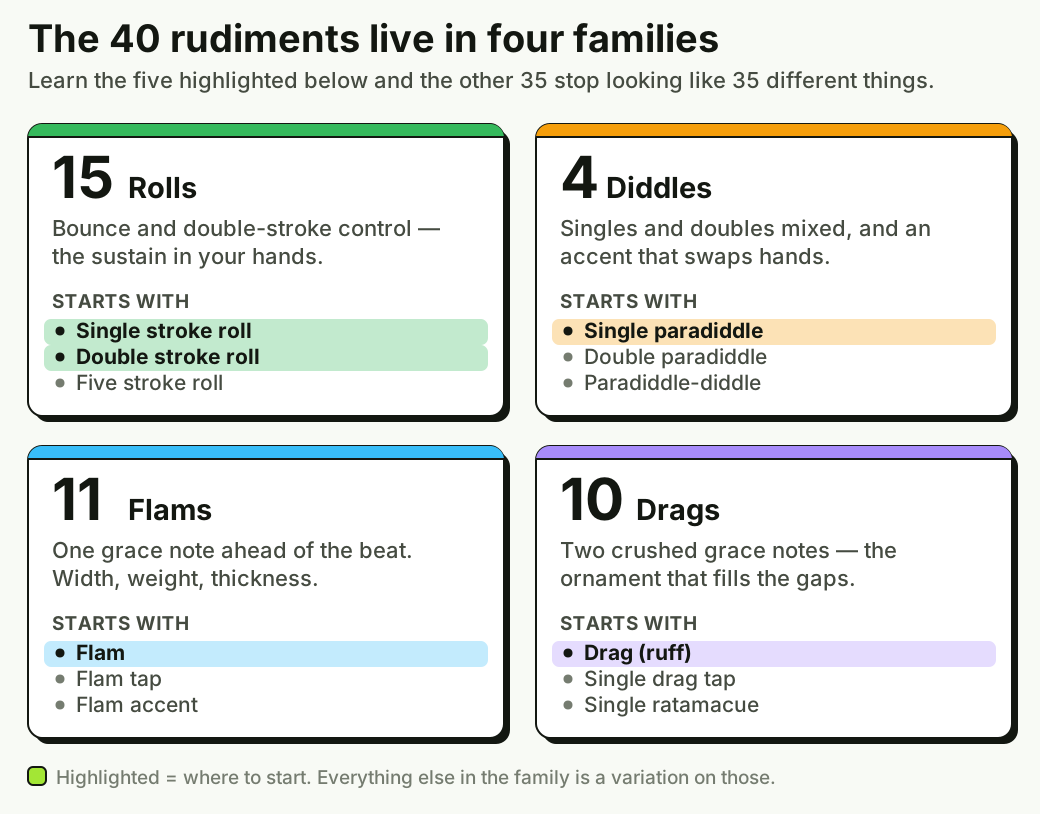
Fifteen rolls, four diddles, eleven flams and ten drags. Forty sounds like an enormous amount to learn. It is not, because they are not forty separate ideas — they are four ideas, wearing thirty-six different hats.
Once you can play a double stroke roll, a five stroke roll is a double stroke roll that stops. Once you can play a flam, half the flam family is patterns you already know with a flam bolted onto the accent.
Where did the 40 rudiments come from?
Nobody invented them in one sitting. They were collected — over about four hundred years, by soldiers, teachers and eventually a committee.
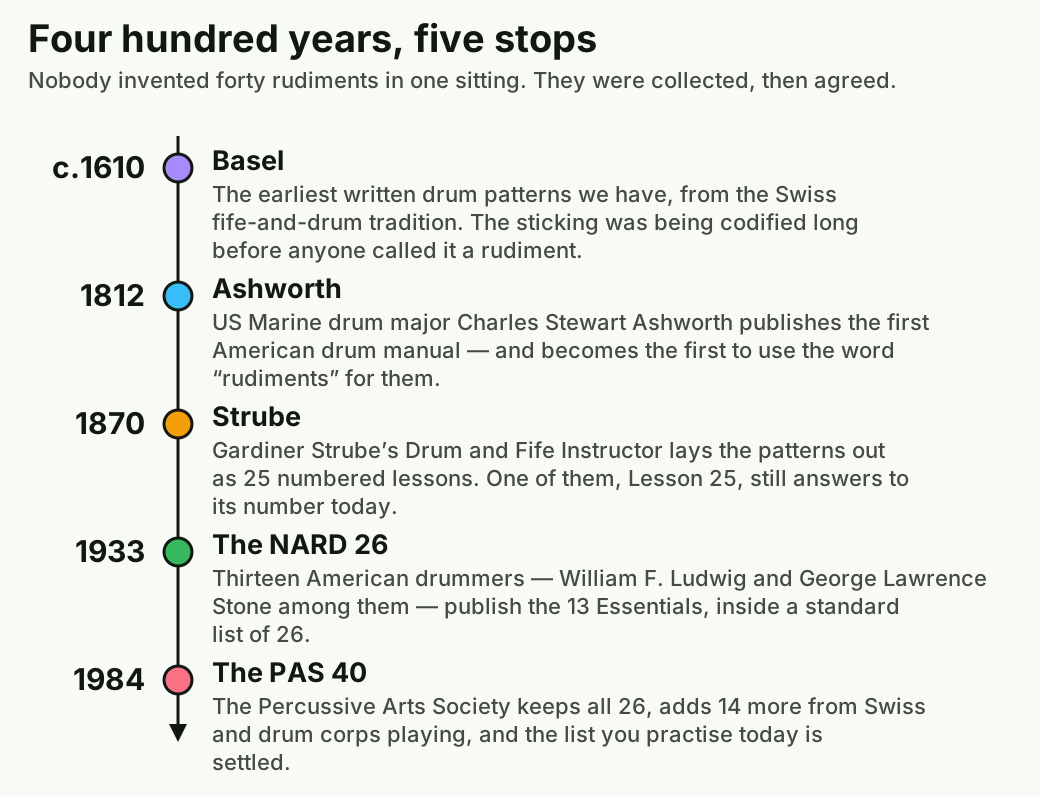
The oldest written drum patterns we have come from Basel in Switzerland, where fife-and-drum companies were already codifying sticking in the early 1600s. Swiss drumming is still its own tradition, and several of its patterns ended up on the modern list.
The word itself is American and surprisingly datable. In 1812, a US Marine drum major named Charles Stewart Ashworth published the first American drum manual — and became the first person to call these things “rudiments” rather than lessons, rules or exercises.
In 1870, Gardiner Strube’s Drum and Fife Instructor laid them out as twenty-five numbered lessons. One of those numbers survived intact: Lesson 25 is still called Lesson 25 today, which is the single most drummer thing in this entire article.
Then in 1933, thirteen American drummers — William F. Ludwig and George Lawrence Stone among them — published the 13 Essentials inside a standard list of 26. To join their association you had to play all thirteen, open and closed, in front of them. No certificate for turning up.
The Percussive Arts Society kept all twenty-six, added fourteen more from Swiss and drum corps playing, and in 1984 published the forty that Vic Firth, Drumeo and every other teacher still work from. That is the list in the trainer.
So why do rudiments actually matter?
Four reasons, and only one of them is speed.
They teach your hands the shapes music is made of
Nobody sits down at a kit and thinks “I shall now deploy a paradiddle”. What happens is subtler and much more useful: patterns you have drilled start showing up in your playing on their own, because your hands know how to get from here to there.
That is the real payoff. Rudiments are pre-solved movement problems. When a fill needs your left hand to end up leading, a paradiddle already knows how to do that, and you do not have to work it out mid-bar.
They train stroke height, not just speed
This is the bit that gets skipped, and it is the whole point.
A paradiddle is only a paradiddle if the accent is loud and the diddle is not. Getting that contrast means controlling where each stroke stops, not just how fast it goes — and there are four ways a stroke can start and finish.
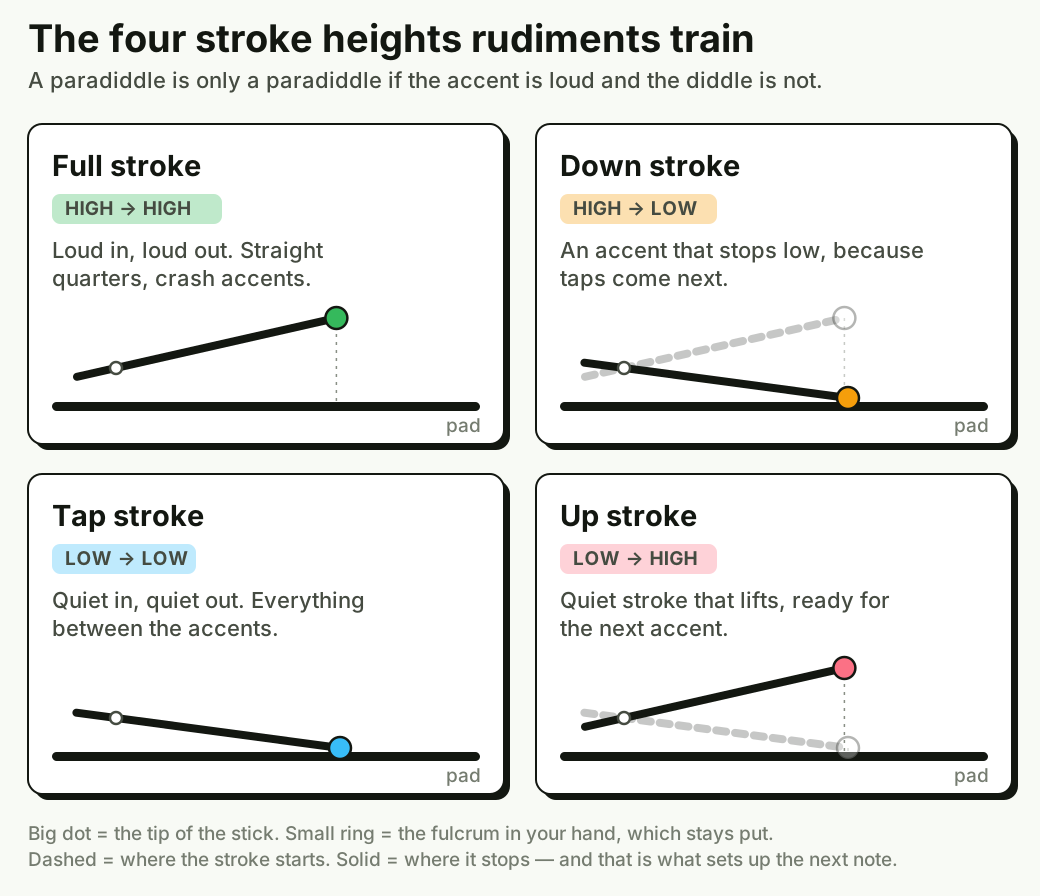
Play a paradiddle properly and you are using all four in eight notes. Accent (down stroke), tap, tap, tap that lifts (up stroke), then the other hand does the same. Drill that and your dynamics on the kit improve whether or not you ever play a paradiddle in a song.
Ignore it and you get what most self-taught drummers get: everything at one volume, which is the drumming equivalent of talking in a monotone.
They give you a language
Saying “that fill starts with an inverted paradiddle” takes two seconds. Describing it stroke by stroke takes thirty, and the other drummer still will not know what you mean.
Rudiment names are how drummers hand each other ideas — in lessons, in a rehearsal room, in a YouTube comment at two in the morning.
They are a brutally honest diagnostic
Play a double stroke roll slowly, then speed it up. Somewhere on the way up, one hand starts cheating — usually your weaker one, usually on the second stroke of the double.
That is not a failure, that is information. Rudiments find the weak spot faster than any amount of playing along to records, because there is nowhere to hide behind a groove.
One honest caveat, because we are not selling anything here: rudiments do not make you musical. They make you capable. Plenty of technically gorgeous drummers are no fun to listen to, and plenty of drummers with four rudiments to their name are a joy. Treat this as vocabulary building, not as the point of the exercise.
Where should I start with rudiments?
With a pair of sticks and something to hit that is not your kit. A practice pad is the right answer — quiet, portable, and honest about your strokes in a way a cushion is not — but the arm of a sofa has started more drummers than any pad ever sold. Use what you have.
The sticks matter more than the surface. Anything around a 5A or 5B is the default for good reason, and our drumstick size guide covers what actually changes when you go heavier or lighter.
Then five rudiments. In this order. Do not move on until the one above is clean and even at a tempo that feels almost boring.
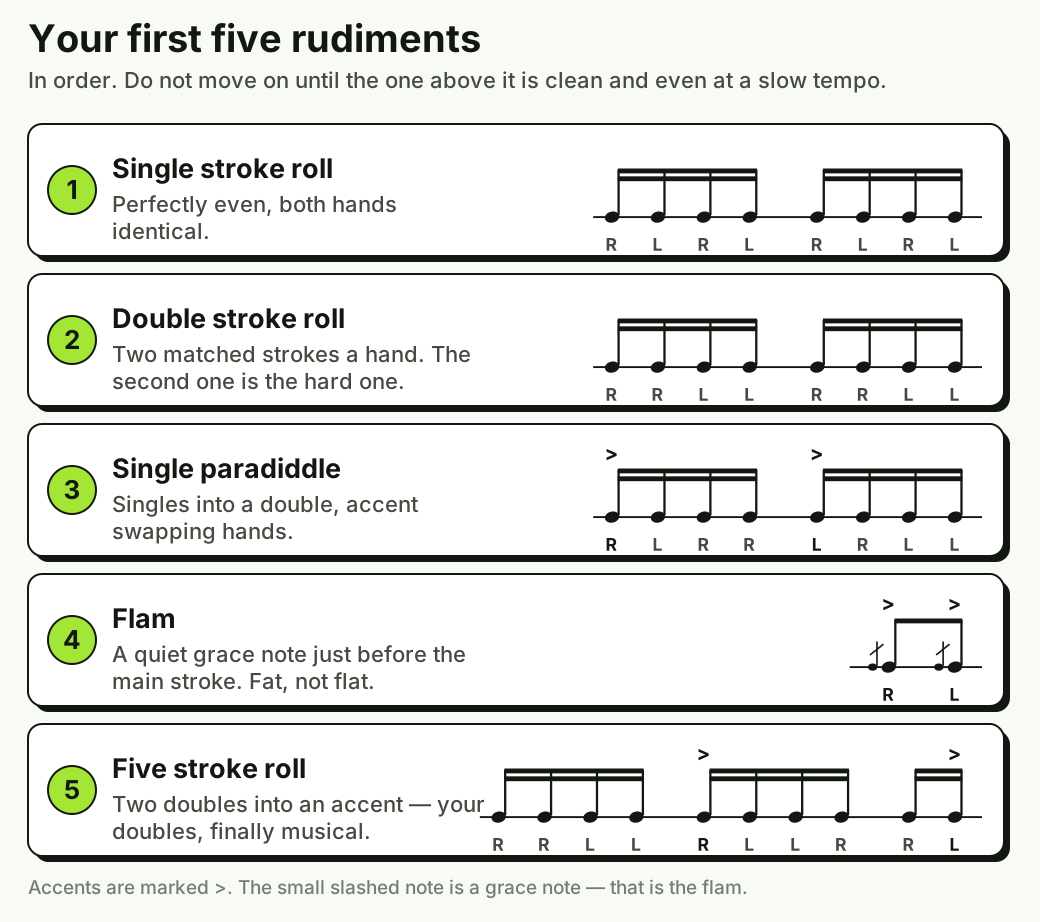
1. Single stroke roll — R L R L. The foundation, and the one everybody skips because they think they can already do it. Can you play it dead even, both hands identical, for two minutes? Most people cannot. Start here.
2. Double stroke roll — R R L L. Two matched strokes per hand, and the second one is the hard one. It should sound exactly as loud as the first. At slow tempos you play both; as you speed up you let the stick rebound. Getting the handover between those two feelings clean is a genuine milestone.
3. Single paradiddle — R L R R, L R L L. Singles into a double, which flips which hand leads every time round. This is the gateway rudiment: it is where sticking stops being decoration and starts being a tool.
4. Flam — a quiet grace note landing just before the main stroke. Both sticks fall together; one starts low and one starts high. Get it wrong and you get a flat, splatty double hit. Get it right and one snare hit sounds twice as wide.
5. Five stroke roll — two doubles into an accent. This is where your doubles finally become musical, and it turns up in more rock fills than any other rudiment on the list.
Five rudiments is roughly a month of honest practice, and it unlocks a startling amount. The six stroke roll, the flam tap, the double paradiddle — they all sit on top of what you have just learned.
How do I practise them so they stick?
Here is the honest version, including the part that will feel wrong.
Slow first, and slower than you think
Sloppy fast practice teaches sloppy fast playing. There is no version of this where you get to skip it.
Start where every stroke is deliberate — 60 to 80 BPM — and only move up when it has become boring. Boring is the signal. Boring means your hands have it.
Open, close, open
The traditional method, and still the best one. Start the rudiment slow, accelerate smoothly to the fastest you can play it cleanly, then decelerate back down — taking as long coming down as you did going up. Around a minute or two per rudiment.
It builds slow control and fast fluency in the same breath, and it shows you exactly where your ceiling is, because that is the tempo where it falls apart.
Set the trainer going and use the tempo trainer for the climb — it steps the BPM up on its own so you can keep your eyes on your hands. There is more on building speed properly in our guide to drumming faster.
Practise them in a random order — yes, really
This is the counterintuitive one. Drilling one rudiment fifty times in a row feels productive, and within the session it looks productive: you get visibly better as you go.
Then you come back tomorrow and it has gone.
Motor learning research has a name for the alternative — interleaved or random practice — and the effect is well documented, including in studies of musicians specifically. Mixing tasks up feels worse in the moment and produces better retention afterwards. The technical term is a “desirable difficulty”, which is an academic’s way of saying it should feel annoying.
It is exactly why the rudiment trainer has a random practice mode: keep playing and it deals you a new rudiment every few loops, so you never settle into the ones you already like. That one is a members’ feature, and free to sign up for.
Twenty minutes is plenty
You do not need an hour. You need twenty focused minutes, four times a week, rather than one heroic Sunday.
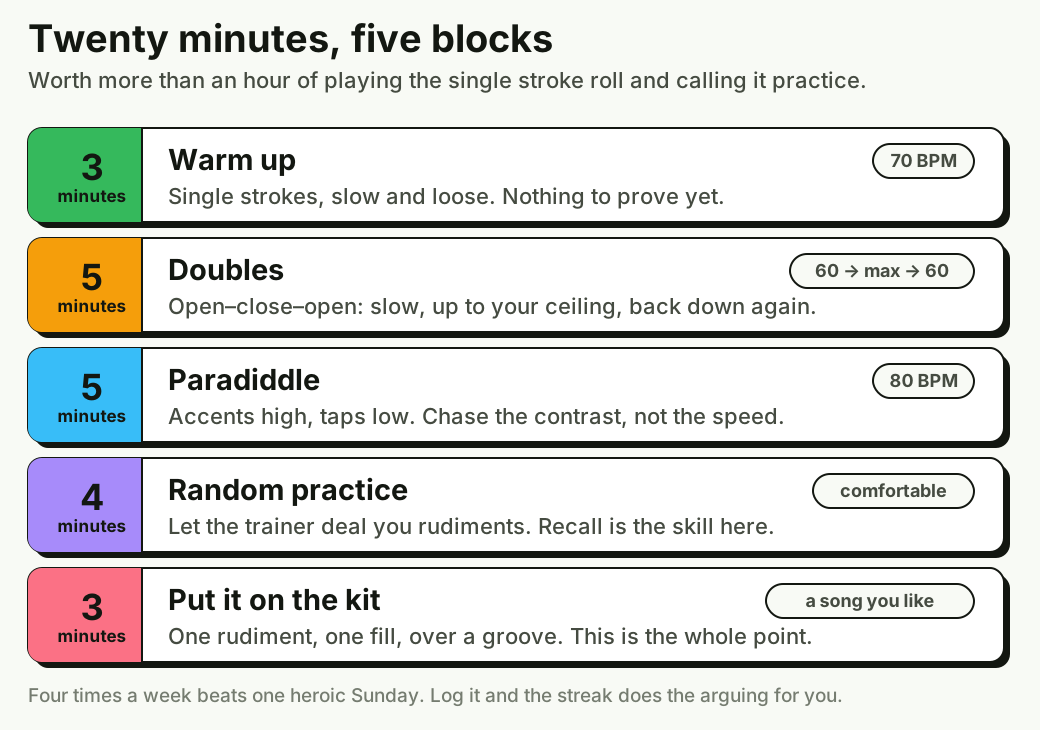
Note the tempo you reached in the practice log when you finish and the next session starts where this one stopped, rather than back at square one. The streak counter does a surprising amount of the motivating for you.
How do I get rudiments off the pad and onto the kit?
By moving them. That is genuinely the whole trick, and it is called orchestration.
The pattern stays identical — same sticking, same accents, same order. All you change is which drum each hand lands on.
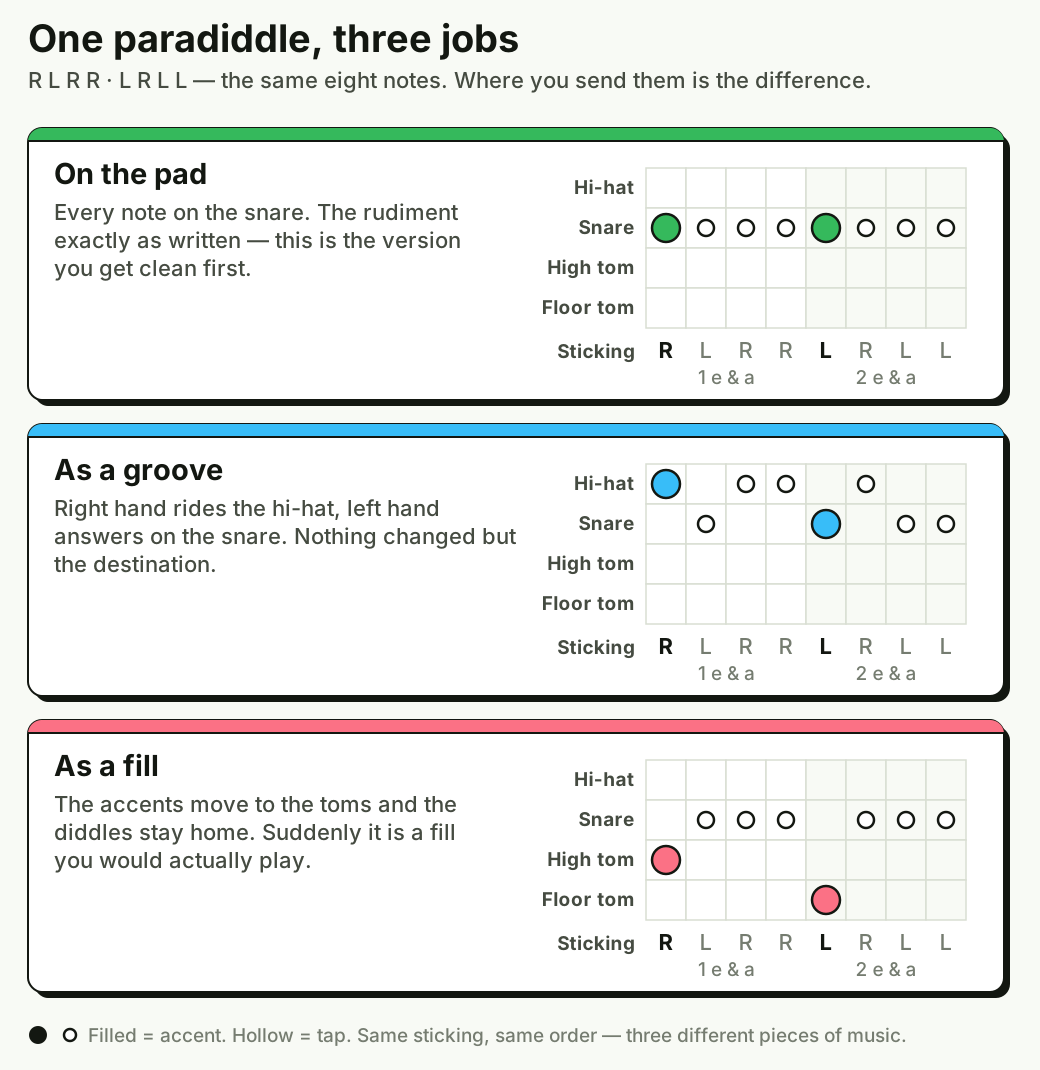
One paradiddle, three completely different jobs. On the pad it is an exercise. Split between hi-hat and snare it is a linear groove. Move the accents to the toms and leave the diddles on the snare and it is a fill you would actually play in a song.
Try it with the six stroke roll next — accents on the toms, doubles on the snare — and you will recognise it immediately, because half the drummers you like play it constantly.
This is where rudiments stop being homework. Give yourself the last few minutes of every session for it: one rudiment, one groove, see what comes out. Our browser drum machine, the Groove Lab, is a decent place to loop a beat to play over if you have not got a backing track handy.
What about the other 35?
Get to them, eventually, and in no particular hurry.
Work outwards from what you know. Comfortable with doubles? The numbered rolls — seven, nine, thirteen — are the same skill at different lengths. Comfortable with flams? The flam accent and flamacue are next door.
The drag family is the one most drummers leave until last, and it is worth pushing through — a drag is the ornament that fills the gaps a flam cannot, and the ratamacues are more fun than they have any right to be.
If you want to hear what a full command of this stuff sounds like in modern playing, Eric Moore is the obvious homework, and Gabe Helguera is very open about having had to go back and learn the foundations he skipped the first time round.
Hear all forty
Reading about a ratamacue only gets you so far. Here is the whole list played through — the quickest way to work out which of the remaining thirty-five you actually want next, and to hear how the families relate to each other:
Then pick one, open it in the rudiment trainer and slow it right down. Watching is not practising.
Final thoughts
Rudiments are not a genre, a rite of passage or a test. They are the shapes your hands make, collected over four centuries by people who got tired of explaining them one stroke at a time.
You do not need forty. You need five, played slowly, mixed up, and moved onto the kit as soon as they are clean. Everything else is variations.
Everything you need is free and in your browser: the rudiment trainer for all forty with the sticking in your ears as well as in front of you, the tempo trainer for the climbs, and the practice log to keep you honest.
Start with the single stroke roll at 70 BPM. Boring is the goal. Go.